 Marcel Waldvogel
Anyone looking for big numbers? Here you will find plenty of them!
#AI #AISpending
https://isaiprofitable.com/
#AI #AISpending
https://isaiprofitable.com/
Big Tech's AI Gambit: Spending Surges Amidst Market Hesitation
Microsoft, Meta, Amazon, and Alphabet are spending more on AI. Investors worry about the high costs and future profits. What happens next?
#BigTechAI, #AISpending, #TechInvestment, #MicrosoftAI, #MetaAI
https://newsletter.tf/big-tech-ai-spending-increases-investor-costs/

Big Tech companies like Microsoft and Amazon are spending much more money on AI this year. This spending is higher than last year's 'AI splurge'.
#BigTechAI, #AISpending, #TechInvestment, #MicrosoftAI, #MetaAI
https://newsletter.tf/big-tech-ai-spending-increases-investor-costs/

JPMorgan Asset Management's CIO Bob Michele says bond markets can absorb hyperscaler debt issuance as these investment-grade borrowers demonstrate strong demand fundamentals and cash flow potential, dismissing AI bubble concerns despite investor anxiety over surging tech company bond supply.

Morgan Stanley designates Nvidia as top pick, predicting concerns over growth sustainability will transform into enthusiasm for 2027 as hyperscalers place three-year orders with full upfront payments, signaling continued AI spending increases despite shares trading near August 2025 levels at $182.48, up 2.99%.
The Hidden Cost of ChatGPT: Why AI Is Burning Millions in Power
843 words, 4 minutes read time.
Artificial intelligence is sexy, fast, and powerful—but it’s not free. Behind every seemingly effortless ChatGPT response, there’s a hidden world of infrastructure, energy bills, and compute costs that rivals a small factory. For tech-savvy men who live and breathe machines, 3D printing, and tinkering, understanding this hidden cost is like spotting a fault in a high-performance engine before it explodes: critical, fascinating, and a little humbling.
AI’s Energy Appetite: Not Just Code, It’s Kilowatts
Every query you type into ChatGPT triggers massive computation across thousands of GPUs in sprawling data centers. Deloitte estimates that training large language models consumes hundreds of megawatt-hours of electricity, enough to power hundreds of homes for a year. It’s like firing up your 3D printer farm 24/7—but now imagine dozens of factories running simultaneously. Vault Energy reports that even inference—the moment ChatGPT generates an answer—adds nontrivial energy costs, because the GPUs are crunching billions of parameters in real time.
For enthusiasts used to pushing their 3D printers to the limits, this is familiar territory: underestimating load can fry your board, warp your print, or shut down a build. In AI, underestimating the energy cost can fry the bottom line.
Iron & Electricity: The Economics of Compute
OpenAI’s servers don’t just hum—they demand massive capital investment. Between cloud contracts, GPU clusters, and custom infrastructure, the company is spending tens of billions just to keep ChatGPT alive. CNBC reported that compute power is the single biggest cost line for OpenAI, dwarfing salaries and office space combined.
For men who respect hardware, think of this as owning a high-end CNC machine: the sticker price is one thing, the electricity, cooling, and maintenance bills are another—and neglect them, and the machine fails. AI infrastructure mirrors this principle on a massive industrial scale.
Capital & Cash Flow: Can This Beast Pay Its Own Way?
Here’s the kicker: while ChatGPT generates billions in revenue, the compute costs are skyrocketing almost as fast. TheOutpost.ai reported a $17 billion annual burn rate, even as revenue surged. OpenAI’s projections suggest spending over $115 billion by 2029 just to scale services, a number that makes most venture capitalists sweat.
It’s like running a personal 3D-printing business where every new printer you buy consumes more power than your entire house, and the revenue from prints barely covers the bills. That’s growth pain in action.
Gridlock: Power Infrastructure Meets AI Demand
Data centers don’t just pull electricity—they strain grids. Massive GPU clusters require sophisticated cooling, sometimes more water and power than a medium-sized town. Deloitte and TechTarget both warn that AI growth could stress regional power grids if not managed properly.
For 3D-printing enthusiasts, this is like wiring a new printer farm into an old house circuit: without planning, it trips breakers, overheats transformers, and causes downtime. AI scaling shares the same gritty reality—without infrastructure planning, growth stalls.
Why It Matters to You
Men who love tech and machines understand efficiency, limits, and optimization. Knowing how AI burns money and power helps you think critically about cloud computing, energy consumption, and sustainability. If you’re running AI-assisted designs for 3D printing or using ChatGPT for coding or prototyping, understanding the cost per query, and the infrastructure behind it, is like checking tolerances before firing up a complicated print: essential to avoid disaster.
Even more, this awareness primes you to make smarter decisions on hardware investments, software efficiency, and environmental impact—not just for hobby projects but potentially for businesses.
Conclusion: The Future of AI Costs
The road ahead is clear: AI will grow, compute will scale, and the dollars and watts required will continue to climb. For tech enthusiasts and makers, this is a call to respect the machinery behind the magic, optimize wherever possible, and stay informed.
Call to Action
If this breakdown helped you think a little clearer about the threats out there, don’t just click away. Subscribe for more no-nonsense security insights, drop a comment with your thoughts or questions, or reach out if there’s a topic you want me to tackle next. Stay sharp out there.
D. Bryan King
Sources
Disclaimer:
The views and opinions expressed in this post are solely those of the author. The information provided is based on personal research, experience, and understanding of the subject matter at the time of writing. Readers should consult relevant experts or authorities for specific guidance related to their unique situations.
Related Posts
#3DPrintingTech #AICarbonFootprint #AICloudInfrastructure #AIComputeDemand #AIComputePower #AIComputingInfrastructure #AIComputingResources #AIDataCenterLoad #AIDevelopment #AIEconomics #AIEfficiency #AIEfficiencyStrategies #AIElectricityUse #AIEnergyConsumption #AIEnergyCosts #AIEnergyOptimization #AIEnvironmentalImpact #AIFinancialImpact #AIFinancialPlanning #AIFinancialRisks #AIFutureTrends #AIGridImpact #AIGrowth #AIGrowthStrategies #AIHardware #AIHardwareUpgrades #AIIndustrialScale #AIIndustryChallenges #AIInfrastructure #AIInnovationCosts #AIInvestment #AIInvestmentRisk #AIMachineLearning #AIOperatingCosts #AIOperatingExpenses #AIPerformance #AIPowerConsumption #AIRevenue #AIScalingChallenges #AIServers #AISpending #AISustainability #AITechEnthusiasts #AITechInsights #AITechnologyAdoption #AITechnologyTrends #AIUsageImpact #chatgpt #ChatGPTScaling #cloudComputingCosts #dataCenterPower #GPUEnergyDemand #largeLanguageModels #OpenAICosts #OpenAIInfrastructure #sustainableAI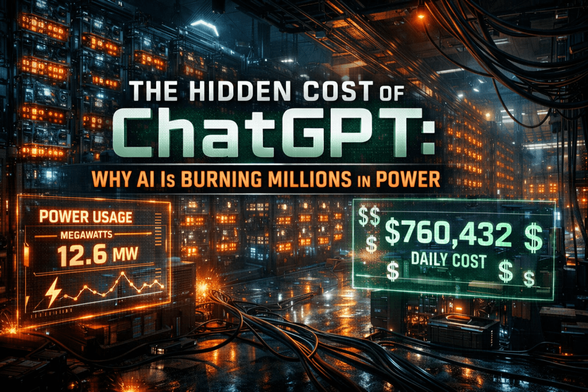

Meta Platforms receives investor approval for up to $135 billion in AI capital expenditures as advertising revenue surges 24% year-over-year to $58.1 billion, demonstrating ability to fund AI ambitions through core business cash generation rather than debt, sending shares up over 10%
 Don Curren 🇨🇦🇺🇦
 NewsletterTF
 tech news ᳇ eicker.news
 Yonhap Infomax News
 Bryan King