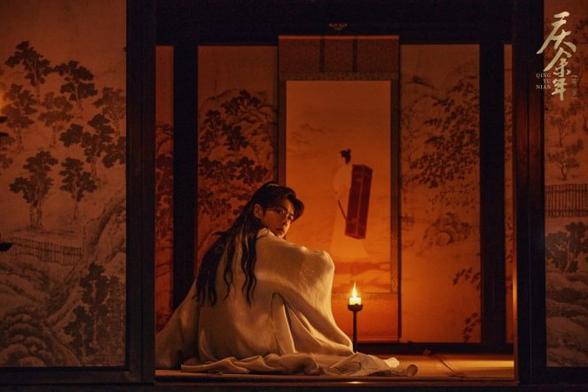
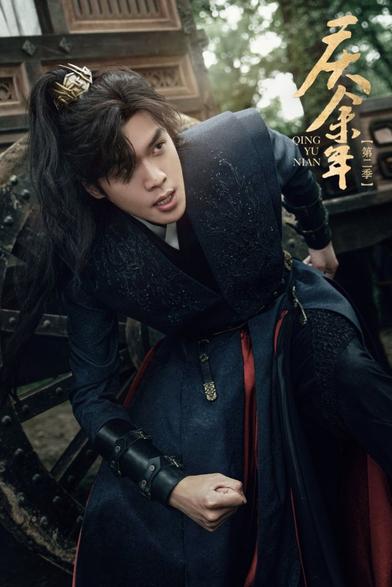
Joy of Life (Season 2)
Joy of Life, season 1 and 2, is not a drama to binge.
It took me a couple of months to watch season 1 because the plots were so heavy. I took many breaks, often detouring to lighter dramas.
I stopped at around five episodes of season 1’s end, and once I knew the season 2 air date, I watched those last episodes.
I think this strategy helped me embrace season 2 better.
Podcast episodeA word about Joy of Life season 1The storyThe charactersEpisode logs(Episodes 1 to 6) Ressurection & brothels(Episodes 7 to 15) Vegetables & the Censorate(Episodes 16 to 23) The imperial examinations(Episodes 24-26) A marriage lullEpisodes 27 to 28: You are a mistake.Episode 29 to 30: Chrysanthemum ViewingFinal rating: 4.5 out of 5Podcast episode
You can also hear my thoughts about the drama.
PS: it’s not an audio version of this article, by the way. This article has a lot more depth.
https://spotifyanchor-web.app.link/e/x6iI2vcyfKb
A word about Joy of Life season 1
Joy of Life season 1 was a big, big, bit hit.
For many, it seems strange that the drama was a hit. For one, it feels like a typical guzhuang drama (costumed drama) with costumed characters strolling around Hengdian studios. What made it stand out?
For one, JOL is a rare fantasy historical drama that is not dominated by idol actors. (Idol actors usually come from non-acting backgrounds. They are often “high traffic” stars that have a huge following due to social media savviness or they got famous as singers or were stars in reality show. As a result, most are not professionally trained.)
JOL has A-class actors, directors and scriptwriters running the show. So there’s better acting, script and cinematography than the average fare. There are a number of veteran actors like Chen Daoming in the drama, and it’s a delight to watch them.
JOL’s story is also “genre-bending” and very unpredictable. And better, almost every side character is well-written, acted and are so unique, even if their appearances were brief.
Not that it was perfect – the first 12 episodes of season 1 was was draggy, but it built the foundation for us to fall in love with the story and the characters.
The comedy, however, is not for everyone. It has a very typical Chinese flavour with many Chinese puns and cultural references.
The story
In season 1, we meet Fan Xian, a man with 21st-century memories who finds himself in ancient China.
Or at least, what he thought was ancient China.
He led a charmed life, even if he was an illegitimate son of a prominent minister. He is protected by powerful men, among them a seemingly ageless and indestructible bodyguard named Wu Zhu, and the head of the kingdom’s secret service. And the emperor seems to be interested in him, for some reason.
At the end of season 1, Fan Xian “dies”, stabbed by Yan Bingyuan, the man he travelled to the north to rescue.
But is he really dead?
When season 2 begins, we discover that Fan Xian has faked his death to elude the schemes of the second prince. But faking your death is akin to lying to the emperor, and if the Emperor finds out what he has done, it’s off with his head!
How does Fan Xian get out of this fix?
FYI, one of the major reveals of season 1 is that Fan Xian is the emperor’s son through Ye Qing Mei. Fan Xian grapples with this reality and also navigates the court, knowing that if his identity ever comes out, he and his loved ones will be in more danger.
Season 2 covers the middle of the 730+ chapter novel; season 2 gets into more “scheming” territory as Fan Xian tries to build his alliances to survive vicious court politics. So, all those big questions about his mum and the mysterious temple are pushed aside, though not utterly ignored, for now.
The characters
Fan XianFirst PrinceChen Ping PingWang Qi NianQi EmperorWu Zhu
There are so many interesting characters in Joy of Life that it’ll be difficult to list them all, but these are the most important ones, and some of my favourites:
Fan Xian – Our lead hero who has memories of the 21st century. Gary Stu and terroriser of chief eunuchs. Admittedly, due to his Gary-Stu-ness, it took me awhile not to feel like slapping his face each time I watch him on screen. But in season 2, he truly grew on me as he became more embroiled in court politics and has become more flawed, conflicted and ruthless.
Uncle Wu Zhu (sixth pic)- Everyone’s favourite killing machine uncle. He has watched over Fan Xian since he was a baby. He is ageless, mysterious and is a match for Grandmasters. Like Fan Xian’s mother, Ye Qing Mei, Wu Zhu comes from the mysterious “temple”.
Emperor of Qing – The emperor who is always in his loungewear but is probably planning your assassination while pouring you a nice cup of tea. Fan Xian once said that he always felt like the most intelligent person in the room with everyone … except the emperor. He is always ten steps ahead of everyone, is very unpredictable and ruthless, even to his family.
Cheng Ping Ping – My second favourite uncle. Looks like a nice uncle but is a murderous bastard with a nice smile. The head of the Overwatch and possibly the second most powerful man in the Qing kingdom.
Fan Jian – Fan Xian’s adopted dad and a minister of revenue. He loves Fan Xian like his own, and among Fan Xian’s many dads, probably loves Fan Xian in the most unconditional way, without agenda or motives.
Princess Royal– Otherwise known as Fan Xian’s batshit crazy future mother-in-law from hell. She once owned the Imperial Treasury and Ye Qing Mei’s legacy, but is forced to give it to Fan Xian once he marries her daughter, Lin Wan’er.
Crown prince – Son of the empress. Many assume he’s not very bright, but it is a facade; he hides his ruthlessness behind a genial personality.
First prince – A military man who prefers to stay out of the capital, he has been summoned back to the capital to marry the North Qi eldest princess.
Second prince – He doesn’t do much to hide his viciousness. He kills, schemes and discards people like used handkerchiefs, but meets his match in Fan Xian, who has now decided that he is Enemy No.1.
Third prince – The youngest of the princes. Largely ignorant of his father and brothers’ scary ways, he is the most sheltered of the princes.
Haitang Duo Duo – The Saintess of Northern Qi. Will beat up all the men without breaking a sweat and has surprisingly not done so with Fan Xian yet. But it’s coming, pretty sure of it. Fan Xian’s good friend, despite what everyone says about it being something more.
Wang Qi Nian – Fan Xian’s right-hand man. He made lying such a cute, loveable thing to do.
Fan Si Zhe – Fan Xian’s brother has brain cells that are focused on enhancing money acquisition. He may be a doofus in many things, but he’s a genius with money.
Fan Ruo Ruo – Fan Xian’s little sister and biggest cheerleader. She wants to be more than a married woman and Fan Xian wants to make it happen for her. She plays an important role in the grand scheme of things.
Li Wan Er – In season 1, she was a character so bland, I only remember her as “Chicken drumstick girl”. Fan Xian’s love interest – she truly grows into a more unique character in season 2.
Episode logs
Do not proceed if you have not watched Joy of Life 2! This sections has spoilers galore.
(Episodes 1 to 6) Ressurection & brothels
People, especially Chinese viewers, were actually quite upset with the first six episodes because they were not in the novel and also because it seemed awkward.
As usual, I seemed to go against the crowd – I loved them LOL. They seem like a light transition from the heavy events of season 1’s last arc and a gentle reintroduction to the Joy of Life universe.
I particularly enjoyed the introduction of Wang Qi Nian’s family, which humanised him even further. And I’m loving Fan Xian’s stepmother more and more as I watch these episodes. Scenes that stood out for me:
- Fan Xian getting angry at Si Zhe. This was a rare time, after Teng Zijing, that we see lose control and act out on his anger.
- Of course, that scene with the vegetable seller in front of the brothel. How he literally hung on to tell him what was inside only to die from his wounds.
One criticism I agreed with is that sometimes, Joy of Life’s comedy doesn’t always land and is, well, lame. For example, that moment where Ba Ba told Fan Xian her name. His reaction to her name made me ask if there’s some cultural element I might be missing, but it turns out that it was just that – he was amused that she was called 爸爸, the modern word for “father”.
And the product placements! As much as I am happy for JOL2’s financial success, they were so distracting.
Also, I actually wished they hadn’t reenacted the last scene of season 1, because it felt so weird to suddenly seem him, er, thin. If they had just started with the scene where the emperor was running down the halls after hearing the news of Fan Xian’s “death” and then to Fan Xian arriving at the gate, I would’ve totally accepted his weight loss as due to his “walk” back home from Bei Qi.
(Episodes 7 to 15) Vegetables & the Censorate
I suspect that this is the arc where most people will fall off because it’s very “talky”. Yet, some of us adore this, because we see the beauty behind the “talkiness” – it takes a masterful scriptwriter to hold your attention in a static stage like the hall where ministers hold court with the emperor. In episodes 10 and 15, I marveled at the fact that most of the episode took place in that boring room, yet I was absolutely riveted.
In the course of watching this show, I thought to myself – why doesn’t everyone appreciate Joy of Life 2 the way I do? Why did some people go in the opposite direction and deem it a deep disappointment?
One can only conclude that Joy Of Life 1, if you think about the 3-part structure of a story, is at the beginning where new discoveries of the world and characters are taking place. There are new and exciting revelations throughout the season.
Season 2, which is the second part of the 3-part structure, is bound to lose that sense of newness and excitement as it builds upon the discoveries of the first part. As a writer, this is the “shit gets real” arc where our hero stumbles, and discovers he’s not as invincible.
As I said before, I didn’t really like Fan Xian in season 1 because I thought he was a Gary Stu who got everything handed to him. He has powerful protectors and allies, is highly intelligent, wealthy, and has a cocky attitude on top of all that.
It is in this arc that I truly ended up liking Fan Xian as a flawed, real human being.
It is also in this arc that Fan Xian discovers that while he may be smart enough to outwit ministers, he cannot outwit the emperor.
He must have gotten his ability to use people as tools for his plans – to quote Minister Lin “to use them to do his dirty work” – from his real dad, the emperor. (But we will discover that the emperor is way more adept at this game than he ever will be.)
And I enjoyed the “fun and games” feel of the first few episodes of the arc as we try to figure out what Fan Xian is doing with Eunuch Dai and the bribes. It was hilarious to see everyone confused, and as usual, Zhang Ruo Yun acted the heck out of it. It turns out that this was Fan Xian’s convoluted way of forcing the court to investigate the second prince. If the emperor won’t do it, I’ll make the court do it! A dangerous game to play, especially with someone like the emperor.
But at the end of the arc, when Fan Xian’s “tool” – the Chief Censor, Minister Lai, – got out of control, accusing everyone including the emperor of corruption – he knew that his fun and games and overconfidence was going to hurt someone.
And in that poignant scene in the rain, as he tries to vainly shield Minister Lai from the rain, knowing that he had caused this man’s death … it hits Fan Xian hard that his schemes will get innocent people killed if he’s careless or fail.
It turns out that accusing the emperor wasn’t Minister Lai’s big mistake, as Chen Ping Ping later explained. His mistake was going to Fan Xian and work with him on a joint investigation.
The emperor wants Fan Xian to be a “lone minister”, one with no allies in court. Not only does this isolate him so that Fan Xian is easier to control, but because the emperor wants the Overwatch as his personal “blade” to do whatever dirty work he wants. He doesn’t want anyone else in the pot, nor does he want anyone influencing Fan Xian. The Overwatch is his and his alone. And Fan Xian’s allegiance must belong to him 100%.
Yes, Fan Xian got his cunning and scheming from his dad, the emperor. But he got his idealism and kindness from his mother. Unlike his father, his heart would bleed if his “tools” end up hurt in his schemes. And that what makes him different … and a threat to the emperor, because while he understands the Crown Prince and Second Prince’s thirst for power, he doesn’t understand kindness.
(Episodes 16 to 23) The imperial examinations
This appears to be a simple arc where Fan Xian champions poor scholars, but turns out to be even more complex than Fan Xian (and us viewers) anticipate.
It seems like an odd arc to follow the heavy and depressing Censorate arc. Indeed, the transition was awkward at first, but eventually I think becomes a good transition for Fan Xian’s arc where he realises that the emperor is always 10 steps ahead of him (and 20 steps ahead of everyone else). It gives the audience a clear view of how absolutely frightening the emperor can be. (Woe to the sons to have a father like this, seriously!)
We eventually find out that the whole thing with the examination, is the emperor using Fan Xian’s idealism and heart for justice, for his own purposes. Fan Xian ends up inevitably being the emperor’s tool to remove the prime minister.
I can’t remember which character said this (I think it’s either the Chancellor or the Grand Princess), but the emperor is the kind of person who will not get his hands dirty to achieve his plans, but by manipulating other people to do something without them even realising that they’re being used!
The “banter” between the emperor and the prime minister was astounding. Like Fan Xian, we are absolutely clueless at what’s happening, but it turns out that the chancellor was literally fighting for his life in that scene. (And even then, he got only a temporary reprieve because the emperor sent assassins after he headed off to his “retirement”, something Fan Xian only managed to only prevent after figuring out Cheng Ping Ping’s riddle at the very last minute.)
The plotting, machinations, the hidden meanings behind the layered dialogue is what makes JOL2 such a delight for some … and utter boredom for others.
This is the kind of drama for people who loves to puzzle out things, who prefer to have their plot hinted at, not told, but it can be frustrating for those who don’t feel like doing all this work.
Definitely not an arc that will spoonfeed you the plot or the characters’ motivations. I think this arc is primarily to demonstrate the depth of the emperor’s machinations, and what a dangerous opponent he is.
My favourite moments:
Fan Xian riding down that lane in view of all the scholars like some hero to not just show the scholars but also to the plotters that “he’s watching”.
The chancellor’s “banter” with the emperor made me sweat eventhough I had absolutely no idea what was going on. I knew shit was happening but I have no idea what that shit is lol.
Favourtie character moments:
Fan Xian taking in that poor scholar (whose whole village was killed) as his retainer. For a poor scholar like him, during those times, having his village destroyed meant that he is now impoverished and homeless. Fan Xian literally saved his life by doing this.
Random thoughts
What is it about Chen Dao Ming that when he walks into a room, you just have to pay attention??
Fan Xian cooking pastries for Deng Zi Yue and Wang Qinian is a nice touch to show his care and regard for his subordinates. I’ve never seen a guzhuang hero doing this!
Don’t you just love it that the characters do not tell you they hate each other through internal monologues, but through polite dialogues with each other? I particularly enjoy the smarmy, fake smile, hate-laced interactions between the Crown Prince and the Second prince.
Deng Zi Yue – that intense scene between Fan Xian and the groveling Deng Zi Yue was fantastic to watch. Surprisingly some Chinese netizens hated that scene, saying that Fan Xian was hypocritical for treating him that way. I thought the scene was appropriate – Fan Xian was forcing DZY out of his meek, hardened shell. The man was so used to making himself so small to protect himself that he needed shock therapy. At one point, Deng Zi Yue admitted to Fan Xian that was all he could do – to protect himself. I enjoyed seeing him emerge into the righteous, brave man he was before court politics ground him down.
(Episodes 24-26) A marriage lull
I call these episodes “a nice break”, because we all know that’s what they do before all hell breaks loose. (I find it interesting that in the novel, the wedding happens much earlier. I think the scriptwriter thought as I did, what better way to create a lull before future explosive events than a wedding?)
Of course, the events leading up to these “joyful” episodes weren’t as joyful, because Ling’er had to bid her father goodbye as the emperor decided to get rid of him in the most elaborate conversation about retirement ever.
That scene where Fan Xian had the audience with both his fathers – one biological, another his “real” dad, was hilarious. The whole “show” they put on for the emperor was so hilarious that you could almost feel the emperor rolling his eyes hard.
Frankly, I expected far more trouble for Fan Xian but it turned out to be a rather uneventful wedding. Well, except for the whole second prince barging into his wedding reception thing and Ye Ling’er trying to tell Wan’er about Fan Xian being involved in her brother’s murder.
And I thought it was hilarious that Shi Zhe and Da Bao tried to interrupt Fan Xian’s wedding night, with Si Zhe in the couple’s bedchamber preventing them from enjoying some alone time! And Uncle Wu Zhu visiting at that time too!
Come on, guys. Give them that time alone – they totally earned it!
It’s so sweet that the Overwatch came to greet the couple in the morning.
There were many other beautiful moments in this mini arc, but my favourite moment was Fan Xian insisting that his stepmother sit in the chair beside his father, so that he could give her his full respect, and that in his eyes, she is his mother. The joy in her eyes was beautiful to see. Quite a journey for their relationship, because when he arrived in the household, they were suspicious of each other, and she seemed like a typical scheming stepmother, but has stepped up to be a full-on mum to Fan Xian.
This is what I love about this show, that you end up loving all the characters, no matter how small they are in the scheme of things, that you’re genuinely happy when they are happy.
Episodes 27 to 28: You are a mistake.
“You are a mistake,” says Wu Zhu.
This, of course, raises many questions. How did Fan Xian get his memories? DNA? Soul transference? Did he get his memories from an actual person? Was he that person? So many questions.
Seems like Fan Xian’s mother was hiding literal bullets in a secret room. Why did she not destroy them according to the temple’s rules in the end? I think at the end of her life, she realized that Fan Xian would need this to fight the Grandmaster, whom Wuzhu casually implies is a monster.
Also, Fan Xian’s Poison Master Dad is such a sweetheart. He gave Fan Xian the cure for his wife’s illness, which is tuberculosis, apparently.
Treasury Bonds: Si Zhe comes to the rescue as he explains a 21st-century concept to this ancient kingdom folk.
This is Fan Xian’s ingenious way of restoring Nei Ku’s coffers which the Princess Royal had emptied.
Side note: There was this hopeful moment when Shi Zhe came really close to coining the term for this “new” (or rather, recreated) financial organization and system only to flub it towards the end.
That scene was so funny. Unfortunately, this is one of the moments where you really need to understand Chinese to get the joke. I relate to Fan Xian’s frustration, by the way, because Shi Zhe came so close to coining the word 银行 (yīn hǎng), which is “bank”.
Shadow’s obsession with Uncle Wu Zhu is rather cute but will be very problematic for Fan Xian in the next few episodes.
Episode 29 to 30: Chrysanthemum Viewing
In one very sweet scene, Fan Sr plays dominoes with Si Zhe and his family. This is a tradition that Fan Xian started in Season 1 if I’m not mistaken. So, it’s sweet that they are carrying on this tradition.
As with most Chinese families, love is not expressed with words, but with gestures. And this was a very elaborate gesture from the dad saying that he loves Shi Zhe and wants him to stay.
Meanwhile, Fan Xian is confused as to why the emperor is showing him favoritism during the Chrysanthemum Viewing Festival. I don’t think it’s coming from a place of love, if you know what I mean.
While he may be one step ahead of everyone when it comes to the emperor, Fan Xian could never figure out what the emperor is up to, and that makes him nervous.
Also, each time I see Chen Daoming, I just get so inspired. Honestly, with the quality or lack thereof of scripts for costumed dramas these days, Joy of Life 2 is a miracle. So many dramas just collapse towards the end so, it’s just amazing that we have a coherent plot and superb acting till the end of season 2.
We also have an indication that the Emperor is more than what he seems in this episode. Can I say that the fight between Fan Xian and the man in white is spectacular? That little spin he decides to do to create that wind effect? So cool!
Also, that little moment when the Emperor decided to risk his internal energy to save Fan Xian gave us a little glimpse of his humanity.
Fan Xian’s problems with his internal energy come to a head in episode 30 and Shadow’s obsession with Wu Zhu causes our hero some problems.
I’m touched, however, by how his adopted and real families reacted. Poor Fan Sr! Of all of Fan Xian’s dads, I feel that he’s the best, and the one who genuinely loves and cares for him, though Poison Dad is a close second.
Though, I could never really figure out if the Crown Prince was genuinely worried for Fan Xian or putting on a show for everyone.
In the novel, it seems that he was putting on a show.
Meanwhile, the Second Prince is probably off celebrating somewhere.
(Speaking of which, I’m going to miss the crown prince, or rather, the actor Zhang Haowei. The actor was involved in numerous scandals recently, and he “decided” to take a break from acting. It feels, however, that the “break” is rather permanent.
There’s no doubt that Zhang Haowei be replaced. I wonder who will be the lucky actor? It’s going to be so bizarre to see somebody else, but since they replaced another actress in season 2, I don’t think the team will hesitate, but the crown prince is not exactly a bit role….)
The whole sequence with Fan Xian hallucinating and laughing is so funny. He was also speaking modern Chinese, which confused the heck out of everyone. Of course, again, this is another moment where you need to understand Chinese to appreciate the humor.
But this funny moment has the unfortunate effect – the emperor now realizes that Fan Xian is like his mother. Meaning, that he probably has knowledge that nobody else has. The knowledge that the emperor probably covets and is also afraid of.
I could almost see the emperor already scheming. How does this change the game?
Final rating: 4.5 out of 5
#45Stars #CDrama #CDramas #China #ChineseDrama #CostumedDrama #Fantasy #JoyOfLife
 Drama Tea