Фотограмметрическая поворотка на Arduino за 2500 рублей

Ко мне на кафедре обратились двое старшекурсников. Они пишут программу для археологов: пользователь фотографирует, что нашел, программа лезет в модель (которая натренирована на исторические архивах) и возвращает карту вероятностей, где поблизости могут лежать неметаллические артефакты, которые металлоискатель не ловит. Дерево, керамика, кость, ткань и тд. Для обучения модели им нужен был большой датасет фотографий находок времен WW2 (значки, гильзы, медали, фрагменты обмундирования) под разными углами и наклонами. Они прикинули два варианта: либо снимать каждый предмет вручную с разных ракурсов, перетаскивая штатив или поворачивая объект пальцами, либо сначала вылепить 3D-модель каждого артефакта вручную и потом программно крутить её в виртуальной сцене под разным светом, рендеря оттуда кадры для датасета. По обоим выходило пара месяцев работы. Я предложил собрать автоматическую поворотку. Спроектировал, напечатал, написал прошивку и питоновский скрипт. Сразу не заработало, переделал пару дней. К ночи рабочей версии я сидел за столом и каждые 12 минут жал ресет на Arduino, меняя предмет на платформе. К утру датасет был готов.

https://habr.com/ru/articles/1040874/

#arduino_uno #фотограмметрия #поворотный_стол #28byj48 #датасет #computer_vision #dataset #diy #3dпечать #pyserial


Фотограмметрическая поворотка на Arduino за 2500 рублей

Ко мне на кафедре обратились двое старшекурсников. Они пишут программу для археологов: пользователь фотографирует, что нашел, программа лезет в модель (которая натренирована на исторические архивах) и...

Хабр

One of the reasons I built the small greeting card #penPlotter was to experiment with these cheap, tiny #28BYJ48 motors in a real world project. After testing them, I came to the same conclusion as many others: there are just too many compromises when using them in a #CNC machine.

So, I put together two adapters and swapped the motors on the X- and Y-axis for some NEMA17s. The adapter for the pen lift servo is still on the to-do list, but otherwise, it's almost done! 🙂

#FreeCAD #CrdMstr9000

Auto Strummer Can Plectrum the Whole Flat-Strumming Spectrum

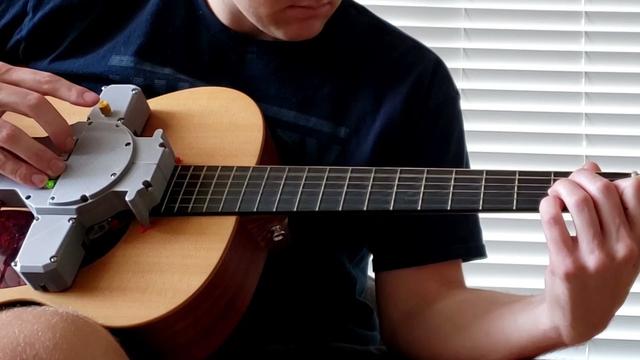
Playing the guitar requires speed, strength, and dexterity in both hands. Depending on your mobility level, rocking out with your axe might be impossible unless you could somehow hold down the strings and have a robot do the strumming for you.

[Jacob Stambaugh]'s Auto Strummer uses six lighted buttons to tell the hidden internal pick which string(s) to strum, which it does with the help of an Arduino Pro Mini and a stepper motor. If two or more buttons are pressed, all the strings between the outermost pair selected will be strummed. That little golden knob near the top is a pot that controls the strumming tempo.

[Jacob]'s impressive 3D-printed enclosure attaches to the guitar with a pair of spring-loaded clamps that grasp the edge of the sound hole. But don't fret -- there's plenty of foam padding under every point that touches the soundboard.

We were worried that the enclosure would block or muffle the sound, even though it sits about an inch above the hole. But as you can hear in the video after the break, that doesn't seem to be the case -- it sounds fantastic.

Never touched a real guitar, but love to play Guitar Hero? There's a robot for that, too.

#arduinohacks #musicalhacks #28byj48 #arduino #arduinopromini #bipolarsteppermotor #blinkenbuttons #guitar #steppermotor #strumming

Auto Strummer Can Plectrum The Whole Flat-Strumming Spectrum

Playing the guitar requires speed, strength, and dexterity in both hands. Depending on your mobility level, rocking out with your axe might be impossible unless you could somehow hold down the stri…

Hackaday