 LinuxGizmos.com [Unofficial]
ESP32 Bus Pirate Update Adds RF Tools, USB Host Mode, Signal Analysis, and Cellular Plans
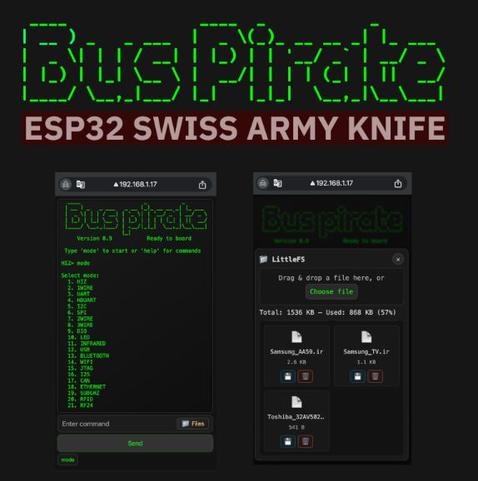
ESP32 Bus Pirate Update Adds RF Tools, USB Host Mode, Signal Analysis, and Cellular Plans
Now that I’ve successfully avoided FPGA-hell (thanks Quentin!) I used my copious free time to slide into GPIO-hell. I don’t have a screen or serial console at the moment on the Rock 4 SE, but whatever magic @armbian is trying to do in the fixup script to get 1Wire configured didn’t work here (see also https://github.com/MichaIng/DietPi/issues/7879#issuecomment-3686491513) and turned my GPIO4_D2 into "gpios = <0x8a 0x04 0x00 0xae>;” instead of “gpios = <0x1a 0x1a 0x00>;” that I need. Yay for handwritten DTSs!

After 15+ years of #Domiticz home automation software I figured it’s time to try Home Assistant, not really because I need it, more because I can.
My environment is quite large and complex so it’s going to be a long transition, bare with me
I’m using MQTT, a lot of Node-red logic, IKEA with gateway, a huge 1-wire network, several bash scripts, several Blocky scripts, Rfxcom with a lot of devices. Many scenarios and time events, ambient controls, and much more.
For now I have a Docker running HA and a ESPHome connected to the IKEA Gateway and realized that it can’t see the events from IR sensors and that I probably need a Zigbee gateway. Happy to get a nodeMCU showing the temp values from a DS18B20 Dallas on the GPIO pins but sadly realized that to configure each device it needs to be available as a pre built device. Hmmm and a lot of my devices are not yet integrated, this means I will need a 1-wire master for the HA, because I like to leave the Raspberry 1-wire setup as today. Why? Because I have to put too much work into it at every upgrade and the Rpi stability considering SD-cards are not the best. (Even though my last installation has run 4+ years on the same card)
Well, the slow journey has at least started towards a new environment, let’s see how it progresses
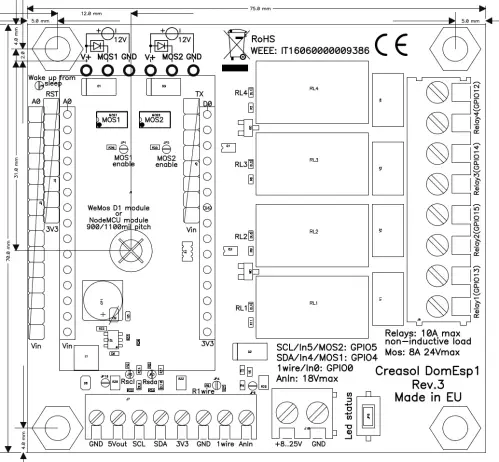
#ESP8266 board with #switchingpowersupply, 4 #relays 10A, 2 #mosfets 8A 30V (led #dimming), #I2C, #1Wire, analog input.
store.creasol.it/DomESP1


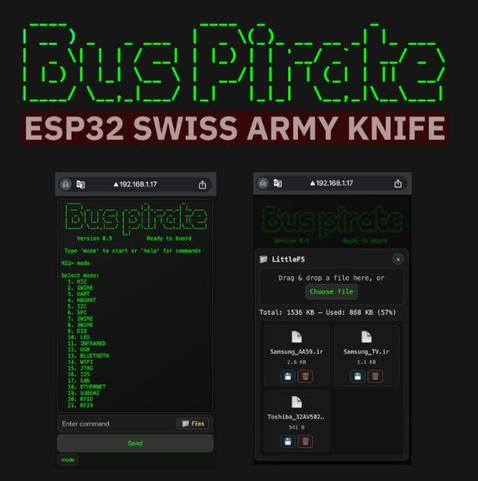
ESP32 Bus Pirate Turns Low-Cost Boards into Multi-Protocol Debugging Tools
Домофон Лидер-М. Как скрестить трубку с ключом и всем проиграть
Приветствую всех! Когда-то я уже рассказывал про цифровые домофоны и про то, как они работают. Но, как оказалось, их система с перемычками была далеко не единственной. В конце девяностых появилась ещё одна схема, использовавшаяся в малораспространённых питерских домофонах. Чем она была примечательна и почему она так и не получила распространения? Сейчас и узнаем.
https://habr.com/ru/companies/timeweb/articles/922724/
#домофон #ключи #1wire #лидер #блок_питания #dallas #timeweb_статьи
My central heating 1wire thermistor sensors stopped working after a long run of working fine for several months. Could be several things but it's finally time to replace the shonkey burglar alarm wire with proper cat5 twisted pair. Connecting all the thermistors along the wire is such a pain though urgh.
Чужой в модуле Wiren Board: вживляем контроллер Lavritech с LoRaWAN
Мы разрабатываем модульные контроллеры Lavritech и считаем, что если объединить два хороших устройства, то можно получить решение еще универсальнее и интереснее. Так и сделали: интегрировали контроллер Lavritech в разные Modbus-модули Wiren Board — релейные, аналоговых и дискретных входов, счетчики электроэнергии — из обычного модуля получили ПЛК. В статье подробно расскажем о том, как разрабатывали решение, какие проблемы преодолевали и что получили в итоге.
https://habr.com/ru/companies/wirenboard/articles/852966/
#wiren_board #lavritech #esp32 #контроллер #modbus #rs485 #плк #lorawan #1wire #разработка
Температурный датчик NST1002 от компании Novosense
Датчик заявлен как высокоточный, +/- 0.1 градуса для 0…+85 град. С, в корпусе DFN-2L. Для всего диапазона температур -40 … +150 градусов точность несколько хуже, до +/- 0.5 градуса. У датчика 15-ти битное АЦП, восемь разрядов на градусы и семь на дробную часть, что дает разрешающую способность 1/128 или 0.0078125 градуса. Время преобразования и считывания данных порядка 32-х миллисекунд. Подключается он по шине 1-Wire и имеет два варианта конструктивного исполнения: DFN-2L (1.6 x 0.8 мм) и TO-92S-2L (4.0 x 3.0 mm). Типовая схема подключения показана на Рис.1 и требует 2 ножки микроконтроллера. GPIO1 используется для управления обменом, GPIO2 для считывания данных. Рекомендуемое значение резистора 4.7 кОм @ 3.3 В.
 Entité terrestre auto-critique
 Volker Stolz🏳️🌈
 kaaswe
 Creasol - Smart Home solutions
 Habr
Habr
 John Leach
