
38 Followers
55 Following
330 Posts

Wir wollten eigentlich nur entspannt übernachten, sind aber (schon wieder!) über Sicherheitslücken in Hotelsoftware gestolpert. Diesmal mit dabei: 35 Millionen Buchungen, ein paar Jugendherbergen, Motel One und (wie immer) ein 🔢 zählendes Zerforschi.

Die ganze Geschichte lest ihr hier: https://zerforschung.org/posts/sihot/

Suche Entspannung, finde Datenleck

Hotels stehen für Schlaf, Urlaub, Reisen – und wohl auch für Datenlecks. Erneut haben wir eine Sicherheitslücke bei einer Hotelsoftware gefunden, diesmal mit vielen Millionen Betroffenen aus den letzten 10 Jahren. Mit dabei: ein saarländischer Softwareanbieter, eine Münchner Motel-Kette und (wie immer) ein zählendes Zerforschi. Die Kurzfassung vorab: Wir haben eine Reihe von Sicherheitslücken in SIHOT.WEB und SIHOT.GO! gefunden, die Zugriff auf die Reservierungs- und Gästedaten im System erlaubten. Betroffen waren unter anderem die DJH-Jugendherbergen in Mecklenburg-Vorpommern, Rheinland-Pfalz und dem Saarland, die Arbeiterwohlfahrtstochter AWO SANO, Motel One, der DeHoGa-Campus und eine Reihe von Hotelketten mit Namen wie “Fidelis” und “GSH”. Dabei wären nach unserer Schätzung insgesamt mehr als 35,5 Mio. Reservierungen und 48,5 Mio. Gästeprofile abrufbar gewesen. Alleine bei Motel One hätten damit schätzungsweise über 30 Mio. Reservierungen und mehr als 40 Mio. Gästeprofile abgerufen werden können, darunter auch Spitzenpolitiker*innen. Doch was genau ist passiert?

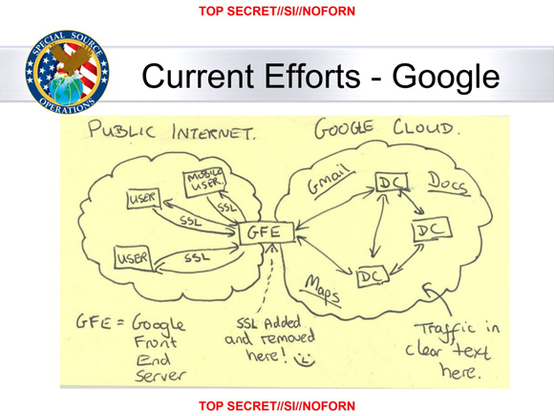
Whenever you see someone recommend Cloudflare or something else that decrypts and re-encrypts TLS for something, esp. for something related to open social media or media storage etc., reply with this picture from the Snowden leaks
Aktuelle Recherche: Es gibt eine massive Sicherheitslücke in Bluetooth-Kopfhörern. Dadurch lassen sich Gespräche abhören und - das fand ich besonders interessant - KI-Agenten missbrauchen, um Nachrichten zu verschicken, das Adressbuch auszulesen oder ähnliches (alles, was Siri & Co eben können und dürfen)
Betroffen sind auch Flagship-Modelle von Sony, JBL, Bose & Co. Achtung, die Lücke besteht aktuell!
(freier Link am Ende des 🧵 für Follower:innen)
https://www.zeit.de/digital/datenschutz/2025-06/sicherheitsluecke-software-bluetooth-kopfhoerer-spionage-daten
#cybersecurity
Sicherheitslücke: Millionen Kopfhörer sind abhörbar

Die Schwachstelle liegt bei einem unbekannten Chiphersteller. Angreifer können mithören und Smartphones übernehmen. Betroffen sind auch Modelle von Sony, Bose und JBL.

DIE ZEIT

The previous Monday, @troyhunt the creator of @haveibeenpwned made another stop on his Have I Been Pwned Alpine Grand Tour, visiting countries like Germany, France, Italy, and Switzerland to discuss his work. Several Zurich user groups were fortunate to hear him speak on various topics and join him for drinks afterward. His presentation covered his experience testifying before the U.S. Congress, some of the most significant breaches tracked on the platform, and insights into how Have I Been Pwned operates

After discovering that the data is accessible via the API and noticing the lack of a visualization tool, I dedicated a few evenings to building haveibeenpwned.watch. This single-page website processes and presents data on leaks from Have I Been Pwned, with daily updates.

The site provides details on the total number of recorded breaches, the number of unique services affected, and the total accounts compromised. Charts break down the data by year, showing the number of breaches, affected accounts, average accounts breached per year, accounts by data type, and accounts by industry. Additionally, tables highlight the most recent breaches, the most significant ones, and the services with the highest number of compromised accounts.

Though simple, the website can be a useful resource for use cases like strategic security planning, cybersecurity sales, risk assessment, or simply tracking trends in the security landscape.

The website is open source, with its repository hosted on GitHub.

Feel free to share any feedback or submit a pull request if you’d like to contribute.

Troy, thank you for hosting these in-person talks and for creating this essential service that the internet relies on!

[1] https://haveibeenpwned.watch
[2] https://github.com/iosifache/haveibeenpwned.watch

Mit dem Wissen über die Existenz dieses Kommunalpolitikers müsst ihr selber klar kommen. Gute Nacht Fedivers

@adulau yes!

When this happened to me, I was relatively lucky. The EU funded a short-term bug bounty on PuTTY and its supporting tools in early 2019. HackerOne ran it, and brought their own triage team, who took a lot of the load off me in terms of smacking down people who had missed the point entirely, or chancers who were putting in the least possible effort in the hope of getting lucky. I only had to get involved with stuff that made it through H1's team.

Even so, I was hard pressed to fix the bugs as fast as they came in, at least to begin with. By the end of the initial 8-week bounty period I was exhausted. When H1 said "we still have some money left, want to extend the period?" I was quite emphatic about needing a break first.

In a retrospective email exchange after it was all over, I made your same point, that funding 1000 people to feed bug reports to me and not helping me actually deal with them is a recipe for overload. Fortunately in this case it was only short-term, and I didn't have to do _all_ the triage myself – so surely it's even worse in cases where neither of those things is true.

Mind you, paying me wouldn't have stopped me being overloaded, in this case! It would have been nice, but in this instance, wouldn't have addressed the biggest problem.

Something that’s been bothering me for years in the security world: why do researchers demand bug bounties for vulnerabilities in open source projects, when the very contributors maintaining and fixing those issues get nothing, just goodwill?

It feels deeply unfair. The burden falls on unpaid maintainers, yet bounty hunters get rewarded. If you want a paid bounty, maybe help fund the people who actually fix the mess too.

#opensource #security #bugbounty

Ich habe heute versucht, etwas zu basteln. Teil der Arbeit war es, ein Programm mittels emscripten zu compilieren.

Leider stürzt das Programm an einer entscheidenden Stelle später immer mit "abort" ab.

Als ich den Fehler melden will, sehe ich im Bug Tracking System einen offenen Eintrag.

Da hat schon eine Person vor einem halben Jahr das gleiche Problem gemeldet.

Ich.

🤦

🚫 No fire detection means no going to sea.
If you're running the Consilium Safety CS5000 fire panel on board, hardcoded credentials could let an attacker shut it down remotely.
 
As a result, if the system is taken offline, your vessel could be detained, lose its class certification, or be prevented from sailing altogether.
 
There is no patch available. The vendor has stated they won’t fix the issue unless cybersecurity was part of your original contract.
 
If your panel was installed before July 2024, it likely wasn’t designed with modern cybersecurity in mind.
 
Andrew Tierney explains how we discovered the vulnerability, its implications for operators, and the steps you can take to mitigate the risk.
 
📌 Read here: https://www.pentestpartners.com/security-blog/fire-detection-system-been-pwned-youre-not-going-to-sea/
 
#MaritimeCyberSecurity #VulnerabilityResearch #OTSecurity #FireDetection #CyberRisk
🚨 *Attention!* We were made aware of a fake “KeePassXC Password Manager Pro” repository on GitHub that links to unverified external binary downloads.
- There is NO Pro version of KeePassXC!
- You get all the “Pro” features with the regular version.
Please download KeePassXC only from trusted distribution channels linked on https://keepassxc.org/ !
KeePassXC Password Manager

KeePassXC Password Manager