 Melanie Mitchell
Perspective paper by myself and David Krakauer is now published in PNAS:
"The Debate Over Understanding in AI's Large Language Models".

| Personal webpage | https://yangfengji.net/ |
| Group webpage | https://uvanlp.org/ |
| Medium | https://medium.com/@yangfengji |
Perspective paper by myself and David Krakauer is now published in PNAS:
"The Debate Over Understanding in AI's Large Language Models".
RT @yangfeng
Our group released a Python package of data valuation in machine learning, Valda. It supports five methods (LOO, Influence Function, TMC-Shapley, Beta-Shapley, and CS-Shapley) via a unified API. Please try it out if you are interested:
uvanlp.org/valda/
https://twitter.com/yangfeng_ji/status/1619365867648843777?s=46&t=LZRXyXdZET5khWrVCzE_6A
“Our group released a Python package of data valuation in machine learning, Valda. It supports five methods (LOO, Influence Function, TMC-Shapley, Beta-Shapley, and CS-Shapley) via a unified API. Please try it out if you are interested: https://t.co/IrkzJqbMlr @stephschoch”
It's amazing how #ChatGPT evolves every day.
When I asked "can I build a copy of you?" Here are what I got:
Left: no answer yesterday
Right: a very good answer today, although I found it a little intimidating 😅
Please check out the welcome page: https://neurips.cc/virtual/2022/index.html
There is a lot going on.
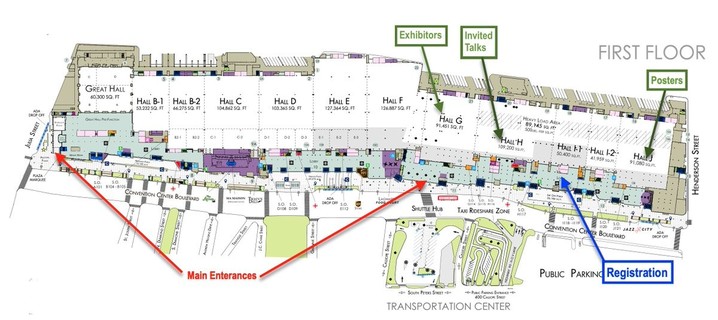
Keep this map of the venue handy!
Thanks for all the responses! It may help to distinguish two types of speculation (cf. https://terrytao.wordpress.com/career-advice/theres-more-to-mathematics-than-rigour-and-proofs/): "pre-rigorous speculation", in which one asks "dumb" questions (cf. https://terrytao.wordpress.com/career-advice/ask-yourself-dumb-questions-and-answer-them/) before fully knowing the field, and "post-rigorous speculation", in which one shares informed insights and opinions from one's rigorous understanding of the field.
I think we should encourage both types, in appropriate venues of course (and separated from traditional "rigorous" work).
I didn’t say the Cicero paper should be rejected and I would not necessarily advocate for that.
But there is something that makes me grumpy. Science, and, more notably, Nature have become the place for big-flashy-things. Often (but not always) these big flashy things have a moderate scientific innovation and a huge engineering achievement. That’s fine. Except Science and Nature are received by a wider, more general audience that is less able to parse the nuance. This in turn drives hype cycles.
 Jacob Eisenstein
 NeurIPSConf
 Terence Tao
 Mark Riedl