George Dillard

11 Followers
231 Following
107 Posts

Facts and artifacts from world history by George Dillard. Longer writing at https://worldhistory.medium.com or https://worldhistory.substack.com

#history, #climate, #environment, #education, #politics

Longer writing at my medium blog:https://worldhistory.medium.com
Substack:https://worldhistory.substack.com
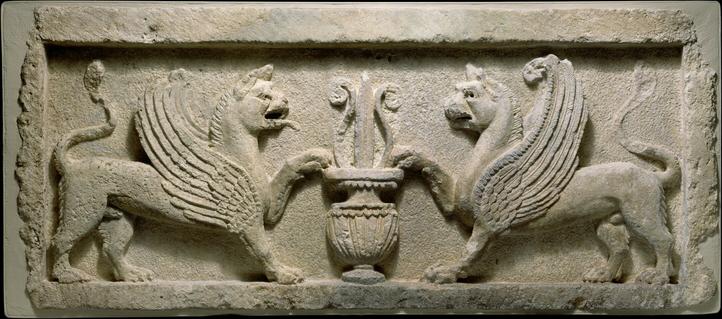
A door lintel from the second or third century CE, found in modern-day Iraq, near Mosul. The lintel features two griffins -- lion-bird hybrids -- facing a vase with a lotus flower in it. This artifact comes from the borderlands between the Roman empire and the Parthian empire, and features influences from each culture.
#history #histodons @histodons

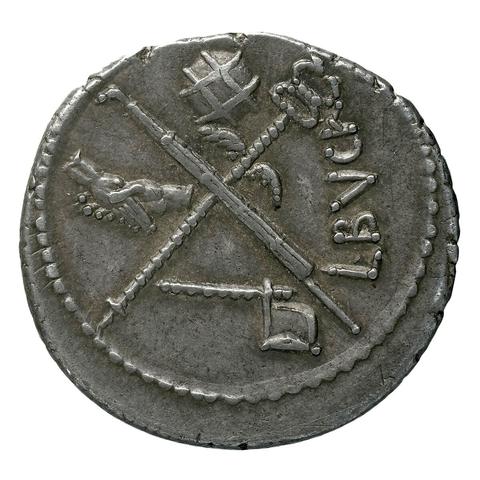
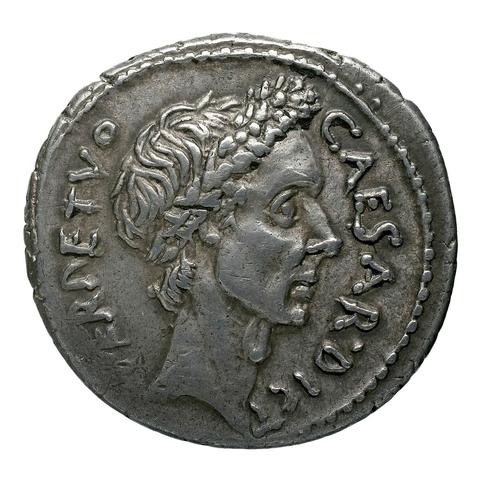
A Roman coin depicting Julius Caesar, reading "Caesar Dict Perpetuo" -- or Caesar, Dictator for life. On the back, we see the name L Buca -- Lucius Buca, one of the men in charge of making coins for the Roman empire -- along with the fasces (symbols of Roman power), a globe, shaking hands, and an axe. Caesar was named dictator for life after defeating Pompey in a civil war; a group of senators, furious that he would not share power, assassinated him.

#history #histodons @histodons

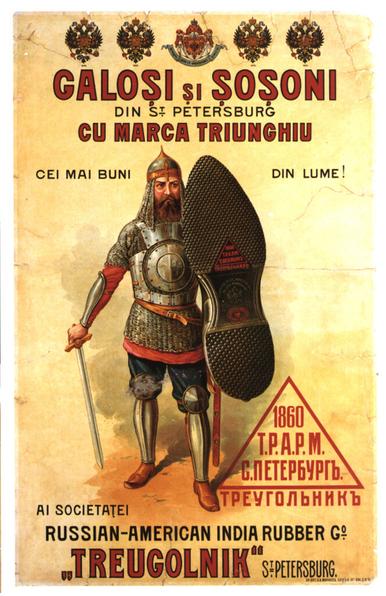
A couple of pre-World War I advertisements for shoes with grippy soles. Both are from the Russian empire, though the one with the knight is in Romanian, advertising that its products are "the best in the world."

#history #histodons @histodons

Seems like a problem that much journalism on #ChatGPT and punditry on AI and student #writing ... doesn't actually ask the students. They're experimenting and taking away different lessons:

- “Writing an AI generated paper was far more difficult than I would have expected.”
- “I would compare collaborating with [GPT-3] to being teamed up with the class ‘slacker.’”
- “I feel as though it would be much more effective for me to just write alone.”
- “Writing my prompts still required critical thought”
“This experiment altered my view of the definition of what qualifies as writing” and
👉 “I would recommend every person do a writing [experiment] similar to this one before they form any hard beliefs on AI-assisted writing”

Shared with permission from this semester's final assignments in HON202. The kids are all right.

The Pantheon, Rome c1860. Photo: Gioacchino Altobelli #History #Photography

“You can find us anywhere you get your podcasts.”

I *adore* this phrase, because it has been like two whole-ass decades and not one single venture capital darling has managed to unseat plain RSS as the distribution method for podcasts. Not one. (And they have really tried!)

Podcasts are just out there, like air. You don’t go to one place to get them; you get them from everywhere and anywhere. You can choose how you want to engage with them and manage them and it is legitimately heartwarming that nothing has ever gotten in the way of that being a fundamental fact.

This is the best of what the web is. It will never have a stock ticker or even a marketing scheme. Most people don’t even know it is there. But it endures (past the many, many attempts by squillionaire corporates to kill it) because of its absolute unshakable utility.

My suggestion: any time you hear “anywhere you get your podcasts”, send a little thanks to RSS for keeping the real web alive.

#RSS #Podcasts #ProtocolsNotProducts
A lukewarm take on the effect of ChatGPT and other AI tools on schools, in response to some of the overheated ones I've seen lately:

https://worldhistory.medium.com/no-the-essay-isnt-dead-7c80ef136084?sk=023d54ab71d1d1b25ace826ab3315e56

#history #education #edutooters @edutooters

No, the Essay Isn't Dead: What AI Means for Teachers and Students | Medium

Ai tools like ChatGPT won't kill the essay or end the teaching of writing in schools. But they will force educators to adjust in ways that will make their classes better.

Medium
Preserved Fish: a Semi-important Historical Figure With a Fun Name

Preserved Fish was an early member of the illustrious Fish clan, an important family in early American history. Among the most important Fishes were such delightfully named luminaries as Stuyvesant…

Medium

Two views of Gaston and Albert Tissandier flying in their balloon, "Zenith," 1876. The Tissandiers were pioneers of early aviation, ascending in balloons to heights that were sometimes so cold or oxygen-deprived that their lives were in danger. The Zenith reached an altitude of 28,000 feet -- almost equal to the summit of Mt. Everest -- in 1875.

#history #histodons @histodons

A bronze eagle, perhaps ready to take flight. Roman, 2nd century CE. Eagles were considered the most majestic birds by ancient Romans, and featured on the standards of legions. Being named the Aquilifer, or eagle-bearer, was one of the most prestigious positions a member of the legion could attain.
#history #ancient #histodons @histodons