
Rather than empowering users to access the services they need in a secure and safe way, the #eIDWallet risks becoming a tool of surveillance and control.
EDRi, @epicenter_works and other digital rights and consumer protection organisations across Europe wrote to the @EUCommission Commission to urge them to amend their plan and ensure that the rights of users are properly safeguarded.
Read the open letter ➡️ https://edri.org/our-work/the-eid-wallet-still-doesnt-deserve-your-full-trust/
RE: https://eupolicy.social/@je5perl/115696467286859905
Some good news from Denmark! The government has withdrawn the #VPN proposal after just five days, claiming that the proposal was misunderstood and that banning VPN use was never the intention. In that case, the drafting was exceptionally bad, and withdrawing the proposal is clearly the right thing to do.
(source: press release yesterday from the Ministry of Culture https://kum.dk/aktuelt/nyheder/kulturministeren-justerer-lovforslag-og-fjerner-afsnit-om-vpn).
Amazon once “pulled a book off your library shelf”—Vint Cerf, a pioneer of the internet, calls it shocking. How did the web drift so far from its roots?
Hear Cerf (Google), Cindy Cohn (EFF), Jon Stokes (Ars Technica) & the Internet Archive’s Brewster Kahle explore the past, present & future of the web on the Future Knowledge podcast.
🎧Listen & Subscribe ⤵️
https://futureknowledge.transistor.fm/episodes/the-open-web-at-a-crossroads-a-conversation-with-vint-cerf-brewster-kahle-cindy-cohn-jon-stokes
Note: Ensure that you are referring to the latest version of this Zenodo record. Introduction This is a guide for writing technical guides that are practical, precise, context-rich, and non-reductive. Most of its content as of December 2025 pertains to crisis response. This meta-guide is purportedly techno-feminist. It may be useful to writers, editors and reviewers of such guides, manuals, and explainers, as well as those who fund, evaluate, disseminate, or use them.For context, I am a techie who has written (refer to the section ‘My works’ in the files): Guides on protecting against digital stalking and image-based abuse. A manual on inclusivity considerations while designing mobile and web software. An online learning module on making events safe and welcoming. Technical explainers on these topics from the lens of democracy, rights, and governance (DRG): artificial intelligence and machine Learning (AI/ ML), automation, Internet of Things (IoT), sensors, robots, and drones. This guide may turn into a living document; I don’t know the final form it will take yet.I am using the guides I wrote as examples because: I want to show, not tell. I know the contents of those guides well, so this is the easiest and the least time-consuming for me to demonstrate certain points. The guides I refer to are aimed at both practitioners and survivors and attempt to bridge technical detail with conceptual clarity. I may analyse some good guides written by others later. If you have benefitted from reading this guide, I request that you make a financial contribution. https://ko-fi.com/supportrohini Small donations count, too. They will go into the operational expenses of the small and big things I do. I work with communities, most of which are under-resourced. Larger donations will pay for the valuable but invisible, unpaid labour of everyone involved. Thank you.
RE: https://procolix.social/@koen/115729500433444335
Voor wie meer wil weten over het @waag Public Nodes project waar wij aan meewerken: https://waag.org/nl/project/public-nodes/
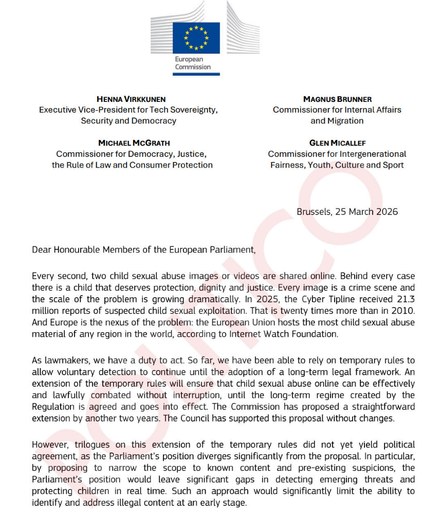
After a years-long battle, the European Commission’s “Chat Control” plan, which would mandate mass scanning and other encryption-breaking measures, at last codifies agreement on a position within the Council of the EU, representing EU States. The good news is that the most controversial part, the forced requirement to scan encrypted messages, is out. The bad news is there’s more to it than that.