UC Santa Cruz

@ucsc@mstdn.social
1.1K Followers
110 Following
217 Posts
The official Mastodon account of the University of California, Santa Cruz. Go Slugs!
Websitehttps://www.ucsc.edu
Instagramhttps://instagram.com/ucsc
Linkedinhttps://www.linkedin.com/school/2841/admin/
Facebookhttps://facebook.com/ucsantacruz

🌍 Emily Brodsky, an earth and planetary sciences professor at UC Santa Cruz, is unlocking the secrets behind earthquakes.

A world-renowned expert on the mechanics behind seismic shifts, Brodsky’s research delves into the triggers and forces at play during seismic events, providing insights into the processes inside fault zones during a slip.

Watch: https://youtu.be/QQQM67wuiy0

#research #earthquake #science

Emily Brodsky on earthquake mechanics

YouTube

24 in 2024! We've got 24 scientists and engineers from UC Santa Cruz who have earned a spot on the 2024 Highly Cited Researchers list, recently unveiled by Clarivate.

This prestigious list acknowledges researchers globally whose papers rank in the top 1% by citations for their respective fields and year of publication, highlighting their substantial influence in the research community.

See who made the list: https://bit.ly/3Zm1qd8

#research #academia #science #engineer

24 in 2024: list of most highly cited researchers includes UC Santa Cruz scientists and engineers

In a notable recognition of scholarly achievement, 24 scientists and engineers from UC Santa Cruz have earned a spot on the 2024 Highly Cited Researchers list, recently unveiled by Clarivate.

UC Santa Cruz News

Take a look at the three “Red Monsters,” captured by the James Webb Space Telescope.

An international team of astronomers—led by the University of Genova and UCSC's Garth Illingworth—identified these three ultra-massive galaxies as already present within the first billion years after the Big Bang.

This discovery is challenging current models of galaxy formation.

Find out why: https://bit.ly/3ACMVIo

#space #Astronomy #Research

Team discovers ultra-massive galaxies in early Universe that challenge standard cosmology

An international team of astronomers has identified three ultra-massive galaxies—each nearly as massive as the Milky Way—already in place within the first billion years after the Big Bang. The discovery is surprising because it indicates that the formation of stars in the early Universe was far more efficient than previously thought, challenging current models of galaxy formation.

UC Santa Cruz News

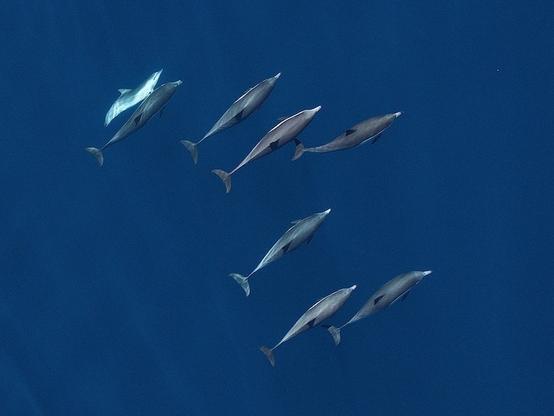
For the first time a team, including several UCSC scientists, has directly measured the behavioral responses of some of the most common marine mammals to military sonar.

The finding that surprised them most was that these animals were sensitive to the sounds at much lower levels than previously predicted.

The researchers then determined the types and likelihood of responses to known sonar exposures, which revealed unexpected behaviors.

Read more: https://bit.ly/3UtMx5G

#research #academia

Dolphins sense military sonar at much lower levels than regulators predict

For the first time ever, a team including several UC Santa Cruz scientists have directly measured the behavioral responses of some of the most common marine mammals to military sonar. And the finding that surprised them most was that these animals were sensitive to the sounds at much lower levels than previously predicted.

UC Santa Cruz News

Citizen scientists show up to help create new mapping techniques to empower bird conservation in Colombia!

UCSC's Natalia Ocampo-Peñuela and a team of Columbian researchers have introduced a transformative approach to mapping bird species distribution across Colombia, harnessing community science data and innovative modeling techniques.

These new sophisticated bird range and habitat maps will support conservation efforts for threatened species.

Read more: https://bit.ly/3AdmZ5S

#Research

New mapping techniques empower bird conservation in Colombia

Natalia Ocampo-Peñuela, assistant professor of environmental studies, and a team of Colombian researchers have introduced a transformative approach to mapping bird species distribution across Colombia, harnessing community science data and innovative modeling techniques.

UC Santa Cruz News

Will AI tools revolutionize public health?

UC Santa Cruz's Lucia Vitale examines the dual promises and concerns of AI in healthcare.

While AI could improve diagnostics and resource management, it also raises privacy, bias, and equity issues.

Vitale warns that focusing on AI might distract from deeper public health issues.

Read more on her study: https://bit.ly/47YV3z4

#science #research #AI

Will AI tools revolutionize public health? Not if they continue following old patterns, researchers argue.

A new paper published in the journal Social Science & Medicine shares findings from an extensive literature analysis of AI’s current trajectory in health care.

UC Santa Cruz News

🦣 🦤 🧬 Could we bring back the wooly mammoth or the dodo bird? Beth Shapiro, a professor of ecology and evolutionary biology at UC Santa Cruz, is pushing the boundaries of what's possible through paleogenomics and ancient DNA research.

Watch the full video of Beth's work: https://youtu.be/KTp8T4miOzM

The UC Santa Cruz Office of Research presents the “Research with Impact” video series highlighting the innovators and changemakers at UCSC.

#science #genomics #STEM #Research

Beth Shapiro on paleogenomics and ancient DNA

YouTube

What's that Mars? You've got dark matter?

A new study co-authored by UC Santa Cruz's Sarah Geller finds that a wobble from Mars could be a sign of dark matter.

New simulations suggest that there are enough primordial black holes—potential dark matter candidates—in the universe for one to pass through the inner solar system every decade. The work builds upon an astrophysical theory that has growing popularity.

https://bit.ly/3Y5nHes

#Astronomy #space #mars

A wobble from Mars could be sign of dark matter, new study finds

New simulations suggest that there are enough primordial black holes—potential dark matter candidates—in the universe for one to pass through the inner solar system every decade. The work builds upon an astrophysical theory that has growing popularity.

UC Santa Cruz News

In the late 1800s, the brown-bear population throughout the lower 48 U.S. states was estimated at over 50,000. Today, there are less than 2,000.

Enter conservation genomics.

The National Science Foundation will fund research at UCSC that will examine the DNA of brown bears and use genetic-sequencing technologies to study the effects of this rapid population decline, as well as the impacts of previous conservation-management actions.

https://news.ucsc.edu/2024/08/bear-dna.html

#science #Conservation #research

Bear DNA study to measure impact of conservation actions on genetic diversity

The National Science Foundation will fund research at UC Santa Cruz that will examine the DNA of brown bears in the lower 48 states, where the iconic beast’s numbers have seen catastrophic declines over the last century.

UC Santa Cruz News

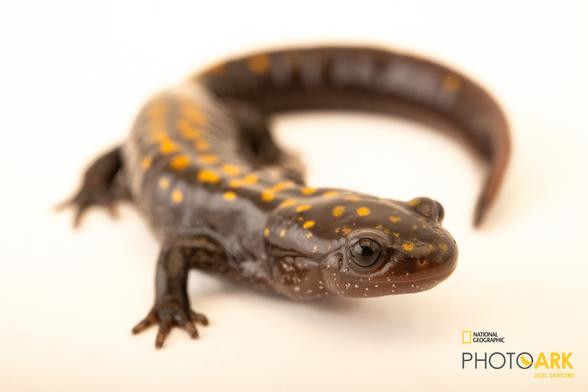
We love Banana Slugs, but our 2nd favorite critter is the Santa Cruz long toed salamander who is the 16,000th species to crawl onto National Geographic Society’s Photo Ark!

The Ark project draws attention to species at risk of extinction around the world -- the Santa Cruz salamander being one of them.

UCSC professor Eric Palkovacs and team have been studying the salamander with the goal of helping to conserve the species.

https://bit.ly/3ywb3eK

#science #conservation #research

Endangered Santa Cruz salamander featured in National Geographic photo project

National Geographic Explorer and photographer Joel Sartore visited the Coastal Science Campus to take pictures of the Santa Cruz long-toed salamander, one of many endangered species that UC Santa Cruz researchers are working hard to save.

UC Santa Cruz News