 Ged Maheux
Here’s your high-res moon fix. 🤓😜
1000 frames stacked using a Nikon Z8 and Takahashi TSA-120 telescope > modified GoPro.
Note: I am not the author/photographer, please do not credit me, found video!

Here’s your high-res moon fix. 🤓😜
1000 frames stacked using a Nikon Z8 and Takahashi TSA-120 telescope > modified GoPro.
Note: I am not the author/photographer, please do not credit me, found video!
Impuestos al carbono, ayudas a las renovables, normas de emisiones… ¿Qué políticas climáticas funcionan realmente?
Tras analizar 1.737 políticas climáticas individuales en 40 países durante 32 años, un estudio científico identifica 28 políticas que reducen de manera consistente las emisiones en diversos contextos.
Publicado originalmente en @theconversationes
#AcciónClimática #Impuestos #Mitigación #Movilidad #Renovables
https://climatica.coop/que-politicas-climaticas-funcionan-realmente/

Tras analizar 1.737 políticas climáticas individuales en 40 países durante 32 años, un estudio científico identifica 28 políticas que reducen de manera consistente las emisiones en diversos contextos.

Transformers are the dominant architecture in AI, yet why they work remains poorly understood. This paper offers a precise answer: a transformer is a Bayesian network. We establish this in five ways. First, we prove that every sigmoid transformer with any weights implements weighted loopy belief propagation on its implicit factor graph. One layer is one round of BP. This holds for any weights -- trained, random, or constructed. Formally verified against standard mathematical axioms. Second, we give a constructive proof that a transformer can implement exact belief propagation on any declared knowledge base. On knowledge bases without circular dependencies this yields provably correct probability estimates at every node. Formally verified against standard mathematical axioms. Third, we prove uniqueness: a sigmoid transformer that produces exact posteriors necessarily has BP weights. There is no other path through the sigmoid architecture to exact posteriors. Formally verified against standard mathematical axioms. Fourth, we delineate the AND/OR boolean structure of the transformer layer: attention is AND, the FFN is OR, and their strict alternation is Pearl's gather/update algorithm exactly. Fifth, we confirm all formal results experimentally, corroborating the Bayesian network characterization in practice. We also establish the practical viability of loopy belief propagation despite the current lack of a theoretical convergence guarantee. We further prove that verifiable inference requires a finite concept space. Any finite verification procedure can distinguish at most finitely many concepts. Without grounding, correctness is not defined. Hallucination is not a bug that scaling can fix. It is the structural consequence of operating without concepts. Formally verified against standard mathematical axioms.
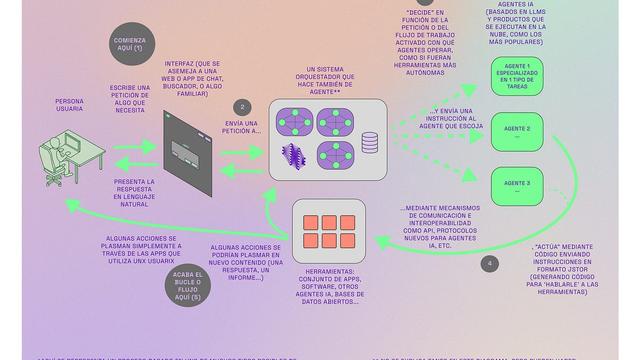
Sistemas y cambio no-linear
¿A qué nos referimos con cambio lineal? No exactamente se toma de las mates
El cambio lineal refiere a la concepción clásica europea de pensar que cualquier cambio (físico, social...) solo puede ser continuo y sin interrupciones, gradual, secuencial. Causa-efecto siempre conectados y proporcionales entre sí: A provoca B, luego C
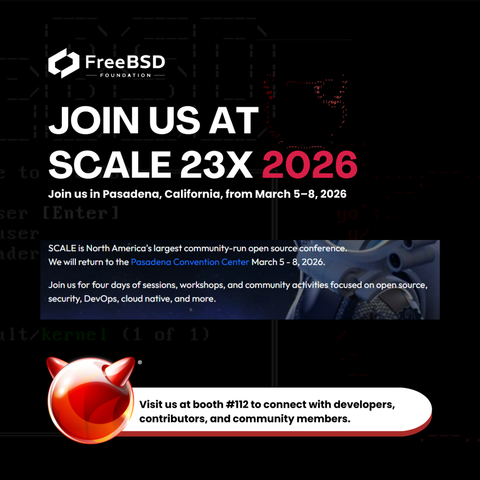
SCALE 23x is happening this week!
We’re excited to be back at SCALE, one of the best places to connect with the people building and supporting open source in the real world.
This year, we’re looking forward to:
Meeting community members, from new to longtime FreeBSD users
Connecting with fellow open source organizations and exploring what’s ahead in 2026
If you’ll be at SCALE 23x, stop by booth #112 and say hello; we’d love to meet you.
https://www.socallinuxexpo.org/scale/23x
#SCALE23x #FreeBSD #OpenSource


Autoregressive decoding is bottlenecked by its sequential nature. Speculative decoding has become a standard way to accelerate inference by using a fast draft model to predict upcoming tokens from a slower target model, and then verifying them in parallel with a single target model forward pass. However, speculative decoding itself relies on a sequential dependence between speculation and verification. We introduce speculative speculative decoding (SSD) to parallelize these operations. While a verification is ongoing, the draft model predicts likely verification outcomes and prepares speculations pre-emptively for them. If the actual verification outcome is then in the predicted set, a speculation can be returned immediately, eliminating drafting overhead entirely. We identify three key challenges presented by speculative speculative decoding, and suggest principled methods to solve each. The result is Saguaro, an optimized SSD algorithm. Our implementation is up to 2x faster than optimized speculative decoding baselines and up to 5x faster than autoregressive decoding with open source inference engines.
 Climática
 Curated Hacker News
 Elisabet Roselló
 FreeBSD Foundation
 José Fernando Ramírez
 Daniel Marín