 Twra Sun
Das #Bundesverkehrsministerium geht wegen der Folgekosten der gescheiterten #PKWMaut (243 Millionen Euro 🤷🏻♂️) nicht juristisch gegen den früheren Ressortchef Andreas #Scheuer (CSU) vor.
Andreas Scheuer: ⬇️ ⬇️ ⬇️

@Ilsebyl Twitter | dada mining and derp learning | TU Eindhoven | she/her
🔗 sibylse.github.io/ZeroShades/
Das #Bundesverkehrsministerium geht wegen der Folgekosten der gescheiterten #PKWMaut (243 Millionen Euro 🤷🏻♂️) nicht juristisch gegen den früheren Ressortchef Andreas #Scheuer (CSU) vor.
Andreas Scheuer: ⬇️ ⬇️ ⬇️
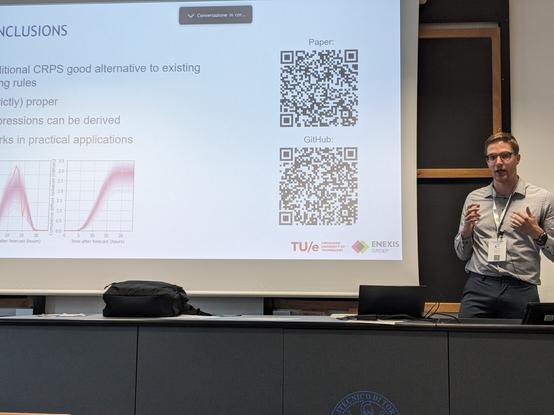
I'm in #ECMLPKDD2023:
Presenting https://link.springer.com/article/10.1007/s10994-022-06277-7 in room A9i today 2pm
Exciting work on embeddings in databases
Tomorrow in the Causal Machine Learning for Operational Decision Making workshop, I'll be giving a keynote on various results on individualizing treatment effet: how to select models, to choose covariates, and summary statistics
https://upliftworkshop.ipipan.waw.pl
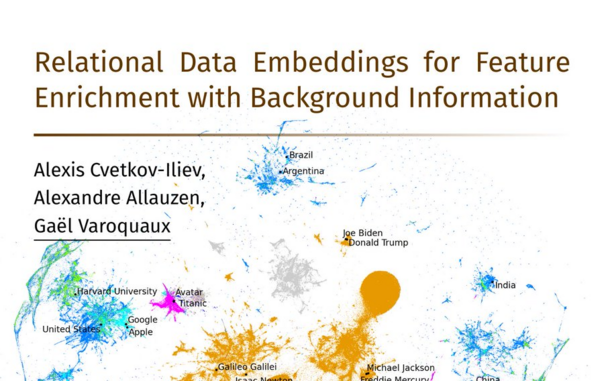

For many machine-learning tasks, augmenting the data table at hand with features built from external sources is key to improving performance. For instance, estimating housing prices benefits from background information on the location, such as the population density or the average income. However, this information must often be assembled across many tables, requiring time and expertise from the data scientist. Instead, we propose to replace human-crafted features by vectorial representations of entities (e.g. cities) that capture the corresponding information. We represent the relational data on the entities as a graph and adapt graph-embedding methods to create feature vectors for each entity. We show that two technical ingredients are crucial: modeling well the different relationships between entities, and capturing numerical attributes. We adapt knowledge graph embedding methods that were primarily designed for graph completion. Yet, they model only discrete entities, while creating good feature vectors from relational data also requires capturing numerical attributes. For this, we introduce KEN: Knowledge Embedding with Numbers. We thoroughly evaluate approaches to enrich features with background information on 7 prediction tasks. We show that a good embedding model coupled with KEN can perform better than manually handcrafted features, while requiring much less human effort. It is also competitive with combinatorial feature engineering methods, but much more scalable. Our approach can be applied to huge databases, creating general-purpose feature vectors reusable in various downstream tasks.
Leaving Scotland after more than 10 years is bittersweet. I came here as a visiting PhD student in 2012, stayed for a postdoc, and then lectureships at Glasgow and Edinburgh.
I made my career here in Scotland.
I made many friends here.
I met my wife here.
But the UK has changed significantly since I came, and not for the better, thanks to Brexit and the Tories. Leaving broken UK academia feels good. I look forward to getting involved in improving German academia.
Überraschend reflektiert
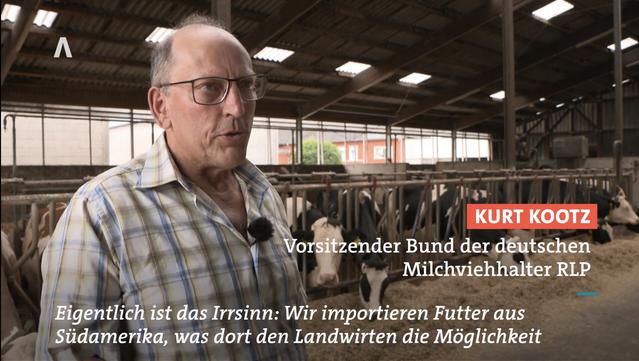
„Eigentlich ist das Irrsinn: Wir importieren Futter aus Südamerika, was dort den Landwirten die Möglichkeit vorenthält, Lebensmittel zu produzieren. Sie haben Hunger, weil Soja für das europäische Rindvieh produziert wird. Wir produzieren mit diesem Soja Produkte, die wir hier nicht brauchen, exportieren die zu Dumpingpreisen - am besten noch nach Afrika, ruinieren dort die Landwirte, die dann irgendwann als Flüchtlinge hier vor der Tür stehen.“
Die afd will Homosexuelle in Thüringen zählen lassen
Faschisten machen Faschistensachen
🧵 1/
While we justifiably fight about opaque algorithms, there's a more sinister opacity -- whether an algorithm exists in the first place. But the solution isn't just making things "transparent". 🤯
💯 Next to bad algorithms in law enforcement, the next most sinister one that undoubtedly touches almost everyone are algorithms around housing.
💡 Often people aren't even aware there's an algorithm pulling the strings behind the scene.

The vast tenant screening industry is subject to less regulation than credit scoring agencies, even though experts warn that algorithms could introduce racial or other illegal biases that can prevent people from getting housing.
 José Oramas
 Gaël Varoquaux
 Michel Steuwer
 Brokkoli-Muskel-Skeletor
 Jonda
Jonda
 Holger Hellinger
 Matteo Riondato
 Upol Ehsan