More on the #Yellowstone #hydrothermal_explosion from Mike Poland at the #USGS...

| Lab | http://www.stromberglab.org/ |
| ResearchGate | https://www.researchgate.net/profile/Christopher-Schiller-2 |
| Google Scholar | https://scholar.google.com/citations?user=RHMYif4AAAAJ |
More on the #Yellowstone #hydrothermal_explosion from Mike Poland at the #USGS...
In my PhD work, we documented the ecological impacts of #hydrothermal_explosion events in #Yellowstone that were significantly larger than the one yesterday in Biscuit Basin. About 13,000 years ago, Mary Bay on the north shore of Yellowstone lake was formed by the largest hydrothermal explosion known in world history, blanketing >390 km2 in debris. Yellowstone experience large hydrothermal explosions about once every 1000 years.
Compare yesterday's #hydrothermal_explosion with the frequent explosions that occurred in at Excelsior Geyser between 1878 and 1881. These frequent explosions were documented by F Jay Haynes photographs.
The images coming out of the #hydrothermal_explosion in #Yellowstone yesterday are so dramatic! Grateful that no one was hurt, but the #USGS is right when they say that this was a small explosion! Large hydrothermal explosions occurred in Yellowstone's distant past...
https://www.npr.org/2024/07/23/nx-s1-5049944/hydrothermal-explosion-yellowstone-national-park
https://volcanoes.usgs.gov/hans-public/notice/DOI-USGS-YVO-2024-07-23T19:18:45+00:00
Very important petition! This paleontological museum in Columbia hosts an exquisite collection of tropical Miocene South American mammals--it has also been a tremendous resource for researchers from the University of Washington. This is part of a push to pressure the government to fix the roads so that the museum can stay open!
We are all mourning this week the loss of Estella Leopold, great conservationist, paleobotanist, and my own academic grandmother. Estella founded the paleobotany program at #UW and built our understanding of how ecosystemas of the #PNW have changed over millions of years. Her collections and legacy are at the heart of all of the paleobotany work we do at the #BurkeMuseum. I'm so terribly honored to have known you.
https://www.wuwm.com/2024-02-28/aldo-leopold-daughter-estella-leopold-died
#Kelp is probably older than once thought--originating more than 32 million years ago! #Fossils from the Olympic Peninsula in Washington preserve holdfasts, the "roots" that anchor kelp to the seafloor. This ties kelps to the cooling of the Oligocene epoch!
Cool work and NPR interview from Jim Goedert!
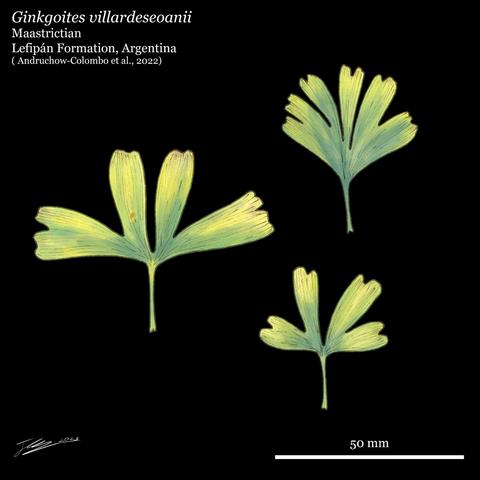
El artículo describe flora fósil de los periodos Devónico a Triásico en Chile, mostrando la evolución de las plantas en un lapso de 180 millones de años, contribuyendo así al conocimiento paleobotánico en Chile, un campo con gran potencial pero aún poco explorado, y que resulta clave para entender la dinámica de los ecosistemas actuales y futuros en relación al cambio climático


 Julianne (Jules) Kiely
 Arrayán 🌿