| Location | Thousand Oaks, CA |
| @pottslab | |
| Google scholar | https://scholar.google.com/citations?user=stfL2RUAAAAJ&hl=en&oi=ao |

Ryan Potts, Ph.D.
- 121 Followers
- 32 Following
- 28 Posts
Head of Induced Proximity Platform @Amgen | Scientist | Father
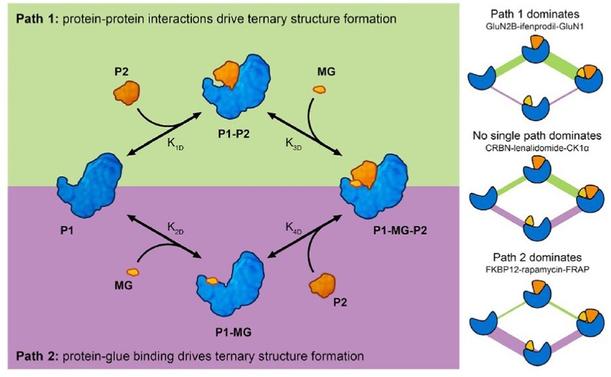
Analysis of molecular glue-induced ternary structures indicate that there are 2 main pathways of how ternary structure is formed; Path 1) a protein–protein binary interface is formed first and then the complex incorporates a small molecule ligand at the interface or Path 2) small molecule binds to a protein partner first, which leads to altered protein surface properties, much like the effects of post-translational modification, making this surface available for association with another protein
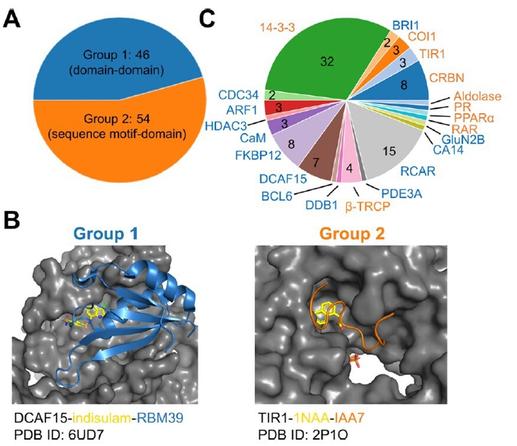
We summarize >100 molecular glue-induced ternary complexes, Group 1) features interactions between proteins with well-folded domains, Group 2) one of the binding partners is a stretch of residues that contains a specific pattern for binding based on interaction mode.