 feliks✨
| Profile image | Inset image of chap in silver cycle helmet, black biker jacket and batik facemask, background is tree branches decorated with molymod of an amino acid |

| Profile image | Inset image of chap in silver cycle helmet, black biker jacket and batik facemask, background is tree branches decorated with molymod of an amino acid |
This is particularly lucid and insightful:

Nanopore sequencing technologies are used widely in genomics research and their adoption continues to accelerate. 'Basecalling' is an essential step in the nanopore sequencing workflow, during which raw electrical signals are translated into nucleotide sequences. The current state-of-the-art basecaller, Oxford Nanopore Technologies (ONT) software 'Dorado,' relies on proprietary, platform-specific NVIDIA GPU optimisations bundled in the closed-source 'Koi' library. As a result, practical, high-speed basecalling is effectively restricted to a narrow class of supported hardware, limiting accessibility, portability, and innovation. We present (1) 'Openfish,' an open-source GPU-accelerated nanopore basecaller decoding library that provides a competitive alternative to ONT's proprietary Koi library; and (2) Slorado, a fully open-source basecalling framework that supports both DNA and RNA with equivalent accuracy to Dorado. Together, Openfish and Slorado remove the hardware lock-in that currently limits high-performance nanopore basecalling. Our framework scales efficiently across heterogeneous computing environments, from low-power embedded devices to GPU-equipped datacenters, without sacrificing speed or accuracy. Openfish and Slorado are available as free open-source packages for basecalling research, optimisation and deployment beyond the constraints of proprietary software and hardware ecosystems: Openfish: https://github.com/warp9seq/openfish, Slorado: https://github.com/BonsonW/slorado. ### Competing Interest Statement B.W., H.S., I.W.D. and H.G. have previously received travel and accommodation expenses from ONT. I.W.D. manages a fee-for-service sequencing facility at the Garvan Institute and is a customer of ONT and Pacific BioSciences but has no further financial relationship. This project was partially supported through philanthropic funding from AMD. G.S., H,J., and K.D. are employees of AMD. H.G. has a paid consultant role with Swan Genomics PTY. The authors declare no other competing financial or non-financial interests. Australian Research Council, DE230100178
When pavement ants (the little reddish brown ants you see in sidewalk cracks) have intra-species war they use the concept of a one-to-one correspondence to determine who has a larger army.
Ants pair off locking jaws with another ant of similar size.
Any leftover ants from the larger colony will gang up two on one against the other colony.
Then based on things only ants know either they all go home OR one colony overwhelms the other.
But most of the time only a few ants die.
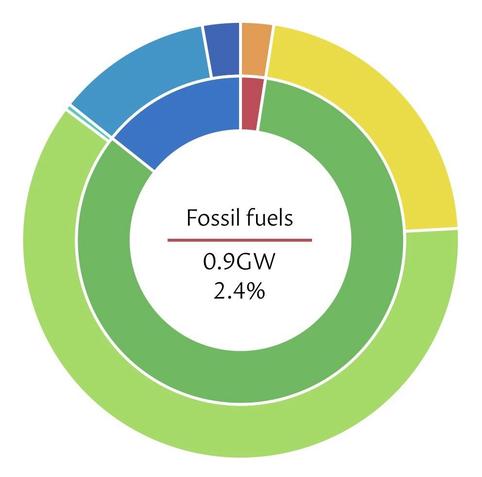
Using machine learning to model brains, proteins, materials: ok.
Using LLMs to produce summaries: fucking stupid
 Santiago Andrés Triana
 Dr Susi Arnott
 bioRxiv
 Trish Greenhalgh
 myrmepropagandist
 Kate Morley
 Eris2cats
 Jonathan Schofield