40 Followers
79 Following
39 Posts
Associate Prof. of Biological Sciences @ Columbia University

Glad to have the pLSM light sheet microscopy work out now in Nature Biomedical Engineering!
https://www.nature.com/articles/s41551-024-01249-9

pLSM framework is essentially about making cutting-edge light sheet microscopy capabilities broadly accessible, at a small fraction of cost with highly simplified mechanical, optical and computational footprints. We are also hard at work to further streamline ways to get the system in the hands of interested users fast - more on that soon.

Youtube: https://www.youtube.com/playlist?list=PLXQ8jqcqgW9DVrepPeLzAHwnEqtsX-N7M

Low-cost and scalable projected light-sheet microscopy for the high-resolution imaging of cleared tissue and living samples - Nature Biomedical Engineering

A light-sheet fluorescence microscope leveraging consumer-grade components as well as optimized optics and software facilitates the high-resolution imaging of cleared and living samples at scale with lower costs.

Nature
New Study Maps Ketamine's Effects on Brain

A mouse study found that the drug can alter the brain's dopamine system, boosting the case for more targeted medical use.

Columbia News
@paravatar hi Peter. Sorry since I havent been active on social media in last days, missed your comment. The projector is still available and as I understand second generation is also out (or coming out soon). We just bought 10 of them. We will soon update the manuscript with additional options and more info. If you are interested please write me an email and I can ensure pointing to right direction. Thank you for your nice words!!
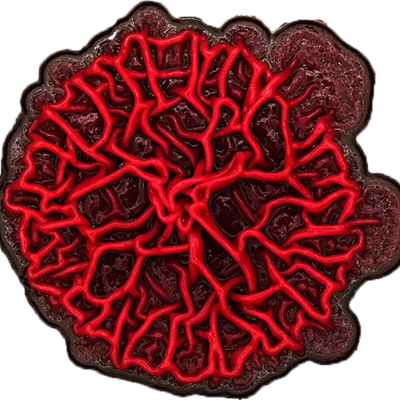
Light-sheet imaging of biofilms at the air-liquid interface. Check out the distinct cell layers and bacteria zipping around like comets in the liquid 💫. Honored to be part of this amazing study by @rajutomer ’s lab and collaborators. https://www.biorxiv.org/content/10.1101/2023.05.31.543173v2
@albertcardona thank you so much for your kind words Albert!!

Happy to introduce our latest gizmo from the lab: pLSM !
https://www.biorxiv.org/content/10.1101/2023.05.31.543173v1

A big shoutout to our brilliant grad student, Yannan Chen, who led this work.

In short, pLSM is a plug-and-play, cost-effective and easy-to-scale light sheet microscopy platform. More than 20 times cheaper, with imaging quality comparable to high-end systems.

https://github.com/tomerlab/pLSM-Control

#LSFM #preprint #biorxiv #lightsheet #dopamine

Overall, in this study we found that brain medication (such as antidepressant) can have profound (though dose-dependent) complex impact on brain structure, when used for long time or abused as recreational drugs.

Also, particularly happy as this is one of few studies which show the utility of employing unbiased whole-brain approaches to discover the complex (non-uniform) changes in brain by external stresses (such as medication or drugs).

(4) Last, but not least, we also analyzed the impact of ketamine on the mRNA as well as protein levels (of TH), discovering that such profound structural plasticity in the dopamine system, at least in parts, is facilitated by post-transcriptional regulatory mechanisms for rapid brain-wide adaptations.
(3) Because of the high resolution of our whole-brain datasets, we could also analyze changes in the long-range brain-wide neuronal projections. Strikingly, we observed increases in TH+ neuronal projections to PFC-related related regions and decreases within sensory regions (e.g., within auditory and visual cortex). This has a nice parallel with dissociative effects of ketamine in disconnecting the brain (i.e. cognition) from real world (i.e. senses).
Indeed, we found that Ketamine exposure for 10 days results in broad and divergent brain-wide changes in the dopamine system i.e. affecting some brain regions positively and others negatively, which is quite a surprising finding as until now the understanding was of the activating impact of ketamine. Specifically, we found decreases in dopamine neurons within behavioral state related mid-brain regions (dorsal raphe, retrorubral area etc) and increases in hypothalamic domains (ARH, PVp etc).