 tapeloop
Hang on, was it seriously DNS again?

Paul
- 85 Followers
- 187 Following
- 172 Posts
Founder & Principal Consultant at IDenovate, helping startups and F500 companies figure out what’s next in enterprise identity and identity security. Former Co-founder and COO @ Remediant. Recovering IT Project Manager. Scoutdad and dogdad too!
 MiralomaLove
The recordings and slides from Identiverse 2025 are now online:
https://events.identiverse.com/2025/on-demand-content
If you're interested in the two sessions I presented, they're both on the Day 4: Friday, June 6 tab.
https://events.identiverse.com/2025/on-demand-content
If you're interested in the two sessions I presented, they're both on the Day 4: Friday, June 6 tab.
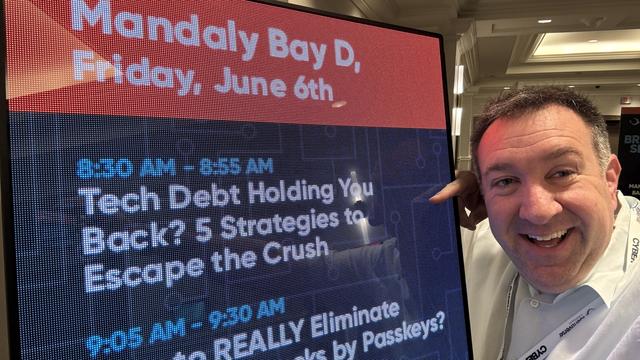
Excited to be giving this #identiverse talk this morning! Enterprise Tech Debt in identity stacks can hold back your teams ability to innovate… but it doesn’t have to.
I would like to have words with whomever at AWS decided to name the thing under an Organization an "account" because this one stupid thing costs me HOURS a week in communication clarifications
I'm in for one of my identiverse talks! Yay!
 nixCraft 🐧
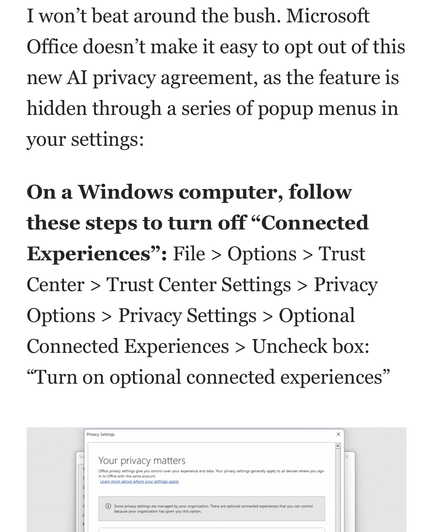
Microsoft Connected Experiences means they collect your Word and Excel files for AI training. Why not call it AI training? Why use such words? This is an unethical practice followed by a trillion-dollar corporation. How is this even legal? I am so glad that I don’t have Windows OS or MS office.
 Sharon Goldberg
Great article on our work on the Blast-RADIUS attack by @dangoodin.

 Dan Goodin
One of the most widely used network protocols is vulnerable to a newly discovered attack that can allow adversaries to gain control over a range of environments, including industrial controllers, telecommunications services, ISPs, and all manner of enterprise networks.
Short for Remote Authentication Dial-In User Service, RADIUS harkens back to the days of dial-in Internet and network access through public switched telephone networks. It has remained the de facto standard for lightweight authentication ever since and is supported in virtually all switches, routers, access points, and VPN concentrators shipped in the past two decades. Despite its early origins, RADIUS remains an essential staple for managing client-server interactions.
Since 1994, RADIUS has relied on an improvised, home-grown use of the MD5 hash function. The result is “Blast RADIUS,” a complex attack that allows an attacker with an active adversary-in-the-middle position to gain administrator access to devices that use RADIUS to authenticate themselves to a server.