also phil_kalina on threads
| #MachineLearning | |
| #statistics |
| #MachineLearning | |
| #statistics |
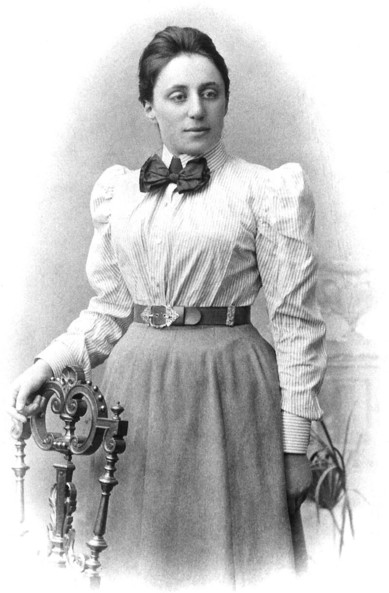
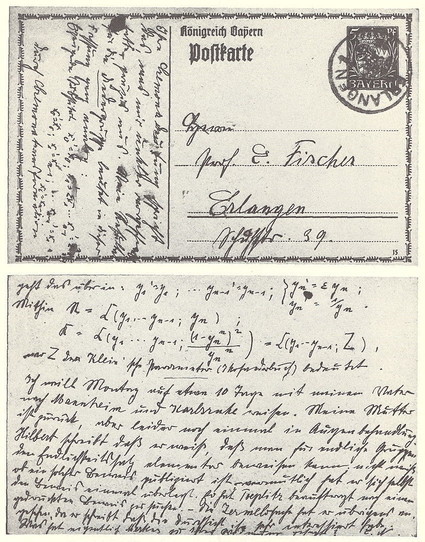
German mathematician Emmy Noether was born #OTD in 1882.
One of her most significant contributions is Noether's Theorem, which establishes a fundamental connection between symmetries & conservation laws in physics. This theorem has had profound implications in fields such as quantum mechanics, particle physics & field theory. Despite facing discrimination as a woman in academia during her time, Noether persevered & made enduring contributions to mathematics and physics.
Enormous thank you to PyData Amsterdam for inviting me to keynote. Slides and notes from my talk, "Build and keep your context window" are all here, and if you're in Amsterdam say hi. :)
https://vickiboykis.com/2023/09/13/build-and-keep-your-context-window/
Starting a reading list for only normcore content around LLMs. What would you add?
Normcore = no hype, no langchain, no AI is going to destroy us all, but practical, technical readings in navigating in this brave new world.
https://gist.github.com/veekaybee/be375ab33085102f9027853128dc5f0e

What: Data Days is a local conference focused on promoting the use of data in the nonprofit and civic sectors (civic data). Data Days CLE (Cleveland) sparks conversation, ideas, and builds capacity in the space where data, information, and community intersect. What is civic data? Civic data is information and data that comes from governments, nonprofits, libraries, and other community-based organizations, and information about the human or environmental components of a community. Here's an accessible definition of civic data, and a second, more technical one. Who: We want YOU! Submit a session proposal to speak at the Data Days CLE 2023 conference. Who should submit a session? People who like people and data: You don't have to be a data expert or technical expert. Anyone who has something to say about how data, information, and community intersect is welcome. Data experts: We love you too. We will challenge you to make your knowledge and skills relevant and accessible to an audience with diverse skill sets. Where and when: Data Days 2023 will be held Thursday, October 12th at the Main Branch of the Cleveland Public Library. Why: In an era where data can be used to reinforce existing biases and structural problems, we believe in the imperative to make data an equalizing force in solving community problems, lending power to the disadvantaged. More about sessions: Submit your session proposal using this form by Friday, July 21st. The planning committee will review all submissions and make final selections early in August. All selected presenters will receive free admission to Data Days CLE. This year, we're aiming for 4 tracks: A track aimed at the "data curious," people who are new to thinking about and using data in the civic space. Example potential sessions: A Beginner's Guide to Civic Data, What Community Members Should Know About AI, A Guide To Understanding the Civic Budget. A track aimed at the more experienced civic data user/data professional. Example potential sessions: Building Data Pipelines with Civic Data, New Accessible Data Tools, Ethical AI and Civic Decision Making. A track showcasing great uses of data in the civic sphere in NEO (our bread and butter). Example potential sessions: Examining Cleveland's Nonprofit Landscape with Data, How COVID-19 Changed the Health Data Landscape. A track focused on building the civic data community. Example potential sessions: Centering Humanity in Civic Data and Decisions, How Are You Making Data More Accessible? (a discussion). We think a variety of session formats make for a good conference. Session types are described below. Sessions are generally a total of 55 minutes in length; shorter "lightning" sessions are grouped together into a 55 minute block, workshop/training sessions can be up to 85 minutes. With each session type, we believe in reserving a healthy amount of session time for discussion with attendees. Singular presenter or panel presentation- this type of session is made up of a single presenter or a group of presenters and a facilitator. The presentation component must be kept to 25-35 minutes, reserving 20-30 minutes for discussion and attendee Q&A. Facilitated conversation- this type of session is made up of a conversation facilitator who is posing a question to session attendees and hosting a conversation. The entire 55 minute session is devoted to discussion. Lightning talk- this type of session is a brief 10 minute presentation, usually given by a single presenter, given the short time frame. Conference planners group lightning talks together into a session or two with time for attendee Q&A. Workshop or training- in this type of session, the presenter seeks to teach the audience about a data set, technology, or skill. We can host 55 minute or 85 minute workshops. Workshops need to have a mix of lecture/instructional time and hands-on/interactive time. Please keep lecture/instructional time to 25 minutes for a 55 minute workshop and 40 minutes for an 85 minute workshop. The rest of the time should be hands-on, assisting attendees in learning, or questions and answer. This hands-on time can be integrated throughout the workshop. There are additional questions in this form for those submitting workshops. Have a great idea that just doesn't quite fit with what's described above? Have any other questions? Don't hesitate to reach out to [email protected].
 🇺🇸 JewWhoHasItAll
 Project Gutenberg
 Sheril Kirshenbaum
 Taylor Lorenz
 Vicki Boykis
 David D. Levine


 Philip Bump
 Kevin Leeson