pgMustard

@pgmustard
26 Followers
1 Following
40 Posts
A visualisation tool for PostgreSQL explain analyze, that also gives performance advice. Posts by @michristofides
Websitehttps://www.pgmustard.com
Statushttps://status.pgmustard.com

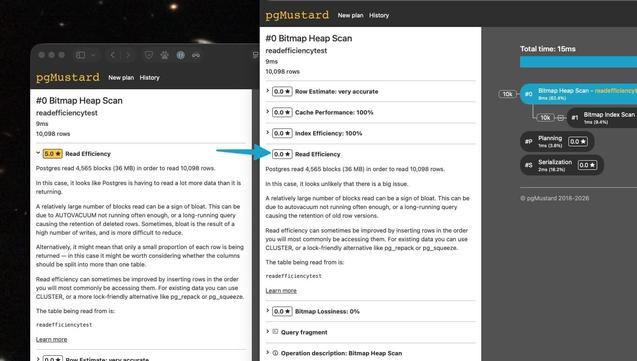
Our Read Efficiency tips are now more efficient to read!

📝 Better wording, mostly for clarity

🔬 More specific to the scan type, and therefore shorter in most cases

🌟 Improved scoring, especially for Bitmap Heap Scans

More details: https://www.pgmustard.com/changelog
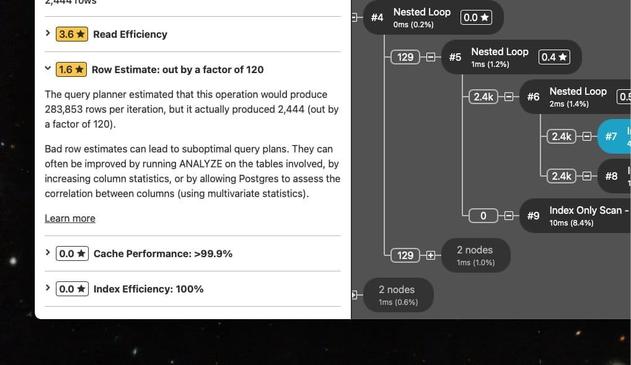
Bad row count estimates are a common cause of slow queries.

We've had a tip for them in pgMustard from the start, but we've just finished a revamp of it, mostly to make the advice in several common cases clearer. We also now report the ratios a little more naturally.

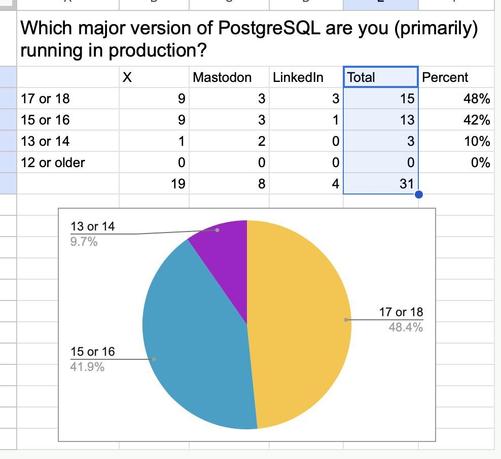
It was a very small sample size, but we were impressed with the number of people running newer Postgres versions in our recent poll 🙌

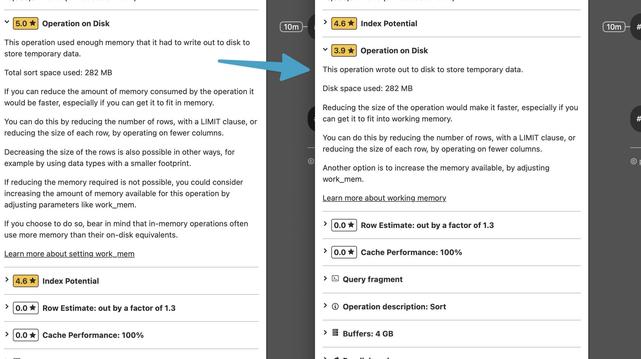
We've revamped our "Operation on Disk" tips ✨

* Made them clearer
* Made them more succinct (in most cases)
* Improved the scoring
* Mention hash_mem_multiplier (when relevant)
* Show "Operation in Memory" in more cases, with the memory used
* Updated the linked blog post

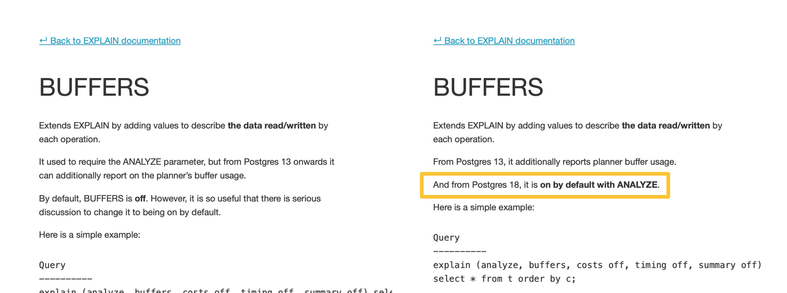
We're in the process of updating our EXPLAIN glossary for Postgres 18.

This change was particularly satisfying 🎉

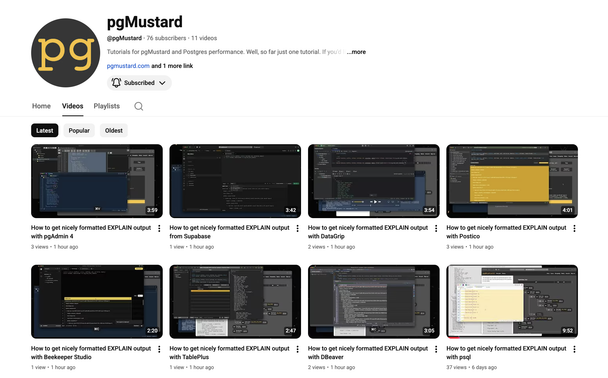
The next chapter in our 7-year battle with EXPLAIN formatting: new demo videos showing how to get nicely formatted query plans in your tool of choice.

https://www.youtube.com/@pgMustard

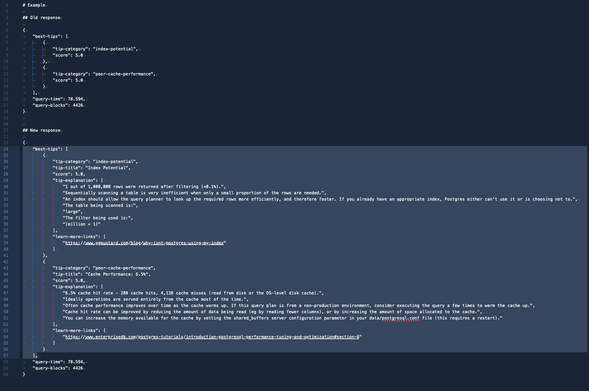
We've added more info to our /score endpoint.

This includes tips titles, tip explanations, and learn more links — much like you see when using pgMustard manually. The idea is to help folks prioritize better, and resolve issues quickly.

Docs: https://www.pgmustard.com/docs/score-endpoint

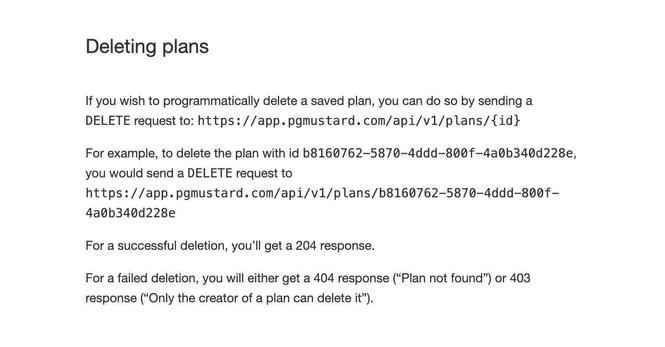
In case you didn't know, we have an API for saving or scoring query plans via pgMustard. Thanks to a (very reasonable) customer request, we recently added the ability to also delete saved plans via the API

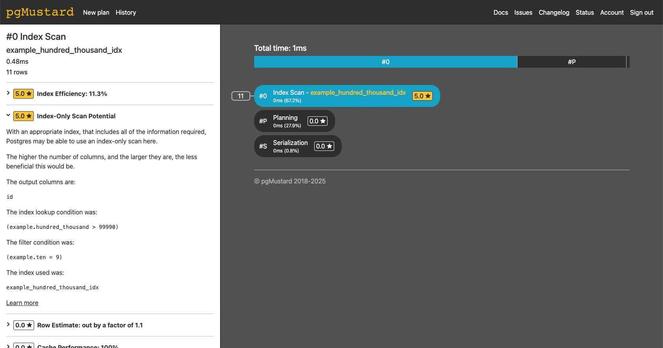
Index-only scans can be a very efficient (and fast!) method for reading data. They're especially good for queries that return and filter on only a few columns.

We've recently revamped our tips for these in pgMustard, to hopefully make them clearer in more cases. ✨

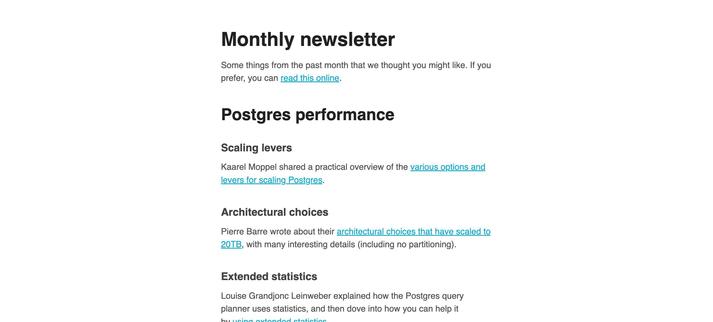
Our latest monthly newsletter is out, including a lot of great performance articles and talks!

https://mailchi.mp/pgmustard/april-2025
https://mastodon.social/@federico_razzoli/114460695489375209

500: We've Run Into An Issue | Mailchimp