Short country names for your plot titles and tooltips ...
https://github.com/rgieseke/shortcountrynames
Short country names for your plot titles and tooltips ...
https://github.com/rgieseke/shortcountrynames
Using Quarto to write (and typeset) a book.
https://kieranhealy.org/blog/archives/2026/03/09/using-quarto-to-write-a-book/
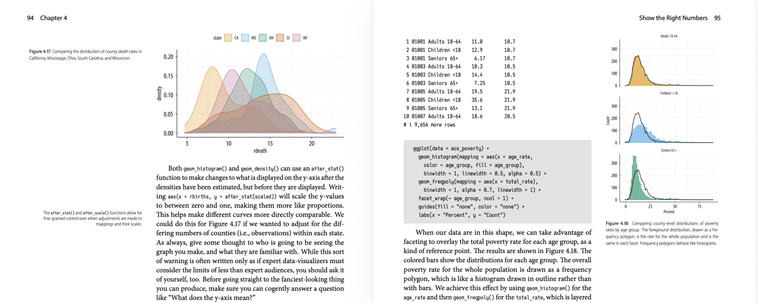
I’ve spent the last couple of months revising my Data Visualization book for a second edition that, ideally, will appear some time in the next twelve months. As with the first edition, I’ve posted a complete draft of the book at its website. The production process hasn’t started yet, so it’s not ready to pre-order or anything, but the site has a one-question form you can fill out that asks for your email address if you’d like to be notified with one (and only one) email when it’s available. A lot has changed since the first edition, reflecting changes both in R and ggplot specifically, and in the world of coding generally. I may end up highlighting some of those new elements in other posts. But here, I want to focus on some nerdy details involved in getting the book to its final draft. I’ll discuss Quarto, the publishing system I used, its many advantages, and its current limits with respect to the demands I made of it.
Hurra! @fuzzyleapfrog und ich haben den Preis der Österreichischen Forschungsgemeinschaft für Wissenschaftsjournalismus für unseren Podcast "Das Klima" gewonnen. Ausgezeichnet worden sind unsere Folgen über den Zweiten Österreichischen Sachstandsbericht zum Klimawandel. Wir freuen uns sehr über den Preis - und noch mehr freuen würden wir uns, wenn sich die Erkenntnisse aus der Klimaforschung auch in der Klimapolitik wiederfinden würden.

At time of writing, large language models (LLMs) are beginning to obtain the ability to design, execute, write up, and referee scientific projects on the data-science side of astrophysics. What implications does this have for our profession? In this white paper, I list - and argue for - a set of facts or "points of agreement" about what astrophysics is, or should be; these include considerations of novelty, people-centrism, trust, and (the lack of) clinical value. I then list and discuss every possible benefit that astrophysics can be seen as bringing to us, and to science, and to universities, and to the world; these include considerations of love, weaponry, and personal (and personnel) development. I conclude with a discussion of two possible (extreme and bad) policy recommendations related to the use of LLMs in astrophysics, dubbed "let-them-cook" and "ban-and-punish." I argue strongly against both of these; it is not going to be easy to develop or adopt good moderate policies.
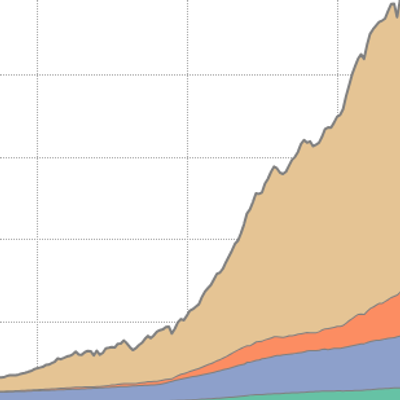
"Greenhouse Gas Emission Data: Public, difficult to access, and not always correct" from @hanno at #39c3

Which factory in my city is the largest emitter of CO2? Which industrial sector is responsible for the largest share of a country's contribution to climate change? It should not be difficult to answer these questions. Public databases and report...
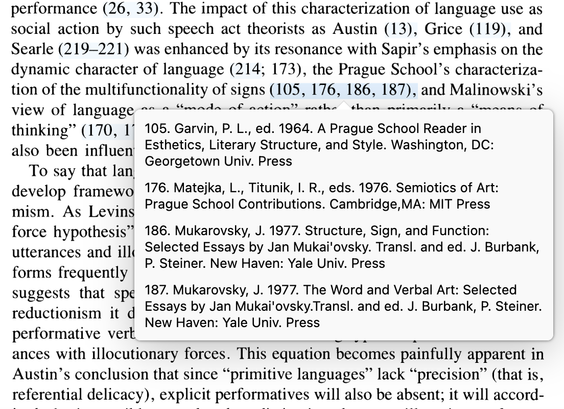
 Simon Meier-Vieracker
 Anthony
 Kieran Healy
 Natasha
  🇪🇺
🇪🇺
 Greg Wilson
 Florian Freistetter
 Aleks Scholz
 Paul Griffiths