Interested in RL and its links to control?
Join us March 24 and 25 at the CWI, Amsterdam, for a great workshop on these topics!
Speakers include: Sean Meyn, Ann Nowe, Bert Kappen, yours truly and more...
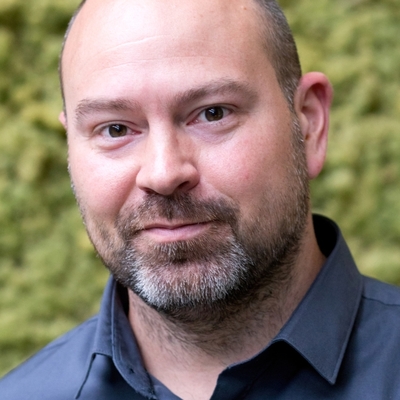
Full Professor at TU Delft. Interactive learning and decision making: ML, RL, AI & MAS
opinions are mine
| website | http://www.fransoliehoek.net |
Interested in RL and its links to control?
Join us March 24 and 25 at the CWI, Amsterdam, for a great workshop on these topics!
Speakers include: Sean Meyn, Ann Nowe, Bert Kappen, yours truly and more...

What a response! More than 3,000 candidates from all over the world registered on our #ELLISPhD portal this year – more than in any year before! We are now reviewing every application in detail and will inform shortlisted candidates in January. Stay tuned!
Learn more about the ELLIS PhD Program here: https://ellis.eu/phd-postdoc
The ELLIS mission is to create a diverse European network that promotes research excellence and advances breakthroughs in AI, as well as a pan-European PhD program to educate the next generation of AI researchers. ELLIS also aims to boost economic growth in Europe by leveraging AI technologies.
The ELLIS Doctoral Symposium is the annual highlight among the many networking and training events for #ELLISPhD students and will take place in Paris next year! Apply to our program by November 15 and join our international #PhD community!
Call for applications 2023: https://ellis.eu/news/ellis-phd-program-call-for-applications-2023
#AI #artificialintelligence #ML #machinelearning #PhDProgram

The ELLIS mission is to create a diverse European network that promotes research excellence and advances breakthroughs in AI, as well as a pan-European PhD program to educate the next generation of AI researchers. ELLIS also aims to boost economic growth in Europe by leveraging AI technologies.

The 2020 ACM – AAAI Allen Newell Award honors Hector Levesque and Moshe Vardi. Levesque is recognized for fundamental contributions to knowledge representation and reasoning, and their broader influence within theoretical computer science, databases, robotics, and the study of Boolean satisfiability. Vardi is cited for contributions to the development of logic as a unifying foundational framework and a tool for modeling computational systems.
The very first citation in this stupid letter, https://futureoflife.org/open-letter/pause-giant-ai-experiments/, is to our #StochasticParrots Paper,
"AI systems with human-competitive intelligence can pose profound risks to society and humanity, as shown by extensive research[1]"
EXCEPT
that one of the main points we make in the paper is that one of the biggest harms of large language models, is caused by CLAIMING that LLMs have "human-competitive intelligence."
They basically say the opposite of what we say and cite our paper?
The ELLIS mission is to create a diverse European network that promotes research excellence and advances breakthroughs in AI, as well as a pan-European PhD program to educate the next generation of AI researchers. ELLIS also aims to boost economic growth in Europe by leveraging AI technologies.

Welcome! You are invited to join a webinar: AIDA AI EDUCATION ONLINE EVENT. After registering, you will receive a confirmation email about joining the webinar.
At the City of Amsterdam, we've been using #AI to assess, analyse, and hopefully improve pedestrian #accessibility. My colleagues Iva Gornishka and Shayla Jansen explain how we've been doing so so far, and what our current interns from the Universiteit van Amsterdam and Universiteit Maastricht - Andrea Lombardo, Alisa Todorova, and Aditi Mishra - are currently working on.

Recently, we shared with you the methodologies behind the venue accessibility pilots [https://www.amsterdamintelligence.com/posts/venue-accessibility-information-extraction] that we already did as part of our Amsterdam for All project. Today, it is time to dive into the topic of pedestrian accessibility. First, we look at Jorrit Ypenga's approach to detecting canal railings on panorama images. Next, we dive into Johanna Fiebag's methodology for analyzing temporal obstacles such as parked microm

 Finnish Center for AI
 ELLIS
ELLIS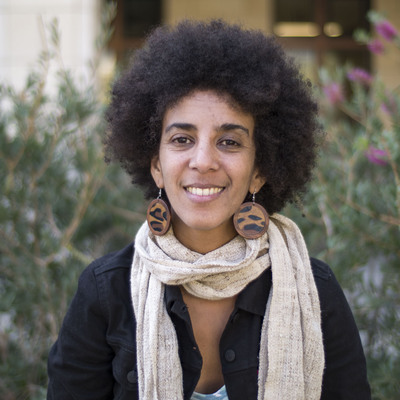 Timnit Gebru (she/her).
 Diederik Roijers
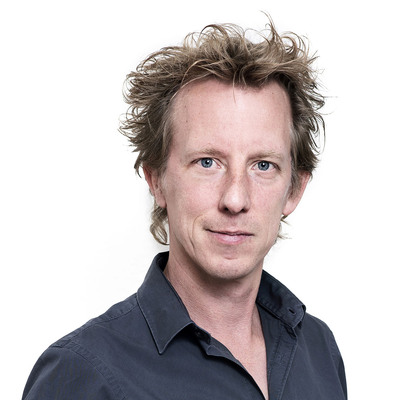 Jasper van Kuijk