
Chris

@multiplicityCT
12 Followers
37 Following
45 Posts
MA student in continental philosophy at Staffordshire University, interested in philosophy of science: evolution, Darwin, Bergson, Canguilhem, Bernard. Wittgenstein and Cantor handshake numbers = 3 (via John Conway).

A longshot cry for help from statisticians/ philosophers of stats:

I vividly remember reading a paragraph quoted from some famous frequentist statistician (I'd like to say Fisher, but I'm not entirely sure) about how we should only use statistical analysis on a data when we don't have other information to go on. And there's a story about the probability of him forgetting to put stamp on his letter is different to a stranger than to himself.

I cannot for the life of me remember where I saw that. Anyone happens to know? 🙏
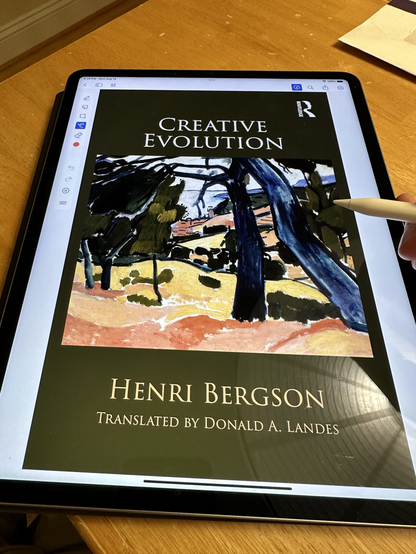
“Bergson writes too well” is such an interesting slam in philosophy. I have gotten a lot out of Kant, Hegel, and Heidegger but had to read clearer writers writing about them to get the most out of them. There’s a lot to be said for getting your ideas out clearly the first time!
Finally starting Creative Evolution to cap off a great summer of reading. I read from the Mitchell translation last term so looking forward to the new Landes translation. #bergson
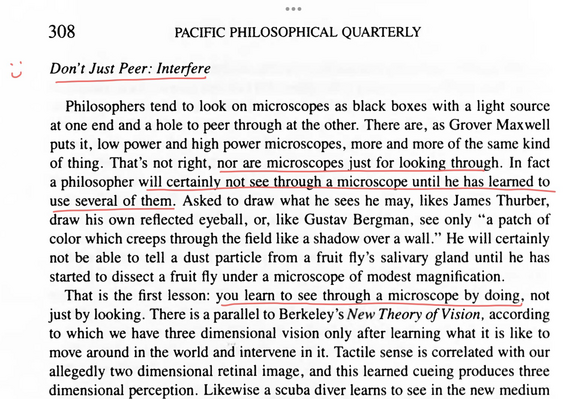
Hooked on Hacking. How great a section heading is “Don’t Just Peer: Interfere”?? @philbio #philsci
@thesiswhisperer Glad to find you here. I really appreciated your book (“Your Academic Writing Trouble”) and have gotten tons of mileage out of doing thesis road maps for papers! Great communication tool with my professors as well.

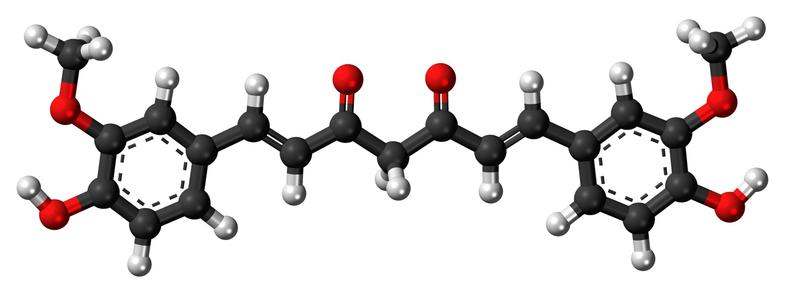
Suppose you were trying to invent a bright orange powder that could easily dye clothes and be hard to wash off. Using your knowledge of quantum mechanics you'd design this symmetrical molecule where an electron's wavefunction can vibrate back and forth along a chain of carbons at the frequency of green light. Absorbing green light makes it look orange! And this molecule doesn't dissolve in water.

Yes: you'd invent turmeric!

Or more precisely 'curcurmin', the molecule that gives turmeric its special properties.

The black atoms are carbons, the white are hydrogens and the red are oxygens.

Read on and check out what pure curcurmin looks like.

(1/n)

@marshall_0i I’ve spent a lot of the summer reading this literature (Mary Williams, Brandon, Beatty, Mills, @pence, Otsuka…), this summary has me really excited to read your book. Which is waiting on my to read pile when I get back from vacation! Thanks for the thread.

I was asked on another platform to give a somewhat less-technical intro to my book, Evolution and the Machinery of Chance. I'm posting here in case anyone's interested. (Long!)

It seems that natural selection helps to *explain* why animals and plants have the traits they do. People say that natural selection is "the survival of the fittest". But then sometimes people also say that being fittest means surviving better or having more offspring that survive. 1/10

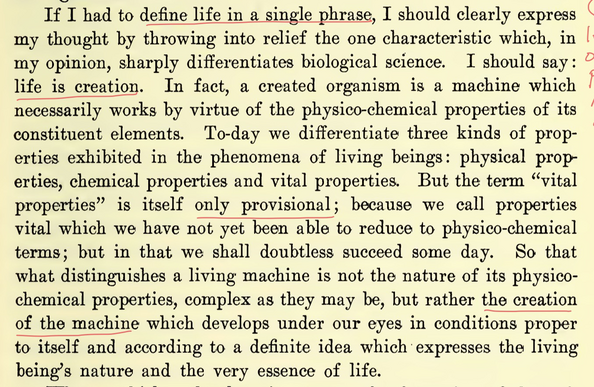
Healthy ambiguity from Bernard: life is deterministic, but creative, like a machine, but not isolable from the whole of nature. Bergson said vitalism might be merely a label affixed to our ignorance. He was planting in fertile soil tilled by Bernard.
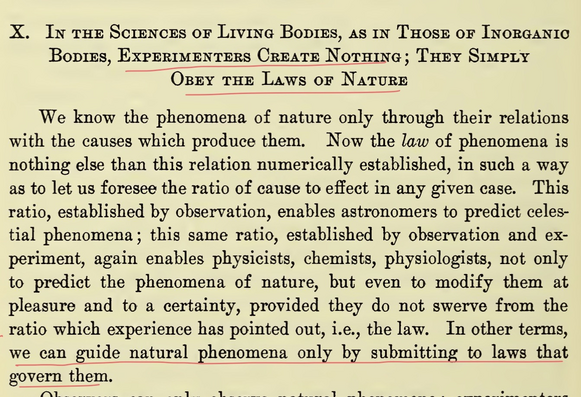
The “control” science gives us over phenomena is not really creative. It comes from obeying nature’s laws. Back on my Claude Bernard kick. #philsci @philbio