About 2000 archaeologists waiting to get free food and booze at the #EAARome2024 welcome ceremony. A delightful crush. A great backdrop.

| Research | Levant and West Asia |
| University | https://www.tu-darmstadt.de/ |
| ORCID | https://orcid.org/0000-0001-5114-2584 |
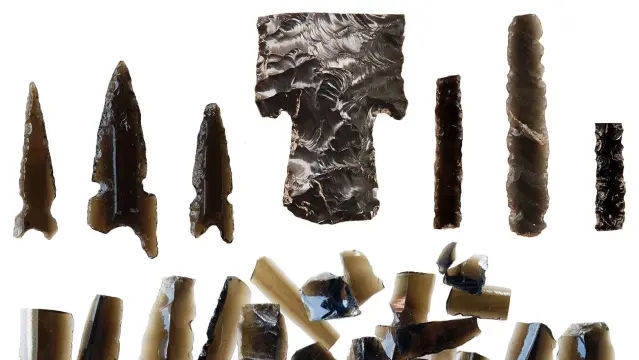
Archaeological Artefact Database of Finland (AADA) on nyt julkaistu. Tätä on odotettu! Kattaa esihistorialliset typoloisesti luokitellut esineet, mm. noin 10 000 identifioitua keramiikkaa ja 38 000 yksittäistä esinettä pääasiassa Kansallismuseon kokoelmista, mutta mukana myös alueellisten museoiden kokoelmista. Ja mikä parasta, tämä on avointa dataa. #avoindata #OpenData #archaeology #arkeologia

This paper presents the Archaeological Artefact Database of Finland (AADA) of prehistoric (covering period of almost 11,000 years) artefacts in Finland that are categorised by type and are accompanied with photos of the artefacts. The database is intended to contain all typologically classifiable prehistoric artefacts found in Finland and held in Finnish collections. This dataset provides spatio-temporal context for artefacts across different time periods and regions, as it includes approximately 38,000 single artefacts and approximately 10,000 pottery type identifications from the Early Mesolithic to the end of the Iron Age in Finland (c. 8900 calBC - 1300/1500 calAD). In addition, the artefacts are given period-based (subperiod) dating to allow their chronological affiliation. To facilitate data usage, we also offer an R-script to replicate the data visualisation provided in this paper and a Python script to merge the artefact information to the pictures. We further work towards an interactive user interface for data download and visualization.


I contributed to a thing!
Ethics and applications of isotope analysis in archaeology
https://doi.org/10.1002/ajpa.24992
Very happy that this is out! It also points to a #DMP template for isotope #archaeology which is hopefully helpful to reuse (and if not, there is a link to a google doc where you can add feedback somewhere  )
)
Be sure to check out our interview with #archaeologist and historian, Dr. Eric H. Cline, as we talk about his latest publication, After 1177 B.C.: The Survival of Civilizations, the collapse of the #BronzeAge, the #SeaPeoples, excavating Megiddo and more.
https://www.diggingupthepast.net/p/featured-episode-hammurabis-shoes
#archaeology #ancient #history @digkabri
Back when #BigData was the fashionable buzz word, I repeatedly had to explain to enthusiasts that archaeological data are not just Big, they are Confused and Patchy and Hairy.
I can't really see how the current generative algorithms could make me obsolete or even speed up much of the work I do. Because I'm in this really niche activity with no commercial potential that demands constant engagement with wildly non-standardised data as well as creative writing about them.


 Frontoni
 Esther Plomp
 Petros Koutoupis
 Matt Willemsen
 Martin Rundkvist
 Cluster ROOTS