Martin Wagner

174 Followers
86 Following
133 Posts
Plastics, people, planet. Hunting down toxic chemicals and #microplastics @NTNU in Norway.
Websitewww.biotox.de
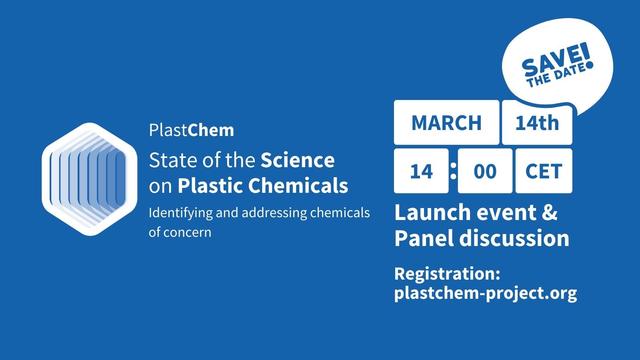
A year in the making, we are happy to announce the launch of our state-of-the-science report on plastic chemicals.
Join us for the virtual launch on March 14th, 14:00 CET hosted by Geneva Environment Network.
Registration: https://plastchem-project.org
#INC4 #plasticstreaty #plasticpollution
PlastChem – State-of-the-science of hazardous chemicals in plastic

The final part of my #PhD thesis has now been accepted and published in #Microplastics and #Nanoplastics! 🖖🥳📃🎓
I'm proud to have coauthored this study by Lisa Marie Oehlschlägel. We looked at water-air transfer of microplastics during #bubble bursting in lab experiments, with surprising results:
https://doi.org/10.1186/s43591-023-00079-x 🌊🫧💥
Water–air transfer rates of microplastic particles through bubble bursting as a function of particle size - Microplastics and Nanoplastics

Microplastic (MP) particles can be ejected into the air by jet drops when gas bubbles burst at water surfaces. For a qualitative and quantitative understanding of this transport mechanism from the hydrosphere to the atmosphere, we studied the transfer of MP due to bubble bursting at the air–water interface in laboratory experiments. Gas bubbles were produced with filtered air that was pushed through a stainless-steel frit at two different volume flow rates in a glass flask filled with polystyrene (PS) particles of six different diameters (0.35 µm, 0.5 µm, 0.75 µm, 1 µm, 1.5 µm, 2 µm) suspended in deionized water. Airborne PS particle concentrations were measured by an optical particle counter. Additionally, size and volume of the bursting bubbles and the resulting jet droplets were analyzed with a camera. Depending on the volume flow rates, bubble bursting rates from 688 s−1 to 1176 s−1 and mean diameters of the bursting bubbles from 0.76 mm to 0.81 mm were observed. The mean diameters of the top jet drops were estimated to be between 0.10 mm and 0.11 mm. The measured number of jet droplets ranged from 2092 s−1 to 2391 s−1. For particle diameters from 0.35 µm – 2.0 µm, the airborne MP particle concentrations ranged from 4.2 l−1 to 348 l−1. We determined size-dependent transfer factors for the water–air transfer and found a maximum for 1 µm particles. For MP particles up to 1 µm diameter, the particle concentration in the jet droplets was enhanced compared to the bulk water concentration, indicating an enrichment of MP particles at the water–air-interface of bubbles.

SpringerOpen

New #preprint: We screened #plastics food packaging from 5 countries for #chemicals and their #toxicity. Sadly no surprises here: Most of them had chemicals inducing endocrine or metabolism disrupting effects. PVC and PUR most toxic.

#INC3 #PlasticsTreaty

https://www.biorxiv.org/content/10.1101/2023.09.28.559713v1

ICYMI: In a recent study led by Christoph Schür, we demonstrate that #microplastics alone and in combo with non-plastic particles have negative population-level effects on aquatic inverts. Important in an ecological context and rarely studied. #plasticpollution

https://www.sciencedirect.com/science/article/pii/S004896972305146X

New paper out:
Mind the gap: forest soils as a hidden hub for global micro- and nanoplastic pollution

#plastic #microplastics #soil #soilhealth #forest

https://microplastics.springeropen.com/articles/10.1186/s43591-023-00067-1

Mind the gap: forest soils as a hidden hub for global micro- and nanoplastic pollution - Microplastics and Nanoplastics

Global plastic pollution has become a major concern because of its effects on environmental and human health. A major fraction of environmental plastics is likely stored temporarily within terrestrial soils. However, even though forests represent the third most common type of land cover on Earth, almost nothing is known about plastics in forest soils. The atmospheric transport of micro- and nanoplastics provides ample opportunity for forest canopies to intercept plastic particles. These plastic particles, together with local plastic sources like litter and items used in forest management, eventually reach forest soils. In this paper we discuss the potential role of forest soils as a hub within global plastic cycles; transport processes from the atmosphere to the soil; and the integration of plastics into forest material cycles. Taken together, plastic in forests could have a major impact on sensitive ecosystems, economically important functions and global environmental plastic budgets. We also develop a roadmap for further investigation into plastics in forest soil systems.

SpringerOpen

LIVING IN A PLASTIC WORLD. VON DER TIEFSEE BIS ZUM MARS - SCHIRN PODCAST

Podcast in German by @anja

https://podcast0315d6.podigee.io/80-living-in-a-plastic-world-von-der-tiefsee-bis-zum-mars

LIVING IN A PLASTIC WORLD. VON DER TIEFSEE BIS ZUM MARS

Plas­tik durch­dringt nahezu jede Sphäre unse­rer Umwelt – ange­fan­gen bei der Luft, dem Wasser und Boden bis hin zum mensch­li­chen Körper. Selbst den Mars hat Plastik bereits erreicht. Doch welche Neben­wir­kun­gen sind eigent­lich erwie­sen und macht die Dosis wirk­lich das Gift? In der zwei­ten SCHIRN Podcast­folge von LIVING IN A PLAS­TIC WORLD gibt Plas­tik­ex­per­tin Anja Krie­ger einen Über­blick auf den aktu­el­len Forschungs­stand zu den Neben­wir­kun­gen von Kunst­stof­fen für Mensch und Umwelt. Im Gespräch mit dem Ökoto­xi­ko­lo­gen Martin Wagner erfah­ren wir, was passie­ren kann, wenn Chemi­ka­lien aus Plas­tik austre­ten und in den Körper gelan­gen. Im Anschluss spricht Anja Krie­ger mit dem Ökolo­gen Matthias Rillig, der an der Freien Univer­si­tät Berlin erforscht, wie sich Mikro­plas­tik auf die Böden auswirkt.

SCHIRN PODCAST

Will be discussing our latest findings on hazardous chemicals in plastics tomorrow, Wed. 4 pm Nairobi time at the @unep webinar. Join us:

https://un-org-unep.zoom.us/webinar/register/WN_HILGuTsGTCeift5DXrAO_Q

#plasticstreaty
#inc3

Welcome! You are invited to join a webinar: Identifying chemicals and polymers of concern . After registering, you will receive a confirmation email about joining the webinar.

This session will present information in relation to the determination of chemicals and polymers of concern used in plastic products, including on plastic-related chemicals and polymers covered by existing conventions and national regulatory frameworks, other processes and frameworks in which chemicals or polymers of concern are being considered, and examples of relevant criteria and approaches adopted in national regulations to address chemicals and polymers of concern.

Zoom
My #PhD thesis is now published here: https://doi.org/10.15495/EPub_UBT_00006977
Which means I'm now officially #PhDone! 🖖🥳🎓📃
Computational study of microplastic transport at the water-air interface with a memory-optimized lattice Boltzmann method - EPub Bayreuth

Hyperspectral imaging is an underrated yet very powerful technique to analyze #microplastics. Check out Andrea Faltynkova’s new work: we developed & validated a workflow using chemoinformatics to identify pristine and weathered polymers. #PlasticPollution

https://www.sciencedirect.com/science/article/pii/S0045653523014534

Mayors panel on cities‘ actions on #PlasticPollution with inspiring cases from Mauretania, Indonesia, USA. Local action key if well connected to national and global level. #INC2 #PlasticsTreaty