Versuch einer unverdrossen optimistischen Olympia-Bilanz...
https://ieg.hypotheses.org/4874
https://ieg.hypotheses.org/4874

Glosse für Euch KI-Nerds und Nichtnerds!
Ohne Intelligenzbestie geht es nicht mehr, mit ihr aber auch nicht.
Sind wir in einem hochtechnisierten Teufelskreis voller Unsicherheiten gefangen, aus dem es kein Entrinnen gibt – außer wir begeben uns noch tiefer hinein?
https://ieg.hypotheses.org/4074
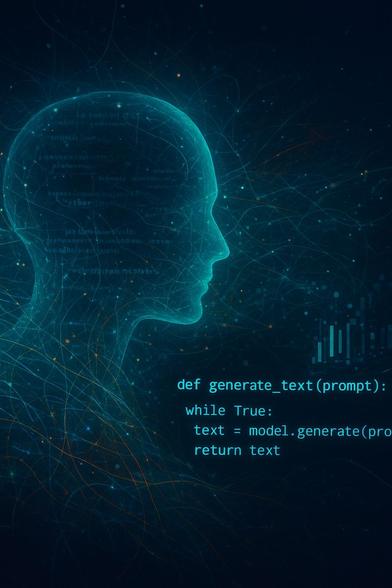
Digitising People: The Ethical Use of Historical Data.
Alleiah Kall writes that any attempt to decolonise the archive needs to go beyond the inclusion of marginalised voices and the sanitisation of metadata.
https://ieg.hypotheses.org/4095
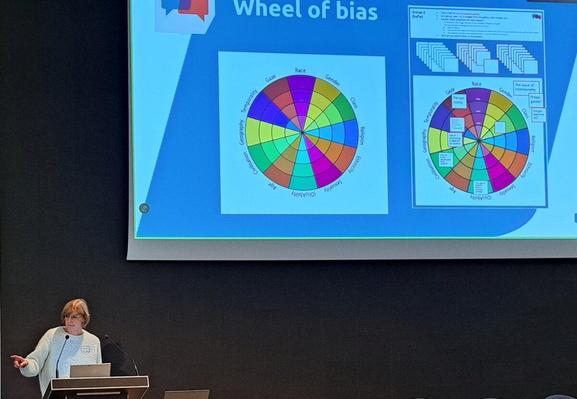
From Fidel to Franco: Why Communist Cuba Mourned the Death of the Fascist Caudillo.
Andrés Pertierra explains how the news of the three days of national mourning confused many in 1975 and still irritates Cold War narratives today.
https://ieg.hypotheses.org/3786
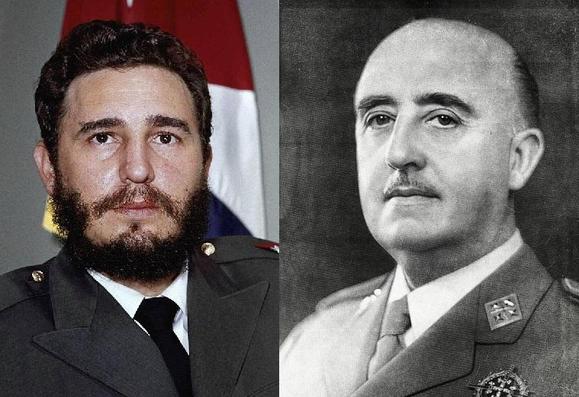
I have just released my debut solo album, "Tools and Toys", part of an electronic/synthpop project (Transits of Mars) that I've been developing in recent years.
Available to stream and download on Bandcamp.
Produced with free and open-source music production tools in #Linux, mainly #lmms and #ardour.
Hope you like it. More on the way in the new year.
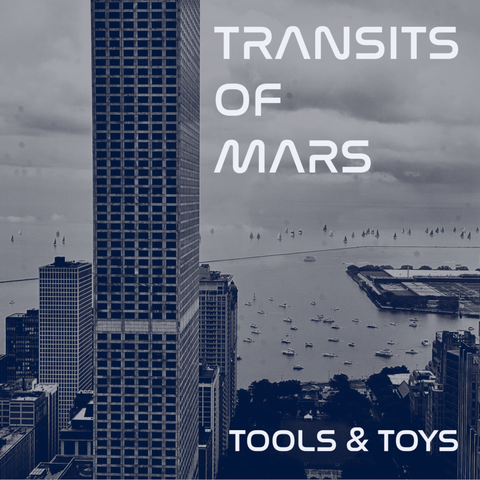
CFP: Doing Migration History with Digital Methods.
🔥Come and join us in Paris next year for the sommer school at the @dhiparis from June 22-26, 2026.
🖥️Rethink how digital sources reshape migration history, from research questions to methods and narratives, while tackling bias and meeting legal & ethical requirements.
MA, PhD & postdocs encouraged to apply. 📅Deadline: 15 Jan 2026.
🔗Info: https://dhdhi.hypotheses.org/12659

Organised by: Mareike König (German Historical Institute Paris), Denis Scuto (C2DH), Machteld Venken (C2DH), Giovanni Vitali (université de Versailles Saint-Quentin en Yvelines), Claire Zalc (CNRS/EHESS) Place: German Historical Institute Paris / Institut historique allemand,...
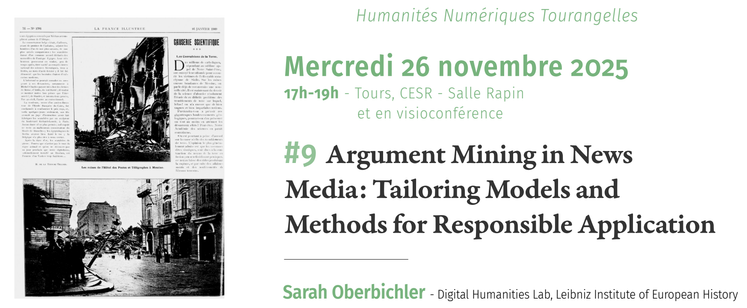
Can we trust general-purpose LLMs for rigorous academic work? According to @SarahOberbichler from the #DHlab_IEG, research integrity demands specialized AI models, not general-purpose LLMs when using AI as an analysis tool.
Join her upcoming talk "Argument Mining in News Media: Tailoring Models and Methods for Responsible Application" on Nov 26th at CESR (University of Tours) or online
➡️ https://prima.hypotheses.org/3181
#DigitalHumanities #NLP #ArgumentMining #ResearchIntegrity #AI #LLMs #Histodons #DH

Abstract. We convert nineteenth-century Bavarian Danube gauge charts (1826–1894) into daily water-level series referenced to gauge zero through a novel semi-automated workflow combining light document pre-processing, dewarping, transformer-based line extraction, pixel-to-curve calibration, and targeted human checks. A curated ground-truth sample supported benchmarking and uncertainty quantification. Across three representative gauges (Neu-Ulm, Vilshofen, Passau), the pipeline attains high series-level accuracy (mean composite score 0.979) while reducing manual effort by roughly an order of magnitude relative to full manual digitisation. Outputs include versioned datasets with page-level provenance, confidence scores, and methodological descriptors to ensure transparency and reuse. The approach offers a replicable template for rescuing analogue hydrometric records and enabling long-term analyses of extremes, regulation impacts, and ecological context. Data are openly available under CC BY 4.0 (Rehbein (2025); DOI: https://doi.org/10.5281/zenodo.17296750).
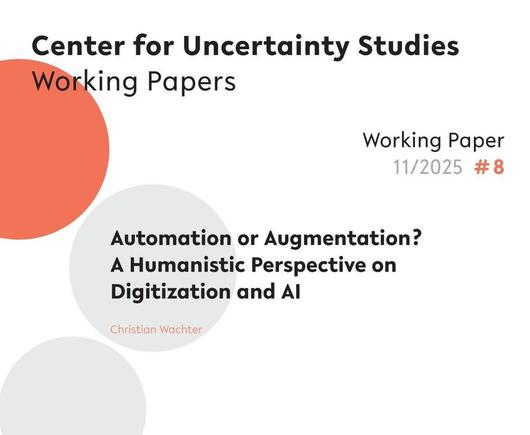
In academia, we agree: AI should be a tool, not a replacement for human intellect. But what does that actually mean? How can we define this supportive role within a research-centered framework - beyond intuitions or individual examples? My new think piece explores a humanistic take 👉 https://doi.org/10.4119/unibi/3011765
For those in a hurry: A much shorter version as a blog post on Digital History Bielefeld's blog (in German). 👉 https://digihistbie.hypotheses.org/862

 John Carter Wood
 mainzed
 Mareike König (she/her)
 DH Lab IEG
 Malte Rehbein
 Christian Wachter