A national analysis of the impact of proximity to nuclear power plants on lung, breast and colon cancer mortalities in the U.S., 2000–2020 - Journal of Exposure Science & Environmental Epidemiology
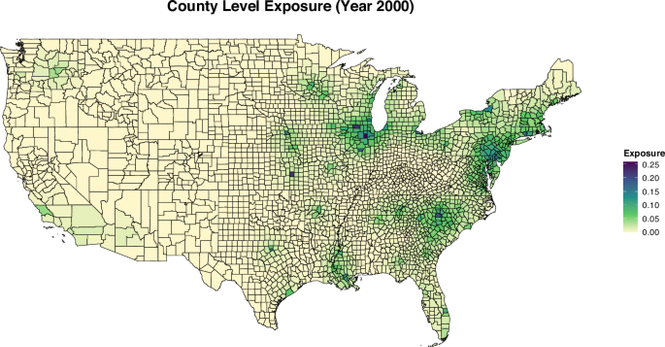
Nuclear power plants emit low levels of ionizing radiation, an established risk factor for breast, colon, and lung cancers, yet the long-term effects of chronic environmental exposure in U.S. populations remain unclear. To evaluate sex- and age-specific associations between proximity to nuclear power plants and mortality from the three most common cancers in the U.S.: breast, colon, and lung cancer. We quantified county-level proximity to nuclear power plants using the sum of inverse distances from each residence county’s population-weighted center to all plants within 200 km, updated annually from 2000 to 2020. Cancer-specific mortality data (breast, colon, and lung) from the CDC were analyzed by sex and five age groups (45–54, 55–64, 65–74, 75–84, 85 + ). Relative risks (RRs) were estimated using generalized estimating equations with a Poisson link. Models were adjusted for sociodemographic factors, urbanicity, region, and temporal trends. Proximity to nuclear power plants was associated with elevated mortality from breast, colon, and lung cancers. From 2000 to 2020, an estimated 39,767 female deaths (95% CI: 9312–69,381), representing 2.01% (95% CI: 0.47–3.50%), and 38,124 male deaths (95% CI: 16,106–59,600), representing 2.33% (95% CI: 0.98–3.64%), were attributable to this proximity. Lung cancer accounted for the largest burden in both sexes, followed by breast and colon cancer in females and colon cancer in males. Mortality risks declined with increasing distance, becoming negligible beyond 50 km. This national-scale analysis provides new evidence that proximity to nuclear power plants is associated with increased mortality from major cancers in the U.S. The magnitude and consistency of the findings highlight the importance of updated risk assessments, sustained surveillance, and strengthened public health planning for communities living near nuclear facilities.

 Corinna Balkow
 M. Heller
 Solarpapst
 Augenstern 👓 🇪🇺 🇩🇪 🇪🇸
 Pauline

 Deutsche Umwelthilfe | DUH