 The Public Domain Review
A look at some of the most beautiful and unusual examples from the first 100 years of the "modern" book cover, since the rise of publishers' bindings circa 1820: https://publicdomainreview.org/collection/the-art-of-book-covers-1820-1914


| work | https://library.uoregon.edu/users/mfgaede |
| website | https://mfgaede.com/ |

Age verification (or age-gating) laws generally require online services to check, estimate, or verify all users’ ages—often through invasive tools like ID checks, biometric scans, or other dubious “age estimation” methods—before granting them access to certain online content or services. Governments in the U.S. and around the world are increasingly adopting these restrictive measures in the name of protecting children online. But in practice, these systems create dangerous new forms of surveillance, censorship, and exclusion. Technologically, the age verification process can take many forms: collection and analysis of government ID, biometric scans, algorithmic or AI-based behavioral or user monitoring, digital ID, the list goes on. But no matter the method, every system demands users hand over sensitive and immutable personal information that links their offline identity to their online activity. Once that valuable data is collected, it can easily be leaked, hacked, or misused. (Indeed, we’ve already seen several breaches of age verification providers.) EFF has long warned against age-gating the internet. Age verification technology itself is often inaccurate and privacy-invasive. These restrictive mandates strike at the foundation of the free and open internet. They are tools of censorship, used to block people from viewing or sharing information that the government deems “harmful” or “offensive.” And they create surveillance systems that critically undermine online privacy, chill access to vital online communities and resources, and burden the expressive rights of adults and young people alike. EFF.org/Age: A Resource to Empower Users Age-gating mandates are reshaping the internet in ways that are invasive, dangerous, and deeply unnecessary. But users are not powerless! We can challenge these laws, protect our digital rights, and build a safer digital world for all internet users, no matter their ages. This resource hub is here to help—so explore, share, and join us in the fight for a better internet.


"Today, ProPublica is launching Rx Inspector, a first-of-its-kind database that provides answers to what the FDA won’t tell us: where our generics are coming from and the track records of the factories that made them. The information is harder to find than you may think."
https://www.propublica.org/article/rx-inspector-prescription-drug-lookup
NEW: Mystery AI Hype Theater 3000, Episode 68: This is What Algo-cracy Looks Like
Tech bros say automation can strengthen democracy, but as usual, their bold suggestions are based on castles made of sand. @alex and @emilymbender tear down some flimsy arguments for AI governance, exposing their incorrect assumptions about the democratic process.
https://www.buzzsprout.com/2126417/episodes/18352083-this-is-what-algo-cracy-looks-like-2025-12-01
First of all, NPR continues to rise in my esteem with this list of non-algorithmic music listening choices https://www.npr.org/sections/world-cafe/2025/12/16/nx-s1-5628939/music-streaming-alternatives-without-algorithms
But also the n10.as radio station (from Montréal) website is incredible https://n10.as/
Hi mastodon,
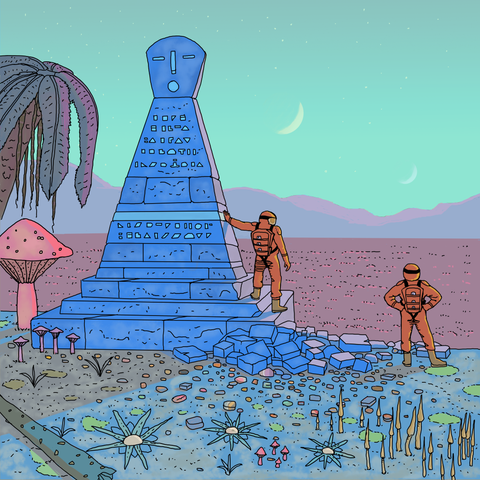
I'm an artist in the ligne claire tradition, based in Sweden. I'm in the process of leaving Instagram. Follow me for scifi/fantasy drawings.
#introduction #MastoArt #FediArt #Art
EDIT: I now have more followers here in a few hours, than I gained on instagram in something like 6 years. It's as if Zuckerberg has been keeping me artificially down. Thank you all.
 Coalition for Networked Info
 Star Trek Minus Context
 Electronic Frontier Foundation
 kottke.org
 VM (Vicky) Brasseur
 DAIR
DAIR Eric Phetteplace
 Ravachol