Lauren Klein

@laurenfklein
5 Followers
930 Following
10 Posts
Digital humanities, data science, cycling, eating, associate professor of English and Quantitative Theory & Methods at Emory. Co-author #DataFeminism. She/her.
Pronounspronoun.is/she
Websitehttps://lklein.com
Twitterhttps://twitter.com/laurenfklein
Labhttps://dhlab.quantitative.emory.edu/
@grvsmth @elotroalex I take your point (and quote that exact line in DF) but as I see it, LLMs are here to stay and given that, I want humanities scholars (incl. my grad students) at the table. We're arguably the best positioned to understand and explain LLMs as objects of culture--a culture of capitalism and colonialism, of elite/tech capture, of racism, sexism, cissexism, and more. If not us then who?
@kburke @FractalEcho Giorgia Lupi is the obvious go-to, design-wise (esp. "Bruises"). And @kim's "MeToo Anti-Network": https://ieeexplore.ieee.org/document/9975621
#MeToo Anti-Network

The measurements of “success” in networked social media do not render visible the actual importance of #MeToo or the broader phenomenon of structural sexual violence. In crucial ways, the structure of #MeToo is not a network. If we insist on mapping #MeToo as a network – the all-encompassing symbol of digital society – we risk missing fundamental elements of the movement that don’t answer to the network analogy. The arbitrary and heavily mediated frame of the 280-character tweet, and Twitter’s “rich- get- richer” network effects, amplify some voices at the expense of others. Mainstream white media are central while ethnic media are minor. White women celebrities are central while Black and Indigenous advocates are marginalized. Since Tarana Burke founded the movement in 2006, its goal has been to break the silence around sexual violence and uplift the voices of survivors. But what happens when the platform works against hearing those voices?

@kburke @FractalEcho Still a very open question. I theorize some of this in "The Image of Absence" but the actual vis methods are off-the-shelf. http://lklein.com/wp-content/uploads/2021/10/661.full_.final_.pdf
@elotroalex Share it when you're ready! Also, jealous of your winter break. We're already in week 2...

Pretty pleased with the schedule for this year's grad seminar in quantitative literary analysis, centered around the uses and limits of LLMs in a humanities context (co-schemed by @intransitive):

https://github.com/emory-qtm/2023-quant-lit/blob/main/docs/schedule.md

2023-quant-lit/schedule.md at main · emory-qtm/2023-quant-lit

In-class notebooks for the Spring 2023 seminar on quantitative literary analysis - 2023-quant-lit/schedule.md at main · emory-qtm/2023-quant-lit

GitHub
@ctschroeder A few! I'll post the syllabus when it's ready!
@lucy Oh! Thanks for this one! I'd seen this when it came out but thought it was a dictionary approach. Will reread!
@Sethlsanders Large language models--essentially, predictive models trained on all of the internet, with the results you might expect
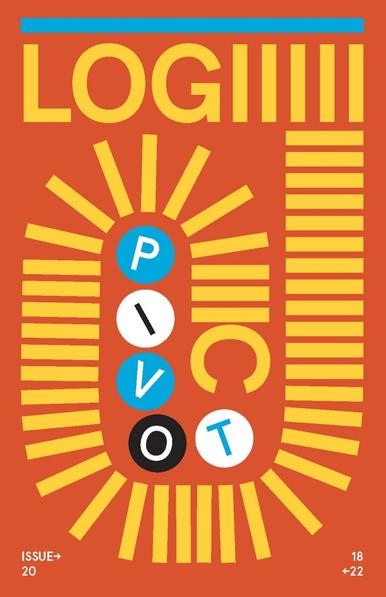
I have an article, “Ghost Ships,” in the new issue of Logic. It’s about why global shipping runs on paper, the gold rush to change that, and the Middle Passage. I believe it’ll be available openly at some point, but you can buy it in print or digitally now: https://logicmag.io/pivot/ #criticallogistics #criticainfrastructure #logistics #criticaldatastudies
Pivot: Issue 18 | Logic Magazine

Remember that one time Zuck said he’d rather host videos, and all those media startups fired their writers? Since then, “pivot” has become a byword...

Logic Magazine
Wading back into this proboscidean (?!) site to ask about your favorite quantitative literary studies / computational social science papers that use or critique LLMs. It's syllabus time!