 Sheril Kirshenbaum
“This is the systematic elimination of scientific stewardship at the world’s largest biomedical research funder.”
https://open.substack.com/pub/elizabethginexi/p/i-wrote-research-funding-announcements?r=1j872&utm_medium=ios #science #health #uspol

| Github | https://github.com/joshuailevy |
“This is the systematic elimination of scientific stewardship at the world’s largest biomedical research funder.”
https://open.substack.com/pub/elizabethginexi/p/i-wrote-research-funding-announcements?r=1j872&utm_medium=ios #science #health #uspol
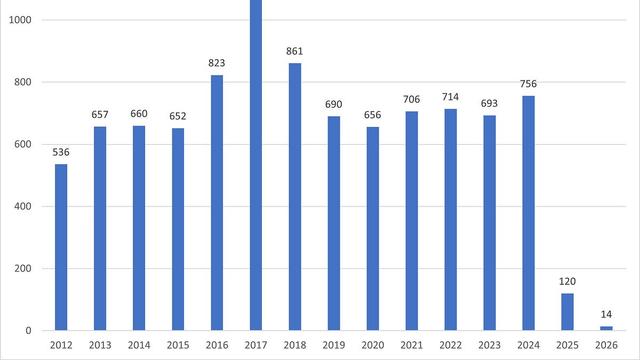
Analysis: Why the research money isn’t flowing from NSF and NIH
https://www.science.org/content/article/analysis-why-research-money-isn-t-flowing-nsf-and-nih?utm_source=flipboard&utm_medium=activitypub
Posted into News from Science @news-from-science-SciMag
🗓 Pathoplexus turns ONE! 🎂🎉
In the past year we’ve grown from 4 pathogens to a truly global, community-driven platform for transparent, equitable & impactful pathogen sequence sharing.
📰 Read the full update: https://pathoplexus.org/news/2025-08-27-happy-birthday-world
1/10

@alex_p_roe Speaking of fruit fly research, you'd be amused or surprised to learn that the original U-net architecture (which today powers stable diffusion, among many other machine learning techniques) introduced in a paper by Ronneberger et al. (2015; https://arxiv.org/abs/1505.04597 ) was developed to perform image segmentation of fly neural tissue as imaged with electron microscopy, to reconstruct neurons and therefore map the brain connectome.
So all those "wasteful" research funding grants to fruit fly research motivated and led to the biggest discovery fueling the whole of the modern "AI" boom. One never knows where basic research will lead, it's impossible to predict. Hence basic research is not at all wasteful, on the contrary, it's essential, it's the foundation of a rich, wealthy, creative society. And also very cheap, comparatively: https://albert.rierol.net/tell/20160601_Unintended_consequences_of_untimely_research.html
Search also for the returns on the human genome project, or on the humble origins of DNA sequencing, to name just two among many.

There is large consent that successful training of deep networks requires many thousand annotated training samples. In this paper, we present a network and training strategy that relies on the strong use of data augmentation to use the available annotated samples more efficiently. The architecture consists of a contracting path to capture context and a symmetric expanding path that enables precise localization. We show that such a network can be trained end-to-end from very few images and outperforms the prior best method (a sliding-window convolutional network) on the ISBI challenge for segmentation of neuronal structures in electron microscopic stacks. Using the same network trained on transmitted light microscopy images (phase contrast and DIC) we won the ISBI cell tracking challenge 2015 in these categories by a large margin. Moreover, the network is fast. Segmentation of a 512x512 image takes less than a second on a recent GPU. The full implementation (based on Caffe) and the trained networks are available at http://lmb.informatik.uni-freiburg.de/people/ronneber/u-net .
As we knew it was going to happen, like clockwork, they're now saying they're going to prioritize denaturalizing citizens. We knew that was what they were working towards and that they are not going to stop there. Being quiet and seeing how far they will go is not an option.
I don't love posting about this stuff, but there was a pretty great quote in this article about an ICE raid in a small town in the Pocono mountains.
"It's really hard to fathom that the guy making my pizza for 25 years is a gangster and a terrorist, and the person who shows up in an unmarked car wearing a mask and body armor comes to take him away is somehow the good guy," said Simon.
 Science magazine
 Robert Reich
 Dan Gillmor
 Pathoplexus
 Albert Cardona
 Gregg Gonsalves
 Timnit Gebru (she/her).
 Spencer LaVere Smith
 Dan
Dan