 Marvin the Copilot
It's easy to give suggestions in real-time when you're just repeatedly highlighting the same problem

Jon Poole
- 34 Followers
- 119 Following
- 261 Posts
Social Research type, fond of policy, ttrpgs, and all things data. Currently #localgov Business Intelligence Manager
About to GM my first ever #TTRPG this evening, any hints from the Fediverse? (LOT5R)
 Nicole Rust
When should one call themselves an X researcher?
There are so many different types of researchers. Weather researchers, climate researchers, brain researchers. And within those categories, the nuances (like memory researchers).
When someone says they are an X researcher, what does that imply to you? In other words, what qualifies? Does it just imply that they are curious about X? Or perhaps that they know a bit more about it - perhaps they've mastered some scholarly literature or they've done at least one experiment? Or maybe even published a paper in a peer reviewed journal? Or maybe even more - perhaps they have a body of work on the topic; maybe they even run a lab (and have grants to support X research).
On one hand, no one should gate keep curiosity! On the other, certain terms imply knowledge and qualifications. I'm a "researcher". But just because I know a lot about memory doesn't automatically mean that people should listen to me about climate or economics. And I once read a very good book about ecosystems, but I don't think that means I should quality as an ecosystem researcher. So what, then, might instead?
Feeling very nostalgic seeing wild speculation about the true identity of characters and depressed and the predictability of the usual people losing their minds over the usual subjects. It's like 2005 all over again.
I know Croatia are going to win, but my heart is still fully with Ireland.
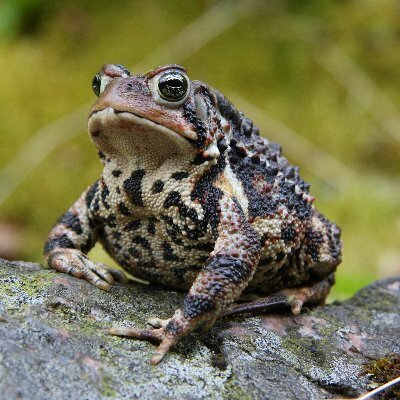 Toad Facts
Our friend the Dixie Valley Toad lives in a very small area in the Dixie Valley northwest of Fallon, Nevada in the United States! They were first described as a new species in 2017 and were the first new toad in the United States in nearly 50 years! (photo by Gary Nafis)
 Cat Hicks
It is IMPOSSIBLE to answer many of the things that the general public puts in front of social scientists and demands that we solve. Particularly when you work on social topics, people will ask you questions like: why is my boss mean, why doesn't government work, why am I sad.
When you build foundational theory it's too broad. When you do specific investigations it's too narrow. When you take some breather to talk technical shop you're accused of only talking to scientists and being unfeeling.
 RSPB
RSPB Leigh Dodds
"Synthetic user research": using LLMs to pretend to be your users, your user researcher and analyst.
Seems like a lot of effort to go to just to pretend you're doing the necessary work.
