
Jon Koops 🇪🇺

@jonkoops
100 Followers
205 Following
897 Posts
European Federalist 🇪🇺 On a mission to deflate your node_modules 🎈
GitHubhttps://github.com/jonkoops
@notjustbikes I recall your video about self-driving cars ignoring rules and lobbying for exclusive access as the only mode of transport. Well, that was prophetic: https://road.cc/news/driverless-taxis-veering-into-cycle-lanes-normal-practice-says-waymo
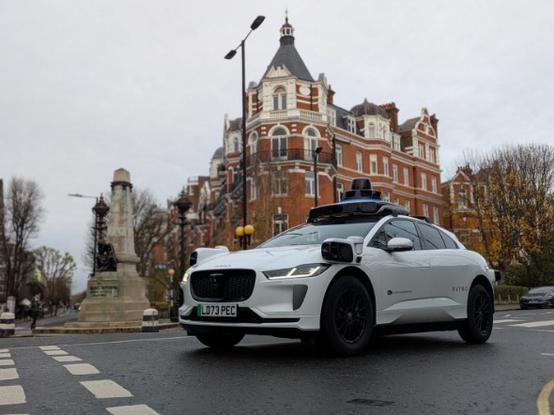
Expecting driverless taxis to respect bike lanes “too high a bar” – because customers want to be dropped off in them, autonomous vehicle firm Waymo tells cyclists

Waymo, the autonomous driving tech firm whose so-called ‘robo-taxis’ are now roaming the streets of London, has allegedly told cycling campaigners that expecting their driverless cars to respect cycle lanes is “too high a bar” – because their customers want to be dropped off in them.But Waymo has denied making such a claim, instead pointing ... Read more

road.cc

@C_Ottenburg @fabienmarry @grimm IMHO we cannot discount a technology just because we tried it once using a single design out of thousands when it can be genuinely useful. We should diversify our investments and use the tools we have where they make sense.

Every tonne of CO₂ that goes in the atmosphere is much harder to get out, and likely to cause much more issues than handling nuclear waste. It is a much greater existential crisis for the whole planet.

@C_Ottenburg @fabienmarry @grimm There is good reason why Northern countries with dark winters overwhelmingly choose nuclear when there is no hydro available (e.g. Finland).

Some industries need very high temperatures (500–1000°C), which are difficult to achieve efficiently with electricity alone, such as steel, cement, and chemicals (ammonia, hydrogen production). Advanced reactors (like high-temperature gas reactors) can deliver process heat directly, eliminating the need for electricity.

@C_Ottenburg @fabienmarry @grimm Now I am not arguing here that we should massively be building nuclear reactors where renewables are a much more obvious fit. But there is a lot of misinformation and misunderstanding about nuclear as a source of energy.

There are valid reasons to choose nuclear. Calculating renewables as 'available energy' is dangerous, you must also account for the overbuilding, transportation and storage requirements and seasonal gaps in the worst case scenarios.

@C_Ottenburg @fabienmarry @grimm Also not we don't have to be dependent on Russia for nuclear fuel when using breeder reactor designs, which can 'breed' their own fuel by transmuting fertile radioactive elements into fertile elements that can sustain the reaction.

All assumptions are essentially based on a single type of design that is one of many. Water based reactors with solid fuel rods are the main design, also because you can make nukes with it.

@C_Ottenburg @fabienmarry @grimm I don't understand why people keep propagating the idea that nuclear waste is not a solved problem.

The French have been recycling their nuclear fuel for decades, and countries that do not store them in geologically stable repositories (Onkalo, Forsmark).

Aside from that, there are plenty of alternative reactor designs that in fact do not create waste that lasts over a couple of hundred years.

See https://mastodon.social/@jonkoops/116439213302116066

@FrVaBe Why would the availability of an over the counter medicine be a reason not to have nuclear power?

By ‘stop nuclear power’ are you advocating we close existing facilities that continue to provide emission-free energy?

@FrVaBe That’s good, what about it?

@tschew Also dealing with nuclear waste is a political problem, not an engineering one.

The Onkalo spent nuclear fuel repository exists, and is designed to safely contain waste for hundreds of thousands of years. The Swedish are building Forsmark with a similar design.

Compared to the type of nuclear waste these sites store, and for how long, the waste from these types of fast breeder reactors is extremely manageable.

@tschew EBR-II was specifically designed to reduce and simplify nuclear waste. Uranium, plutonium, and minor actinides are recycled back into fuel. Only fission products are removed as true waste.

This means that instead of having to manage this waste ~100,000+ years we're talking about a couple of hundreds of years, and also in MUCH lower volume (3 to 5 times less).