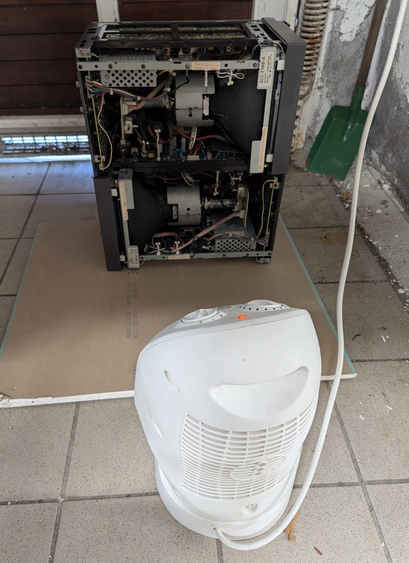
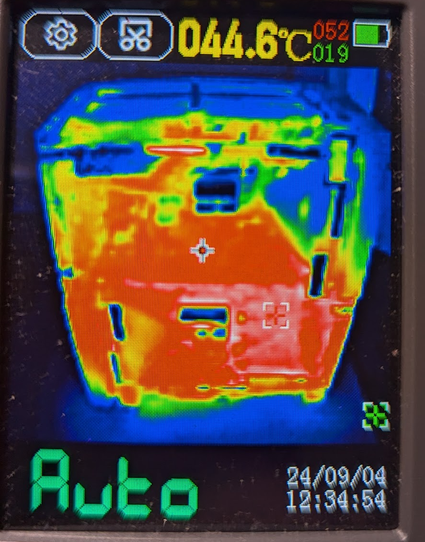
After the quick win yesterday, it became clear that the tape deck motor has some problems that don't disappear with some use. So today I serviced the motor... #repair #tapedeck #electronics 1/2

Infosec by day, old computers, synths and electronic music by night. Degree in CS.
he/him
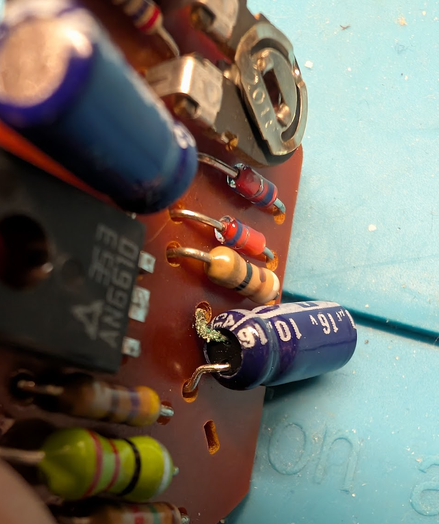
I hate to take these apart, but since it's bit of a long shot to find a replacement, I had to pry open the case and take a look.
It's always capacitors.
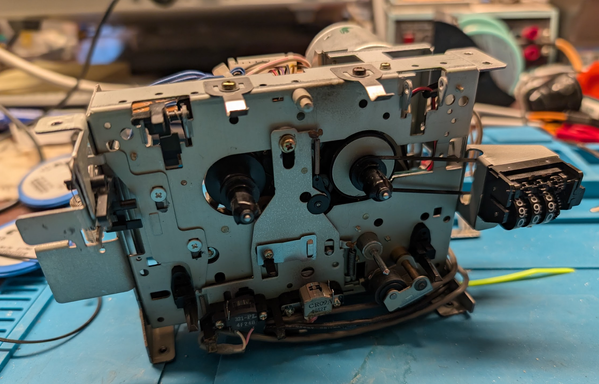
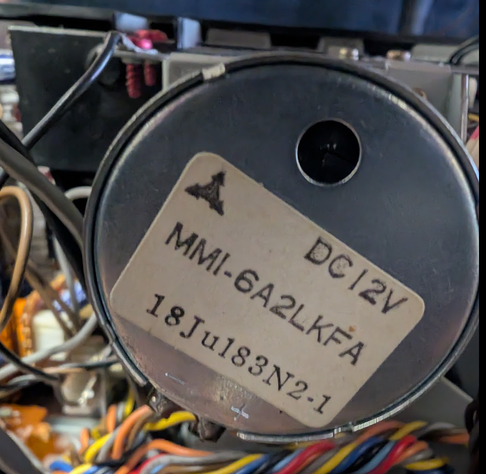
I also serviced the motor itself, it was very hard to turn by hand and it turned out the rear bearing was completely gummed up. I bent the brushed because the permanent magnet sucked the assembly from my hands, so that was fun to fix under the microscope😑 .
At least the deck now plays fine again.
But this turntable has another neat trick: It uses an optical sensor not only to adjust to different record sizes, but also to enable a "track skip" function:
4/5
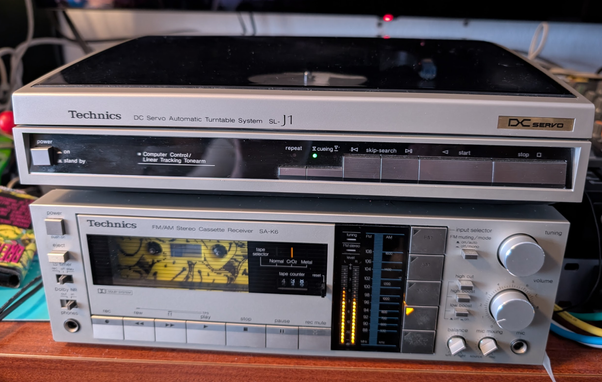
The turntable is also quite interesting, because it's a linear (tangential) turntable. This works like a normal turntable, but has a very short tonearm that sits on a base that can be moved horizontally while the record is playing. A bit like a CD player which also has a moving coil mechanism for fine movements and uses a sled for corse adjustments when it reaches the limits of its movement.
This also needed new lubrication and belts.
3/x
Its main component is a "casseiver" (receiver with built-in tape-deck). It needed new belts, and for that it had to come completely apart to take out the tape mechanism.
It mostly works now, but the motor probably also has to be completely stripped and rebuilt because it occasionally still has problems maintaining the correct speed speed.
2/x
To take my mind off of 2025, I bought a broken HiFi system on the flea market and brought it back to life.
This is a somewhat unsual mid-range stereo system from the 80s.
1/x

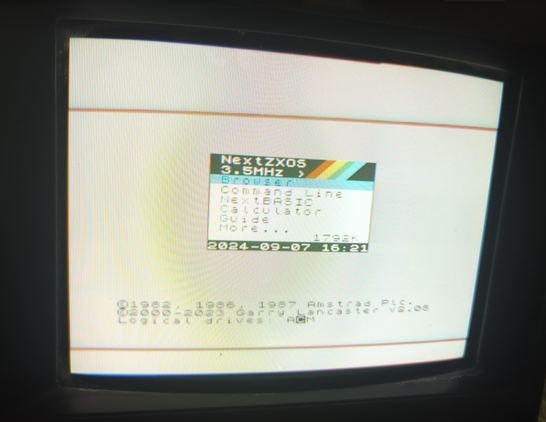
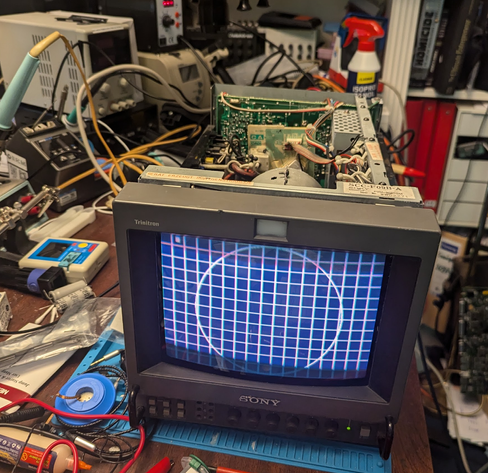
I then discovered that I could get a nice image when I connected an RGB source. This is a bad photo, in real life the second monitor is clearly the better of the two.
I now have a good idea where to look for the fault with composite decoding, but first I will let both monitors run a while to see if they develop any problems when warm.