I can’t believe SSNAP 2023 is next week! We have an amazing agenda. The first week is just for the fellows but the second week is open to everyone around! Can’t wait! http://www.ssnap.net/2023
Felipe De Brigard
@felipedebrigard
- 166 Followers
- 75 Following
- 24 Posts

 FOR 2812
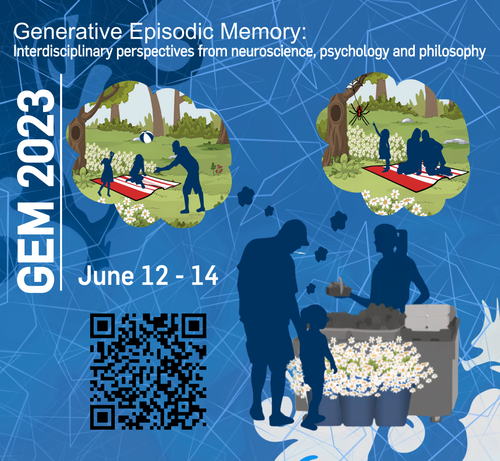
Check out our conference program at https://conftool.net/gem2023/sessions.php
Deadline for registrations is 30.04.23
@felipedebrigard @mariawimber @ptoncompmemlab
Deadline for registrations is 30.04.23
@felipedebrigard @mariawimber @ptoncompmemlab
 Steve Fleming
RT @lolabeerendonk
2 PhD positions in Cognitive Neuroscience available in our lab with PI Simon van Gaal, fully funded by an ERC Consolidator grant! Apply before the 20th of May. https://vacatures.uva.nl/UvA/job/2-PhD-Positions-in-Cognitive-Neuroscience-The-Neural-Basis-of-Consciousness/767371302/
2 PhD positions in Cognitive Neuroscience available in our lab with PI Simon van Gaal, fully funded by an ERC Consolidator grant! Apply before the 20th of May. https://vacatures.uva.nl/UvA/job/2-PhD-Positions-in-Cognitive-Neuroscience-The-Neural-Basis-of-Consciousness/767371302/
 Earl K. Miller
The medial temporal lobe supports the quality of visual short-term memory representation
https://www.nature.com/articles/s41562-023-01529-5
https://www.nature.com/articles/s41562-023-01529-5

The medial temporal lobe supports the quality of visual short-term memory representation - Nature Human Behaviour
Xie et al. combine intracranial recording, brain stimulation and lesion case study to show that the human medial temporal lobe is involved in the quality of short-term memory representation.
Very happy to see this out, forthcoming at the Psychonomic Bulletin and Review: "Moralization and self-control strategy selection", spearheaded by Sam Murray and Juan Pablo Bermúdez. Congratulations!

Samuel Murray, Juan Pablo Bermúdez & Felipe De Brigard, Moralization and self-control strategy selection - PhilArchive
To manage conflicts between temptation and commitment, people use self-control. The process model of self-control outlines different strategies for managing the onset and experience of temptation. However, little is known about ...
 El Duvelle
Let's do #JoinMastodonDay on 9th of March!
- Before: spread the word! Get to know Mastodon, choose a server, export contacts from 'other platforms', ...
- On the 9th: Mastodon users write & boost tutorials and tips, share #Introduction posts, advertise servers, send invite links, ... and the Newcomers Come!
- After: keep helping newcomers and sharing intro posts.
What say you? 😃 Please boost if you're in!
an idea of @noellemitchell
inspired by @alexwild 's #LeaveTwitterDay
 JamieLarsH
RT @meharpist
I'm thrilled to announce that, as of today, @Nature will consider Registered Reports for confirmatory research in cognitive neuroscience and the behavioral/social sciences. Please spread the word! @chrisdc77 @OSFramework @MarikeSchiffer @NatureHumBehav https://www.nature.com/articles/d41586-023-00506-2
I'm thrilled to announce that, as of today, @Nature will consider Registered Reports for confirmatory research in cognitive neuroscience and the behavioral/social sciences. Please spread the word! @chrisdc77 @OSFramework @MarikeSchiffer @NatureHumBehav https://www.nature.com/articles/d41586-023-00506-2

 Lynn Nadel
HIPPOCAMPAL HISTORY TOUR PART 12: Charan Ranganath
#hippocampus #hippocampusHistory
#hippocampusGurus
Today's comments come from a contemporary of Mike Hasselmo's -- and someone I've enjoyed exchanging ideas with from the very first time we met. And it continues to this day. Charan's comments will have to be broken into two parts.
Charan Ranganath
What got you interested in the hippocampus?
I know it is a cliche, but what got me interested was hearing about Brenda Milner’s work with H.M., reading her work with temporal lobectomy patients… and also the general contrasts between declarative and nondeclarative memory described by Larry Squire, Neal Cohen, and Dan Schacter.
Really, though, all that work was part of my bigger interest in memory, and my first love was the prefrontal cortex. Having gotten my feet wet as an undergraduate in Art Shimamura’s lab, I was doing clinical neuropsychology in grad school. Later, having read Joaquin Fuster’s eloquent book on the prefrontal cortex and Marcia Johnson’s work on Source Monitoring, I was sold. That interest was reinforced by testing so many people in the clinic with frontal dysfunction.
I later fell into the hippocampus when I was doing my postdoc in Mark D’Esposito’s lab to study how the prefrontal cortex contributes to working memory and long-term memory. I started to read the monkey lesion and single-unit recording literature, and I noticed that many of the tests used to test the role of the prefrontal cortex in working memory were hardly different from the tests used to investigate effects of medial temporal lobe lesions on memory in monkeys. At the time, people who were doing standard tests of declarative memory in fMRI studies could not get hippocampal activation, and surprisingly, we found hippocampal activation when people were asked to do a working memory task. Our publication even included a replication–in the exact same voxels that we had investigated in the original study. Chantal Stern had gotten similar results with an n-back working memory paradigm. No one wanted to believe our results and I took a ton of flak from people–our paper was rejected by a number of top journals. But the findings were replicated by others, and other labs that ran our paradigm in amnesic patients found that hippocampal damage could impair working memory. I soon did a deeper dive, and I saw all these flaws in the previous literature on working memory and long-term memory, and I began to question all the standard dogma about the hippocampus. That led me to do all sorts of other studies to challenge the standard model of hippocampal function.
Aside from your own work, what findings about the hippocampus (and related brain parts) in the past 50 years most excited you, and why?
I think the most exciting and eye-opening thing was the discovery of what the hippocampus doesn’t seem to do, and that the “related brain parts” really do most of the heavy lifting in many memory tasks. One study that stands out was Betsy Murray’s study showing that the perirhinal cortex is the essential player for object recognition memory, not the hippocampus (as well as the work from Howard Eichenbaum, John Aggleton, etc.). Then I went back and noticed that Larry Squire’s lab had shown relatively minor memory deficits in humans with hippocampal damage (compared to those with perirhinal damage). Putting that together with the failure to find hippocampal activation in fMRI studies of “declarative memory” made me rethink all of my assumptions about what the hippocampus does.
Then there were the studies that revealed something different about hippocampal function. For instance, I was really influenced by Jen Ryan and Neal Cohen’s study, suggesting that the hippocampus may be critical for spatial relational memory even in the absence of awareness. I was also amazed by the convergence between Andy Yonelinas’ work in human amnesics and Howard Eichenbaum’s parallel studies in rats showing that the hippocampus seems to be critical for recollection. The Nadel and Moscovitch review on retrograde amnesia was another paper that took a while to pass through my defenses, eventually leading me to the realization that the standard systems consolidation theory actually made no sense. All of this stuff led me to really think about “context” and its central role in memory.
On a related note, context is also connected to a completely different area of research on the “P300” event-related potential, which is a neural response to unexpected events or targets in simple detection tasks. Donchin and Coles proposed that the P300 is an index of “context updating,” a process that we now call “event segmentation”. Bob Knight had shown that the P300 was abolished in patients with hippocampal damage, and many intracranial EEG studies showed that the P300 is ubiquitous in the human hippocampus. P300 effects are far more robust than any other neurophysiological signal in the human hippocampus. Thomas Grunwald basically demonstrated that if a hippocampus doesn’t generate a P300 it is non-functional.
Finally, I was drawn to the “time cell” studies from Gyuri Buzsaki and Howard Eichenbaum’s labs, and Howard’s work examining representation of item and context information in the hippocampus. All that stuff led me back to the foundational work on spatial memory done by John O’Keefe, Richard Morris, Edvard and May-Britt Moser, etc.
And since you mentioned “related brain parts,” the confluence of findings showing a critical role for the parahippocampal cortex (and possibly also the retrosplenial cortex) in all aspects of context representation in memory was probably the biggest bombshell for me, although the importance of that discovery has been overlooked by much of the field.
Can you relate one personal story about interactions with colleagues that most exemplifies the world of hippocampal research?
This is the question that held me up. It is hard to pick one because our community has a lot of different personalities. I can tell a couple of stories of social interactions that laid bare the behavior of highly influential scientists who abused their power in ways that really hurt vulnerable people both personally and professionally. But I can equally tell of stories of incredible senior scientists like Howard Eichenbaum, Ray Kesner, and you Lynn, who would talk to students, postdocs, and junior faculty members (male and female, white or POC) like what they had to say was incredibly important. That gives you a kind of boost that is hard to put into words.
I’ll choose one story which captures the most collaborative and constructive aspects of our world. In 1999 or 2000, at the Cognitive Neuroscience Society meeting, I literally bumped into Andy Yonelinas as he was presenting a poster on his work showing that hypoxia patients had impaired recollection and intact familiarity. At the time, I was a true believer in this whole thing that the hippocampus does “declarative memory,” and I told him that I was skeptical about this whole recollection/familiarity thing. It would have been reasonable for him to blow off this silly comment from a postdoc who knew almost nothing about cognitive theories of memory. Instead he totally disarmed me when he said, “You should be skeptical!” What followed was a cool conversation/debate about the topic and how the distinction between recollection and familiarity could be tested with fMRI. We designed a study together and made a bet that if the hippocampus and perirhinal cortex contributed differently to recollection and familiarity, I’d buy him a beer, and if not, he’d buy me one. For a while, it looked like I was right but when we got enough data to do a group analysis, it turned out he was right–and that result pretty much changed my view of the hippocampus, and in turn about what memory is in the first place. By now I owe Andy a lot of beers and probably will not live long enough to pay off my tab.
New paper in Scientific Reports spearheaded by our amazing post doc Kristina Krasich at the IMC lab at Duke https://www.nature.com/articles/s41598-022-25720-2

Prestimulus oscillatory brain activity interacts with evoked recurrent processing to facilitate conscious visual perception - Scientific Reports
We investigated whether prestimulus alpha-band oscillatory activity and stimulus-elicited recurrent processing interact to facilitate conscious visual perception. Participants tried to perceive a visual stimulus that was perceptually masked through object substitution masking (OSM). We showed that attenuated prestimulus alpha power was associated with greater negative-polarity stimulus-evoked ERP activity that resembled the visual awareness negativity (VAN), previously argued to reflect recurrent processing related to conscious perception. This effect, however, was not associated with better perception. Instead, when prestimulus alpha power was elevated, a preferred prestimulus alpha phase was associated with a greater VAN-like negativity, which was then associated with better cue perception. Cue perception was worse when prestimulus alpha power was elevated but the stimulus occurred at a nonoptimal prestimulus alpha phase and the VAN-like negativity was low. Our findings suggest that prestimulus alpha activity at a specific phase enables temporally selective recurrent processing that facilitates conscious perception in OSM.
 Sam Gershman
This is so interesting:
https://www.cell.com/cell-reports/fulltext/S2211-1247(21)01802-7
Synaptically connected neurons send proteins to each other packaged in exosomes. Previous studies showed protein transfer but I think this is the first large-scale screen, identifying 200 proteins (likely an underestimate because they only looked at ones passing through axons).
More evidence that our conventional models of neural signaling are radically incomplete!