Evan Rail

@evanrail
138 Followers
180 Following
56 Posts
Writing about food and drink.
VERIFIED BY PRESSCHECK.ORGhttps://presscheck.org/journalists/evan-rail

Good news for Czech brewing: the Czech nation’s consumption of beer rose last year to 136 liters per capita, its highest level in three years.

For context, second-place Austria drinks around 3/4 of the Czech Republic's volume per person.

In 2022, the U.S. drank some 68 liters of beer per person, or just half the amount consumed by each person in the Czech Republic.

The Czech Republic has drunk the most beer per capita every year since 1993.

“When ‘Coco’ came to China a few years ago, it really put Mexican culture on the map. I have seen an increase in Mexican restaurants and more sales of tequila, thanks to that movie.”
To the bewilderment of many Mexican expats, Cinco de Mayo — a small, regional holiday back home — is spreading around the world. In China, the popularity of the Pixar movie “Coco” helped make Cinco de Mayo a thing.
For VinePair, I wrote about May 5 parties in Shanghai, Munich and elsewhere.
https://vinepair.com/articles/cinco-de-mayo-global-celebrations/
From Munich to Mumbai, Cinco de Mayo Goes Global

Despite the fact that Cinco de Mayo isn't celebrated to the same degree in Mexico, celebrations have spread around the globe.

VinePair

A Mastodon #haro (aka “help a reporter out”) experiment: I’m looking for places outside of North America that have or have had U.S.-style Cinco de Mayo events. (Yes, I know Cinco de Mayo is not celebrated the same way in Mexico. That’s what makes this interesting.)

Have you seen a Cinco de Mayo event at a bar or restaurant in Berlin, Tallinn, London, Mumbai, Johannesburg or somewhere else? What was it like?

#journalism #drinks #foodwriting

Just in the off chance that someone from Chicago who enjoys digging things out of libraries (or microfilm): I'd love tor read an interview that Vicente Blasco Ibanez gave to the Chicago Herald & Recorder in 1919. The journalist was Charles Macarthur and apparently the interview was very funny and mostly described the famous author's toes. Ibanez was a huge hit in the USA with his novel Blood and Sand and many film adaptation of his novels. #chicago

Za’atar Martinis (and Margaritas). Craft beer with Persian roots. New gins from Lebanon. Sazerac with arak, aka Saz Arak.

For @VinePair, I wrote about Middle Eastern flavors in drinks, with help from @BackHomeBeer and @TheGreenZoneDC, among others.

https://vinepair.com/articles/middle-eastern-cocktail-ingredients-trend/

Za’atar Martinis and Sumac Sours: The Drinks World Is Harnessing the Flavors of the Middle East

The drinks world is riding a wave of Middle Eastern flavors, from Persian black lime in craft beer to unusual new gins from Lebanon.

VinePair

In 2021, Belgium brewed 24 million hectoliters of beer (20.5M barrels).

In 2021, the Czech Republic brewed 19.6 million hectoliters of beer (16.7M barrels).

Over 73% of Belgian beer was exported.

Over 73% of Czech beer was consumed domestically.

🍺🇧🇪🇨🇿

"My favorite place for a quiet beer in Dayton, Ohio, is a closet. It’s about 3’ x 4’, with a small bench on one side that can seat two people who know each other very well and a tiny seat in the opposite corner to set one’s beers upon. I guess it could fit a third person, but that’s up to you and the particular boundaries of your friendships."

I wrote about my favorite drinking nook at my favorite bar for Good Beer Hunting:

https://www.goodbeerhunting.com/b-roll-blog/2023/2/6/no-679

no. 679 — Good Beer Hunting

My favorite place for a quiet beer in Dayton, Ohio, is a closet. It’s about 3’ x 4’, with a small bench on one side that can seat two people who know each other very well and a tiny seat in the opposite corner to set one’s beers upon. I guess it could fit a third person, but that’s up to you and t

Good Beer Hunting

My podcast on the Busch-Lasker Controversy of 1922--Prohibition on the high seas!--is finally out in the world.

My article on this story came out last fall, but the podcast sprinkles lots of fun extra details in.

Here's a clip with Anheuser-Busch archivist Mike Thompson.

Spotify: https://tinyurl.com/fs376mje

Apple: https://tinyurl.com/mutuxzdv

GBH link: https://tinyurl.com/2af9eu46 #beerhistory #beer #history #podcast

SM-008 Beer For All or None: The Busch-Lasker Controversy of 1922

Listen to this episode from Good Beer Hunting on Spotify. It was 1922, and August A. Busch, Sr. needed a break. A long one. It turns out that running a gigantic brewing company like Anheuser-Busch during Prohibition was kind of stressful. And so, being the patriarch of one of the country's wealthiest family dynasties at the time, Busch did what dynasts do: he treated the word "summer" like a verb. On May 15th of that year, Busch boarded the SS George Washington, a passenger ship about half the size of the Titanic, bound for a three-month retreat at the family's country estate in western Germany. Now, we could all get a cheap laugh at the elitist image of Anheuser-Busch's president leaving his titan brewery so a luxury liner can whisk him away to his personal castle on a German hillside, but I urge you to resist the temptation. If you'd had the run that Busch had so far, you'd need a vacation too. Prohibition in the United States, which banned the manufacture, importation, transportation, and sale of alcoholic beverages nationwide, had been in effect for over two years now–which meant the beer that had built the Busch family's empire was illegal.  Many of the nation's thousand-ish breweries simply closed, but Anheuser Busch was one of the few that tried to survive in a post-beer country. And so far…it wasn't going well. The brewery was millions in the red, the products they made to replace beer weren't cutting it, and the government was failing spectacularly to contain the growing hordes of moonshiners and bootleggers across the country. But if you're going through hell, keep going. Whether it was pure faith or rational assessment, Busch believed that Prohibition wouldn't last forever. Even so, it was clearer every day that fighting the 18th Amendment would be a marathon, not a sprint. Which brings us back to the George Washington. Busch boarded and the ship set sail, but the George Washington was barely underway when Busch saw something shocking. As soon as the ship passed into international waters, and out of U.S. jurisdiction, the ship's staff threw open cabinets full of liquors, wines, and beer, and opened up a bar. Actually, they opened five bars, all over the ship. And because American alcohol producers, like Busch, had all been put out of business, the booze was entirely foreign in origin–even the so-called "Old American Moonshine Whiskey." As you might imagine, this made Busch a little angry. The George Washington, like many American passenger liners at the time, wasn't just some ship. It was owned and operated by the United States Shipping Board, a government agency. In other words, the government that was enforcing Prohibition on Americans was also slinging drinks on the side. August Busch wasn't about to take this lying down. The United States government had become, in his words, the "biggest bootlegger in the world," and everyone was going to know about it. In this episode, the strict impositions of Prohibition draws a once and future titan of the brewing industry, Busch, into a very public feud with Albert Lasker, an advertising guru turned reluctant chairman of the Shipping Board. Their battle over the right to sell alcohol at sea delighted a sensationalist media, put a finger on the scales of the 1922 congressional midterm elections, spurred a Supreme Court case, and laid bare the strange politics of the Prohibition era. As Prohibition expanded the size and reach of the U.S. government, it also kindled political conflicts that went far beyond the morality of drinking beer. In fact, Prohibition laid bare the complications involved in implementing, adapting to, or coping with high minded social concepts. Whether that idea is a controversial moral creed like banning alcohol, or a hopefully straightforward ideal like democracy, the devil will always be in the details.  

Spotify
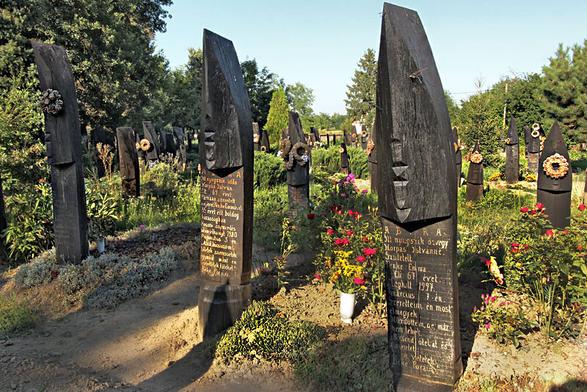
Most of the grave markers in the village of Szatmarcseke, Hungary, resemble upturned wooden boats. Some claim this tradition dates back to a flood, when drowned victims were floated to their burials on boats, which were then used as headstones. The grave markers may also represent the idea that death is a journey, a notion once reflected in an ancient Finno-Ugric custom of burying the dead in boats. #mythology #history #folklore #weird #graveyard

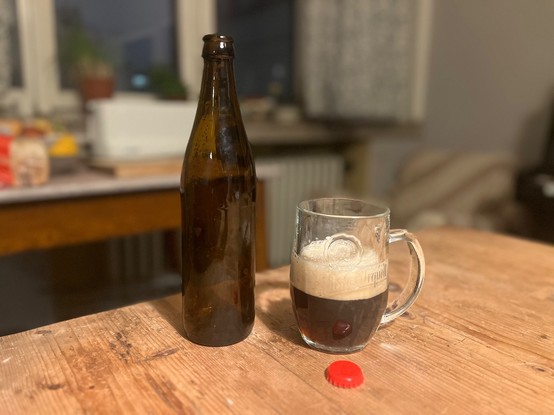
Yesterday I got to try @akrennmair’s homebrewed Czech-style dark lager, based on the tmavé pivo article and recipe I wrote up for Craft Beer & Brewing last year, with recommendations, tips and the recipe itself coming from brewer Štěpán Kříž at Pivovar Hostomice.

It tasted just like the dark lager from Pivovar Hostomice. I mean, it was *this close* to the beer from the pub.

This picture shows the last half-glass, because the first glass disappeared before I could shoot it.