@ErikvanStraten @ScottHelme The information is in the title of Scott's article.
Some random page that explains the number.
https://inspirepearls.com/blogs/people/what-does-it-mean-when-someone-says-101

Information Security in Financial Services, Ireland.
Certified auditor.
PADI Rescue Diver.
Has two black cats.
MSc in Climate and Meteorology
BSc in Cybersecurity
"If you want your children to be intelligent, read them fairy tales. If you want them to be very intelligent, read them more fairy tales." - Albert Einstein
| Location | Europe |
@ErikvanStraten @ScottHelme The information is in the title of Scott's article.
Some random page that explains the number.
https://inspirepearls.com/blogs/people/what-does-it-mean-when-someone-says-101
@ErikvanStraten @ScottHelme "I am asking for USEFUL information for users to evaluate advantages and their risks."
I think this sentence is key in your reply. A user is rarely a technical expert, and is not able to understand the authentication process, or evaluate it. Such knowledge is available to a small fraction of one percent of people on Earth. Technical analyses of FIDO2 are available to those few able to understand them. For the overwhelming majority a much higher level information is required. It is the same as with washing machines - you don't need to know how they are built in order to operate them.
The level of information in an article is a matter of the audience the article is targeting.
@ErikvanStraten @ScottHelme "stops phishing attacks": not while *creating* a passkey"
Why should a passkey protect this ceremony (in FIDO wording) if the passkey has not been created yet?
Session cookies have nothing to do with passkeys. Those are post-authentication.
The following paper should help with clarification of some misunderstandings on your side.
Passkeys are becoming a major part of how we secure accounts online, but there’s still a lot of confusion about what they are, how they work, and what risks remain.
I've written a short introduction to Passkeys to set the scene before we publish some deeper technical posts this week.
A simple starting point before we get into the details.
https://scotthelme.co.uk/passkeys-101-an-introduction-to-passkeys-and-how-they-work/
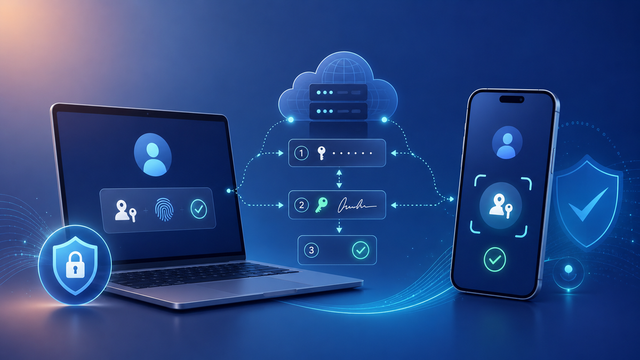
Passwords have been the weak point in online authentication for decades. They can be reused, guessed, stolen, phished, leaked, sprayed, stuffed, and captured by malware. Passkeys are one of the first mainstream authentication technologies that remove many of those problems entirely, and any website still relying on passwords should be
‘No Way To Prevent This,’ Says Only Package Manager Where This Regularly Happens | Kevin Patel
「 “It’s a shame, but what can you do? This is just the price of building modern web apps,” said Senior Frontend Engineer Mark Vance, echoing the sentiments of a community that completely relies on a 40-level-deep nested tree of unvetted packages maintained by pseudonymous strangers to capitalize a single string 」
Tech has tricked us all - and Europe has made itself increasingly incapable of protecting against itself against this influence. How did it get to this point?
As the director of Enforce and prominent critics of the adtech industry in Europe, Johnny Ryan (@johnnyryan) explores the dangers Big Tech poses to society. At #rp26 he while outline possible solutions to lessen Big Techs influence on Europe.
➡️ https://re-publica.com/en/news/rp26-speaker-johnny-ryan-how-we-avoid-dystopia
Babies Are Bleeding to Death as Parents Reject a Vitamin Shot Given at Birth
---
The vitamin K shot, a lifesaving injection given to newborns to prevent uncontrollable bleeding of the brain and intestines, has become collateral damage of the anti-vaccine movement.
https://www.propublica.org/article/more-parents-decline-vitamin-k-shot-newborns?utm_source=mastodon&utm_medium=social&utm_campaign=mastodon-post
#News #Parenting #Health #PublicHealth #Science #Medicine #Children
 Scott Helme
 jbz
jbz re:publica
 Steven Reed
 ProPublica