Postdoctoral and doctoral researcher positions in Probabilistic Machine Learning research group, Aalto University
Samuel Kaski’s research group on Probabilistic Machine Learning (https://research.cs.aalto.fi/pml/) is searching for postdocs and doctoral researchers (PhD students) to work on AI fundamentals and/or join exciting projects. The work includes collaboration with the Finnish Center for Artificial Intelligence (FCAI), the Centre for AI Fundamentals at the University of Manchester, the Turing Institute, ELLIS, and researchers of other domains in our applications. Prof Kaski is Professor of Computer Science in Aalto University and Professor of AI in the University of Manchester. He is Director of Finnish Center for Artificial Intelligence and ELLIS Unit Helsinki, and Research Director of the Pankhurst Institute for Healthcare Technology. His research group develops machine learning principles and methods focusing on a few key topics (see “Probabilistic modelling and Bayesian inference for machine learning” below), often working with researchers of other fields in new exciting applications (see the other topics below). Topics Probabilistic modelling and Bayesian inference for machine learning Keywords: probabilistic modelling, Bayesian inference, simulation-based / likelihood-free inference, multi-agent RL and collaborative AI, sequential decision making and experimental design, privacy-preserving learning, Bayesian deep learning. We are looking for a new postdoc or PhD student in the team which develops probabilistic modelling and Bayesian inference methods. The team has several exciting new machine learning formulations we work on, and opportunities for applying the methods with top-notch collaborators. The core is always development of new methods, and with this call I am looking for talented researchers with background in machine learning, stats or CS (or other directly relevant topics) who are keen on developing the new methods. In the cover letter, let me know what you are interested in - if we are already working on it, all the better, but I am willing to listen to new ideas too. Machine learning for drug design Keywords: probabilistic modelling, drug design, deep learning Recent progress in machine learning for generative and predictive models of molecules brings us towards computational, automatised drug design. We develop statistical methods and models for molecular structures, energies and interactions with the help of deep learning. A number of open problems reside in developing neural network models with physics-based inductive biases, in generative models in 3D spaces, in modelling the property landscapes of molecules, and in generalizing outside the training distribution in molecular design. We are looking for motivated candidates with background in computational sciences, machine learning, statistics. Team: this position is in the Probabilistic Machine Learning (PML) research group at Aalto, https://research.cs.aalto.fi//pml and will involve collaboration with Prof. Vikas Garg (https://research.aalto.fi/en/persons/vikas-garg) and Dr Markus Heinonen. Machine learning for synthetic biology and biodesign Keywords: AI-based design, human-in-the-loop machine learning, collaborative AI, molecular modeling, reinforcement learning, deep learning algorithms, generative models, We are searching for early career scientists to join our research team working towards next-generation machine learning methods for synthetic biology. The position is available in a new large multi-year project, the Virtual Laboratory for Biodesign (BIODESIGN), implemented in collaboration between FCAI and VTT Technical Research Centre of Finland. Supported by a 2 million EUR grant from the Jane and Aatos Erkko Foundation, the BIODESIGN project aims for breakthroughs in AI techniques for protein design by combining the strength of novel deep learning models with AI-based design and human feedback in a Design-Build-Test-Learn cycle. The virtual laboratory is envisioned to have wide-range applications in industry (e.g., new biochemicals, biomaterials and drugs) and to help the transition to a carbon-neutral society. We are looking for applicants with a strong academic record in computer science, mathematics, or statistics. Solid research experience in one or more of the following fields is beneficial: AI-based design, Deep learning algorithms, Generative models, Human-in-the-loop machine learning, Collaborative AI, Molecular modeling, Reinforcement learning, Structured prediction. We invite applications from early-career scientists at all levels: Doctoral researcher (PhD student), Postdoctoral researcher, and Research fellow. The successful applicants will join a world-class research team where top AI researchers in FCAI (led by Professors Samuel Kaski, Juho Rousu and Vikas Garg) join forces with synthetic biology experts of VTT (led by Prof. Merja Penttilä). Team: this project will involve collaboration with Prof. Juho Rousu (https://research.aalto.fi/en/persons/juho-rousu) and Prof. Vikas Garg (https://research.aalto.fi/en/persons/vikas-garg). Deep learning with differential privacy Keywords: Deep learning, hyperparameter learning, differential privacy Differential privacy allows developing machine learning algorithms with strong privacy guarantees. Recent work shows it is possible to combine strong privacy and high accuracy by pre-training models on public data and only fine-tuning the model with the sensitive data. However, high accuracy still requires a few key problems to be solved. The aim of this project is to develop methods that make it easier to train high accuracy private models. The project will benefit from a very large grant of compute time on LUMI, 3rd fastest supercomputer in the world. The project requires a background in deep learning. Team: this project will involve collaboration with Prof. Antti Honkela (https://www.cs.helsinki.fi/u/ahonkela/). AI-Assisted Modeling in Economics Keywords: probabilistic machine learning, mechanism design, game theory We are seeking a PhD student interested in developing machine learning approaches to study questions in economics. A particularly interesting research problem is how to incorporate machine learning into game theoretic and mechanism design problems with specific focus on how AI-assistants can be used in the design of robust mechanisms. The candidate needs sufficient background in CS/stats/math, preferably also machine learning, and an interest in engaging in economics. We welcome applicants interested in doing a PhD supervised by Prof. Samuel Kaski from the Finnish Centre for Artificial Intelligence in collaboration with Prof. Otto Toivanen and Prof. Daniel Hauser from Helsinki Graduate School of Economics. Team: This project involves collaboration with Professor Otto Toivanen whose research interests are in the intersection of competition, innovation and regulation(his profile here) and Assistant Professor Daniel Hauser who is an economic theorist focusing on learning in dynamic games (his profile here). Probabilistic modeling for neuroimaging (AI-Mind) Keywords: Neuroimaging, probabilistic modeling, Alzheimer’s, medical AI We are looking for researchers to join us in developing new probabilistic modeling and machine learning methods needed in the core problems of modern neuroscience, based on (functional) brain imaging and clinical data. In this domain, methods need solid uncertainty estimates and ability to uncover both linear and nonlinear relationships from data, and those are key properties of the probabilistic modeling methods we work on. The project requires a background in probabilistic modeling and Bayesian inference, preferably in the machine learning context, and good communication skills. Prior experience in neuroimaging research is a bonus. The work will be related to a large EU project including an excellent neuroscience collaborator, Prof. Riitta Salmelin of Aalto, and unique data coming from a number of collaborators across Europe. In the project we are developing new machine learning methods for estimating individual “fingerprints” of brain activity that are predictive early of later disturbances, with large application potential in early-onset dementia and Alzheimer disease. Links: http://research.cs.aalto.fi/pml/ https://www.ai-mind.eu/project/ Team: this project involves collaboration with Riitta Salmelin (Neuroscience, NBE), and AI-Mind project partners across Europe. Collaborative Machine Learning This topic is our strong focus and we recruit new members to our team through FCAI’s call for postdocs and PhD students. Please apply to topic “5) Collaborative AI and Human Modelling” in the FCAI call. You can enter your wishes about supervision arrangements in the cover letter. Your experience and ambitions We expect the candidates to hold or be close to getting a relevant doctoral degree (for postdocs) or MSc degree (for PhD students) and have solid background in the mathematics/statistics/computer science needed in machine learning. Previous experience in the application fields is an advantage. Capability of both independent work and teamwork, and excellent written and spoken English are necessary. What we offer We provide 1) RESEARCH ENVIRONMENT You will work in Professor Samuel Kaski’s research group (Probabilistic Machine Learning Group). We design the collaboration as we go, according to what the research needs. Collaborators include but are not restricted to the other groups in the Finnish Center for Artificial Intelligence (FCAI), other sites of the European Laboratory for Learning and Intelligent Systems (ELLIS), Centre for AI Fundamentals of the University of Manchester, the Turing Institute, and a number of excellent researchers in other fields in our applications. 2) JOB DETAILS All positions are fully funded, and the salaries are based on the Finnish universities’ pay scale. The contract includes occupational healthcare. Postdoc positions are typically made for up to three years. Following the standard practice, the PhD student position contract will be made initially for two years, then extended to another two years after a successful mid-term progress review. Starting dates are flexible. All positions are negotiated on an individual basis. We are strongly committed to offering everyone an inclusive and non-discriminating working environment. We warmly welcome qualified candidates from all backgrounds to apply and particularly encourage applications from women and other groups underrepresented in the field. Ready to apply? Submit your application through our recruitment system Workday by clicking Apply button under the page title. The deadline for applications is 1st October at 23:59 Finnish time (UTC +2). Required attachments 1. Cover letter (1–2 pages). 2. CV 3. List of publications (please do not attach full copies of publications) 4. A transcript of doctoral study for applying to postdoc positions; both transcripts of MSc and BSc studies for applying PhD student positions 5. The degree certificate of your latest degree. If you are applying for a postdoc position and don’t yet have a PhD degree or for a PhD student position and don’t have a Master's degree, a plan of completion must be submitted. 6. Contact details of two senior academics who can provide references. We will contact your referees if we need recommendation letters. All materials should be submitted in English in a PDF format. Note: You can upload max. five files to the recruitment system, each max. 5MB. Please note: Aalto University’s employees and visitors should apply for the position via our internal system Workday -> find jobs (not external aalto.fi webpage on open positions) by using their existing Workday user account. Contacts: Fang Wang ([email protected]) More Information We are part of Finnish Centre for Artificial Intelligence FCAI and ELLIS Unit Helsinki. More information on their pages, and the frequently asked questions on this page. Aalto University is a community of bold thinkers where science and art meet technology and business. We are committed to identifying and solving grand societal challenges and building an innovative future. Aalto has six schools with nearly 12 000 students and a staff of more than 4000, of which 400 are professors. Our main campus is located in Espoo, Finland. Diversity is part of who we are, and we actively work to ensure our community’s diversity and inclusiveness. This is why we warmly encourage qualified candidates from all backgrounds to join our community. The Department of Computer Science is an internationally-oriented community and home to world-class research in modern computer science, combining research on foundations and innovative applications. With over 40 professors and more than 450 employees from 50 countries, it is the largest department at Aalto University and the largest computer science unit in Finland. Computer science research at Aalto University ranks high in several prominent surveys (47th worldwide and 9th in Europe in Shanghai subject ranking 2019; and 56th worldwide in Times Higher Education subject ranking 2020). About Finland Finland is a great place for living with or without family – it is a safe, politically stable and well-organized Nordic society. Finland is consistently ranked high in quality of life and was just listed again as the happiest country in the world: https://worldhappiness.report/news/its-a-three-peat-finland-keeps-top-spot-as-happiest-country-in-world/. For more information about living in Finland: https://www.aalto.fi/services/about-finland More info: twitter.com/fcai_fi linkedin.com/company/fcai youtube.com/channel/UC7nUhposDgxzDOKns_H5J0w Aalto.fi More about Aalto University: Aalto.fi twitter.com/aaltouniversity facebook.com/aaltouniversity instagram.com/aaltouniversity Aalto University is where science and art meet technology and business. We shape a sustainable future by making research breakthroughs in and across our disciplines, sparking the game changers of tomorrow and creating novel solutions to major global challenges. Our community is made up of 13 000 students, 400 professors and close to 4 500 other faculty and staff working on our dynamic campus in Espoo, Greater Helsinki, Finland. Diversity is part of who we are, and we actively work to ensure our community’s diversity and inclusiveness. This is why we warmly encourage qualified candidates from all backgrounds to join our community.

 Tim Mak
 myrmepropagandist
 Missing The Point
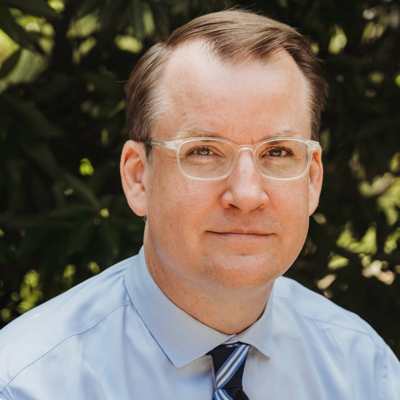 Philip Bump
 Minnesota Reformer
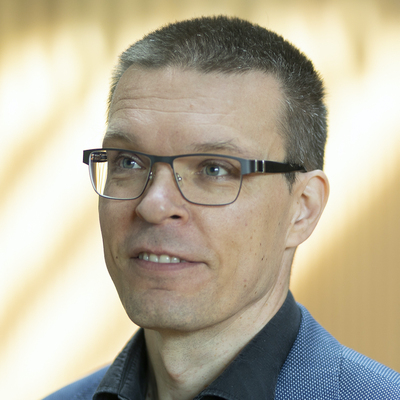 Samuel Kaski
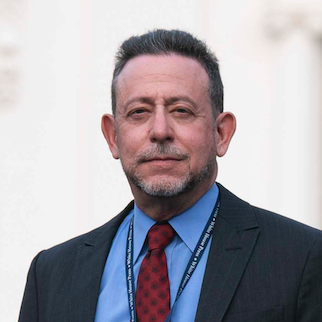 Steve Herman