 Tom Stafford
Analysis of UK higher education sector finances puts numbers on what everybody must know
"We are punishing providers for failures of marketing, while turning a blind eye to failures in the student experience"
from David Kernohan
| Website | https://www.twelvetreeslab.co.uk/ |
| Research | Cell & Molecular Neurobiology |
| Location | Sheffield, UK |
Analysis of UK higher education sector finances puts numbers on what everybody must know
"We are punishing providers for failures of marketing, while turning a blind eye to failures in the student experience"
from David Kernohan

Research Article
Knitted origami
Elizabeth L. Wilmer
"Techniques are presented for embedding horizontal, vertical, and45◦diagonal crease lines into garter stitch knitted fabric. While theseare mostly based on standard lace knitting stitches, the horizon-tal creases use double-cable-crossed elongated stitches in a non-standard way. This crease library suffices to knit a model of a squaretwist, a foundational origami tessellation unit."
https://www.tandfonline.com/doi/epdf/10.1080/17513472.2023.2191572
Our colleague, Pablo de Castro, has recently published an interesting blog post on the implications of the Twitter exodus on alternative metrics.
"It’s not just that the desertion of large swathes of very active communicators in the scholarly comms domain to Mastodon has dried up the references (tweets) ... [but that its] rendered the Altmetric snapshot unreliable."
Twitter turbulences & their impact on Altmetric scores https://strathoa.tumblr.com/post/712481087162646528/twitter-turbulences-and-their-impact-on-altmetric #AltMetrics #scholcomm #Twitter #twittermigration
New posting! And a very personal one.
In January I handed in my resignation, and will be leaving the Department of Cell & Developmental Biology, the University of Würzburg, and the Physics of Parasitism network at the end of April.
I am #LeavingAcademia.
More discussion of this decision, the reasons for it, and what it means for TIR, in the posting below.
https://totalinternalreflectionblog.com/2023/03/19/changing-lanes/
ChatGPT is a chat bot that is really, REALLY good at relevance, coherence, and sounding plausible. But it's incredibly bad at factual accuracy.
If you're a teacher, why not use it as a teaching tool rather than banning it? Students are going to use it anyway: best they learn about it's limitations.
An exploration of some of ChatGPT's strengths and weaknesses from a classicist's point of view.
(ca. 14 minutes reading time)
#ai #classics #chatgpt #factchecking
https://kiwihellenist.blogspot.com/2023/03/chatgpt.html

We are excited for the launch of The Forest of Biologists, a new #biodiversity initiative from @Co_Biologists, created with support from the Woodland Trust.
#forbiologists
For every #Research Article & #Review article that is published in @J_Cell_Sci a #nativetree is planted in a forest in the UK. We are also funding the preservation of #ancientwoodland & dedicating these trees to our peer reviewers.
Find out more in our Editorial: https://journals.biologists.com/jcs/article/136/6/jcs261084/297138/The-Forest-of-Biologists-for-biologists-for
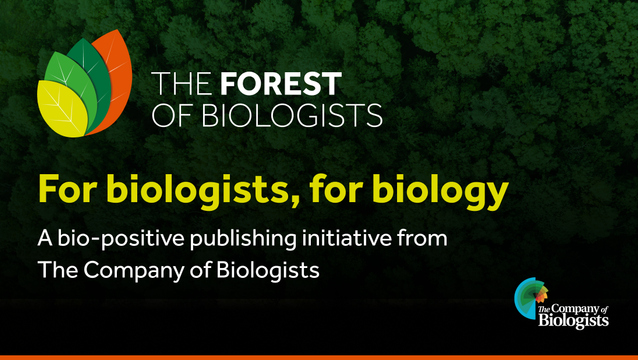

We are excited to announce an ambitious new biodiversity project – The Forest of Biologists – creating, restoring and preserving important woodland habitats in the UK. This will help to counteract nature loss and safeguard some of the most critically endangered ecosystems for future generations.We want to integrate this new initiative into the core of what we do as a publisher. For the next two years, we will be planting a new tree for every Research Article and Review article that we publish. We will also be funding the restoration and preservation of ancient woodland – these are some of the rarest and most biodiverse habitats in the UK – and dedicating these woodland trees to our peer reviewers, who help us to preserve the integrity of the scientific record.This important work will be funded by The Company of Biologists as a not-for-profit publisher and UK charity. Our focus on the creation, restoration and preservation of precious woodland habitats reflects widespread concern among biologists worldwide about climate change and a global decline in biodiversity. After nearly 100 years of publishing journals, facilitating scientific meetings and providing charitable grants to support our communities, we want to play our part in supporting biology too. In linking this initiative to our authors and peer reviewers, we want to acknowledge the extraordinary support we receive from the communities that embrace Journal of Cell Science and its sister journals: Development, Journal of Experimental Biology, Disease Models & Mechanisms and Biology Open.As we aim to make a positive difference, it's important that we think carefully and that our actions are directed and evaluated by science. We've therefore chosen to work with the Woodland Trust (https://www.woodlandtrust.org.uk/), the UK's largest woodland conservation charity focusing on the role that trees and woods play in tackling the threats of climate change and nature loss. In their words, ‘the benefits of trees in the fight against climate change are now well understood. They lock up carbon, reduce pollution and flooding, and support people, wildlife and farming in adapting to the climate crisis.’It's important to us as biologists that our trees are responsibly planted with long-term management and preservation in mind. Through our collaboration with the Woodland Trust, we're funding the planting of native trees in the Young People's Forest in Derbyshire (https://www.woodlandtrust.org.uk/visiting-woods/woods/young-peoples-forest-at-mead/). The grove will feature a range of native UK tree species including silver birch, oak, lime, alder, rowan and hawthorn – a good mix of species reduces the risks of vulnerability to diseases and pests. The site is rich in wildlife and, once complete, will include biodiverse ponds, open spaces and species-rich grassland.The nature and climate crises we face require urgent action – and that action needs to be directed and evaluated by science. That's why we are really excited to be working with The Company of Biologists on both the restoration of ancient woodlands and the creation of new woodlands. Ancient woodland is one of our most biodiverse habitats and using these as the building blocks for woodland and habitat expansion gives us the best opportunity to address these crises together.John Tucker, Woodland Trust AmbassadorAncient woodlands are some of the rarest and most biodiverse habitats in the UK and home to more threatened species than any other terrestrial habitat in the country. We will be funding the restoration of nearly 12 hectares of degraded temperate rainforest over the next two years in partnership with the Woodland Trust. Great Knott Wood is located on the shore of Lake Windermere within the Lake District National Park. Restoration efforts include the protection of veteran trees and deadwood, removal of non-native species, and the gradual thinning of the canopy to carefully increase light levels. Together, these activities will help counteract biodiversity loss and protect these habitats for future generations.To keep track of our progress, we have created a virtual forest (https://forest.biologists.com) that we hope you'll explore.For every article published, a new tree is planted – and a representation of that tree will appear in the virtual forest. Authors will be able to see which species has been planted on their behalf (this will match a real tree). Readers will see clickable forest icons for articles published from January 2023 and will be able to browse articles (trees) within the forest.Similarly, each time a peer reviewer completes the review process for one of our articles, we will dedicate a tree in the ancient woodland to them. Virtual representations of these trees will be added to the forest periodically and there will be no association with specific articles so that peer reviewers retain their anonymity.At Journal of Cell Science, we pride ourselves in supporting the cell biology community, so it is a great pleasure to now be able to support an even larger community – our planet and its climate.Michael Way, Editor-in-ChiefThe virtual forestVirtual trees will appear in our online forest to represent each new tree planted on behalf of our authors and trees preserved in ancient woodland to acknowledge our peer reviewers. (A) A new ‘leaves’ icon on articles will allow readers to click through to view individual trees. (B) View of the landscape in the virtual forest. (C) Information will be provided about each tree species along with a button to tweet individual trees (#forestofbiologists).This project was developed as a community initiative. We would particularly like to thank Steve Kelly, Professor of Plant Sciences, University of Oxford (and Editor-in-Chief of Biology Open), for planting the seed that grew into The Forest of Biologists. The idea was enthusiastically embraced by our Board of Directors who approved the financial commitment needed to ensure that our efforts were appropriate, long term and supported by science.As we look ahead to the centenary of The Company of Biologists in 2025, we've been thinking deeply about our contributions to biology and the scientific communities around our journals. The Forest of Biologists represents an important step in our commitment to incorporating sustainability thinking into all aspects of what we do (https://www.biologists.com/about-us/sustainability/) as we look forward to another 100 years of supporting biologists and inspiring biology.Variations of this Editorial appear in each of our journals.

 Bruno Rodrigues

 Alexandre B A Villares 🐍
 Strathclyde Open Scholarship
 Total Internal Reflection
 Peter Gainsford
 Saul Cozens (he/him)
 Journal of Cell Science