Journal of Cell Science

@J_Cell_Sci@mstdn.science
363 Followers
594 Following
168 Posts
Journal of Cell Science publishes cutting-edge science, encompassing all aspects of cell biology.
Journal of Cell Sciencehttps://journals.biologists.com/jcs
Did you know…Journal of Cell Science is a #preprint friendly journal. We welcome the submission of manuscripts that have been deposited on preprint servers. In fact, we have a two-way integration portal with bioRxiv, allowing you to submit to the journal when you upload your preprint or, vice versa, to post your article on bioRxiv when you submit to us.
https://bit.ly/3pWeOoV
#cellbiology
Journal policies | Journal of Cell Science | The Company of Biologists | Journal of Cell Science | The Company of Biologists

Journal policies | Journal of Cell Science | The Company of Biologists | Journal of Cell Science | The Company of Biologists Journal policies Contents Disclaimer Publisher policies Appeals and complaints Diversity and Inclusion Company privacy policy Confidentiality Objectivity and fair play Financial and competing interests Author contributions Redundant or concurrent publication Scoop protection Preprint policies Transfers to and from Journal of Cell Science Citation policy Data deposition Resource sharing Experimental subjects...
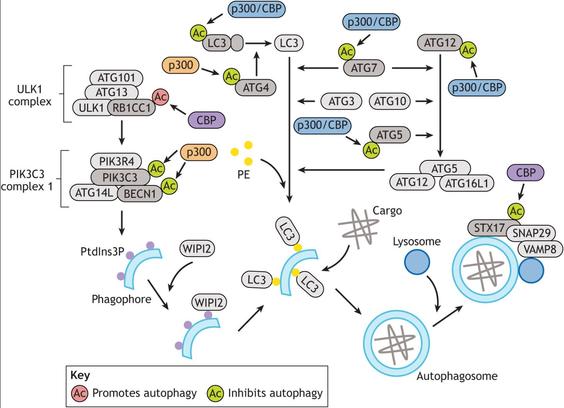
In their Review article, Yinfeng Xu and Wei Wan discuss the role of p300/CBP-mediated protein acetylation in autophagy and the implications for autophagy-related human disorders.

https://journals.biologists.com/jcs/article/136/12/jcs261028/316740/Emerging-roles-of-p300-CBP-in-autophagy-and

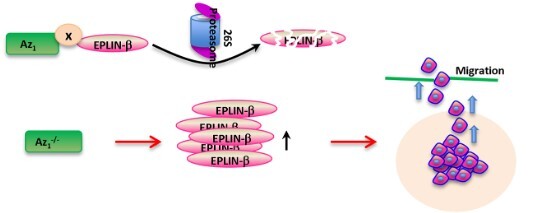
Dan Li, Kanaga Sabapathy and colleagues identify EPLIN-β as a substrate of ornithine decarboxylase antizyme 1 (Az1). Loss of Az1 leads to elevated EPLIN-β levels, causing enhanced cellular migration.

https://journals.biologists.com/jcs/article/136/12/jcs260427/316760/EPLIN-is-a-novel-substrate-of-ornithine
#OpenAccess

EPLIN-β is a novel substrate of ornithine decarboxylase antizyme 1 and mediates cellular migration

Summary: EPLIN-β is degraded by ornithine decarboxylase antizyme 1 (Az1) in a proteasome-mediated, ubiquitination-independent manner. Az1 absence leads to elevated EPLIN-β levels, causing enhanced cellular migration.

The Company of Biologists

Gillian DeWane, Kris DeMali and colleagues find that vinculin Y822 modulates ligand binding, and mutations at this residue affect focal adhesion morphology and contribute to tumorigenicity in cancer cells.
https://journals.biologists.com/jcs/article/136/12/jcs260104/316742/Vinculin-Y822-is-an-important-determinant-of

This article is available under our Read & Publish Open Access initiative.
Researchers can find out about the wide range of benefits, read what researchers are saying and view a list of participating institutions at https://www.biologists.com/library-hub/read-publish/researchers/
#OpenAccess #ReadandPublish

Vinculin Y822 is an important determinant of ligand binding

Summary: Vinculin Y822 modulates ligand binding to control focal adhesion morphology and tumorigenicity in cancer cells.

The Company of Biologists

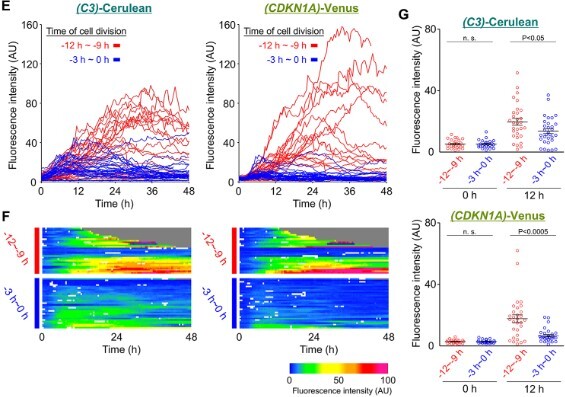
Tatsuki Tsuruoka, Kazuyasu Sakaguchi, Toshiaki Imagawa and colleagues share their reporter system for visualising transcriptional activity of p53 at the single cell level.

https://journals.biologists.com/jcs/article/136/12/jcs260918/316739/Development-of-a-fluorescence-reporter-system-to

#cellbiology #p53

Development of a fluorescence reporter system to quantify transcriptional activity of endogenous p53 in living cells

Summary: Tumor suppressor protein p53 is one of the hub factors of the cellular stress responses. Our novel reporter system allows easy and precise visualization of the transcriptional activity of endogenous p53.

The Company of Biologists

Issue 11 is complete!

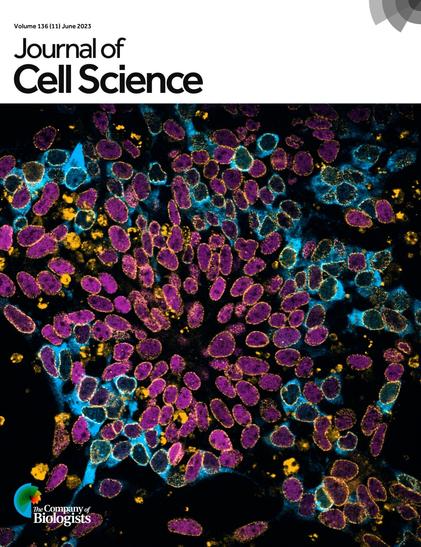
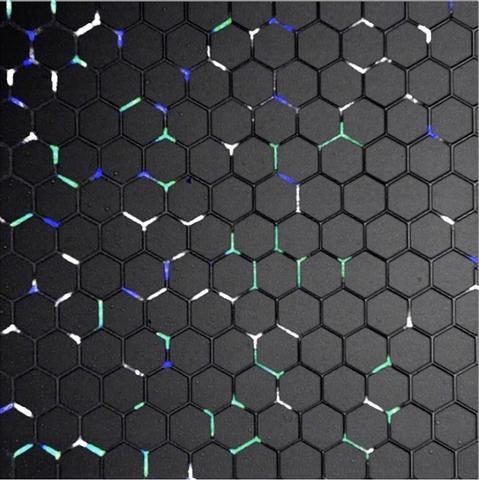
Our cover shows Nup133Δmid mESCs during neuroectoderm differentiation from Orniacki et al. The nuclear pores (GFP-Nup133Δmid, orange), form a discontinuous rim at the NE.

https://journals.biologists.com/jcs/article/136/11/jcs261151/316659/Y-complex-nucleoporins-independently-contribute-to

Also in Issue 11:
- Research Highlights on neutrophils, septins and nucleoporins
- Cell scientist to watch – Pascale Guiton
- Peroxisomal membrane contact Review
- Review on mitophagy in neuronal homeostasis
Explore our ToC here:

https://journals.biologists.com/jcs/issue/136/11

Y-complex nucleoporins independently contribute to nuclear pore assembly and gene regulation in neuronal progenitors

Highlighted Article: The Y-complex nucleoporins Nup133 and Seh1 have roles in gene regulation upon neuroectodermal differentiation, and this process can be uncoupled from nuclear pore basket integrity.

The Company of Biologists

In their #OpenAccess Research Article, Zane Bergman, Georjana Barnes and colleagues find that Cik1 and Vik1 regulate the localisation and function of the kinesin-14 Kar3 in a cell-cycle dependent manner.
https://journals.biologists.com/jcs/article/136/11/jcs260621/316684/Cik1-and-Vik1-accessory-proteins-confer-distinct

This article is available under our Read & Publish Open Access initiative.
Researchers can find out about the wide range of benefits, read what researchers are saying and view a list of participating institutions at https://www.biologists.com/library-hub/read-publish/researchers/
#OpenAccess #ReadandPublish

Cik1 and Vik1 accessory proteins confer distinct functions to the kinesin-14 Kar3

Summary: We show, through biochemical reconstitution experiments and live-cell imaging, that functions and localization of Kar3 are dictated by the stage of the cell cycle and the activities of two Kar3 accessory binding partners – Cik1 and Vik1.

The Company of Biologists

Koyomi Nakazawa, Anirban Sain, Stéphanie Mangenot, Aurélie Bertin and colleagues discover that human septins organise into a two-layered mesh of orthogonal filament on membranes, which is sensitive to curvature and drives membrane reshaping.

Highlight: https://journals.biologists.com/jcs/article/136/11/e136_e1102/316660/Making-waves-septin-reshapes-reconstituted
Article: https://journals.biologists.com/jcs/article/136/11/jcs260813/316658/A-human-septin-octamer-complex-sensitive-to

#OpenAccess

Making waves: septin reshapes reconstituted membranes

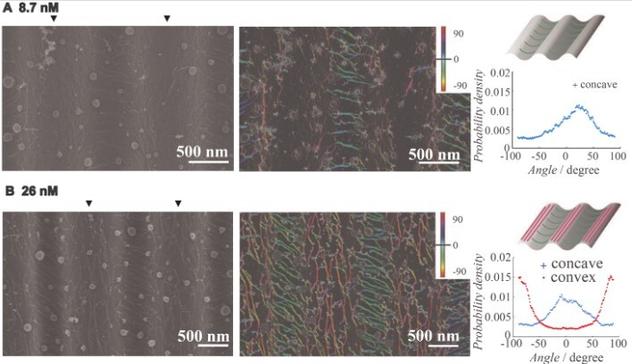
Septins are cytoskeletal scaffolding proteins that directly interact with the inner plasma membrane to influence membrane remodelling. In humans, 13 different septins contribute to hexameric or octameric complexes. Diverse combinations of septin hetero-oligomer composition can confer differing structural and functional properties, but the number of possibilities makes examining intrinsic properties of septin filaments in vivo extremely complicated. Using cell-free in vitro and computational approaches, Aurélie Bertin and colleagues (Nakazawa et al., 2023) study how controlled, purified septin octamers behave on lipid surfaces with varying properties. They first show that septin organizes differently on convex versus concave membranes with micrometre-scale curvature, assembling perpendicular to ‘valleys’ and parallel to ‘hills’. Above a threshold concentration, septin forms a second layer of filaments orthogonal to the first, creating a mesh-like structure. Moreover, purified septin not only preferentially localises to curved regions of lipid vesicle membranes, but also induces uniform micrometric convex membrane deformations. Based on a computational simulation of the septin network modelled as a two-dimensional liquid crystal on a fluid membrane, the authors suggest that this effect likely arises from protein-membrane and protein-protein interactions between the first and second filament layers. Taken together, these sophisticated reconstitution studies provide new insight into fundamental properties of human septins.

The Company of Biologists

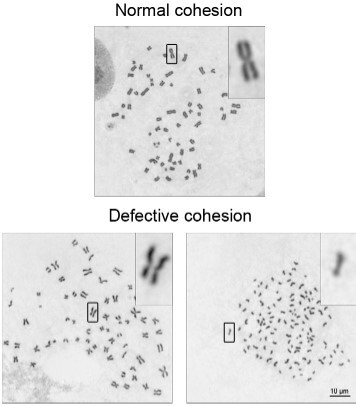
Grégory Eot-Houllier, Laura Magnaghi-Jaulin, Christian Jaulin and colleagues find that NSD3-dependent methylation contributes to sister chromatid cohesion by ensuring proper kollerin recruitment and subsequent cohesin loading during mitotic exit.
https://journals.biologists.com/jcs/article/136/11/jcs261014/316627/The-histone-methyltransferase-NSD3-contributes-to

This article is a @ReviewCommons transfer.
You can find out more about Review Commons and the transfer to affiliate journals including @J_Cell_Sci here: https://www.reviewcommons.org/authors/

The histone methyltransferase NSD3 contributes to sister chromatid cohesion and to cohesin loading at mitotic exit

Summary: NSD3-dependent methylation contributes to sister chromatid cohesion by ensuring proper kollerin recruitment and subsequent cohesin loading during mitotic exit.

The Company of Biologists

Connie Shen, Judith Mandl @mcgillu, Nienke Vrisekoop and colleagues discover that nuclear segmentation allows neutrophils to migrate faster in confined spaces.
Highlight: https://journals.biologists.com/jcs/article/136/11/e136_e1101/316633/Knobbly-neutrophil-nuclei-navigate-narrow-niches
Report: https://journals.biologists.com/jcs/article/136/11/jcs260768/316606/Nuclear-segmentation-facilitates-neutrophil
#OpenAccess #ReadandPublish

Find out more about this research from Connie Shen in our ‘First person’ interview:
https://journals.biologists.com/jcs/article/136/11/jcs261344/316604/First-person-Connie-Shen

Knobbly neutrophil nuclei navigate narrow niches

To access distant sites of inflammation, leukocytes must migrate through tissue microenvironments of varying degrees of stiffness and spatial constriction. However, the relatively rigid nuclear envelope can be damaged by fast migration through tight spaces. Neutrophils are some of the most rapid immune responders, capable of quickly navigating complex environments, and they show a unique diversity in nuclear morphology. Homeostatic neutrophils feature segmented nuclei with a small number of lobes; when activated by inflammatory stimuli, they exhibit a wider range of multi-lobular and elongated nuclear shapes. In this Short Report (Shen et al., 2023), work by Judith Mandl, Nienke Vrisekoop and colleagues offer support to a long-held hypothesis that nuclear segmentation helps neutrophils transit quickly through restricted spaces by increasing nuclear flexibility without damaging the nuclear envelope. Using a custom microfluidic device, the authors challenge primary neutrophils, taken from healthy volunteers given a low dose of endotoxin, to squeeze through increasingly narrower channels toward a chemotactic signal. By correlating cell migration velocity with the nuclear phenotype, they demonstrate that neutrophils with more nuclear lobes move faster through restricted spaces than those with fewer or single lobes. These data support emerging roles of the nucleus as a potential ‘size gauge’ in cell migration, influencing how different cells sense and navigate their microenvironment.

The Company of Biologists