
- 0 Followers
- 0 Following
- 9 Posts
That’s the part that got me. Like, I dunno, it’s got acids in it, maybe it would degrade DNA faster? But why dump it on her? Was she trying to get rid of her own DNA so they’d never be able to match it to the skin cells on the knife handle?
Imagine getting pulled over and being asked if you have a license to be carrying so many potatoes all at once.
They compared a basket of streaming services to an average-priced cable package, which loosely makes sense. Individual streaming services are usually only a fraction of the content of a cable package, so if you want to compare prices, comparing the price of a comparable-size bundle of goods is a good place to start.
It all varies from market to market, cable is quite cheap where I live and these numbers wouldn’t hold up in my market.
But who wants to pay money for cable TV when they push as many ads as they do?
Plenty of business owners in the US are invested in commercial real estate, so an undercurrent at least in the US is that a lot of people with decision making authority over this kind of thing personally stand to lose money if the value of commercial real estate falls.
It seems a bit off and corrupt from a business standpoint to deliberately mismanage your business in hopes of limiting personal losses from investments in other industries, but most of how business works in America seems off and corrupt to me.
Once, I moved into a house that, for reasons I cannot possibly begin to explain, had 250kg of potatoes rotting in the basement left behind by old tenants (hey, at least they were in boxes!). I can’t remember what we did with them, but after reading about this I know I had a heart attack, thinking about what do you in Western Australia if the former tenants leave you with over 200kg of rotting potatoes? Does the potato corp handle bulk potato disposal? What if I’m on the way to the dump with them? Surely this has happened to someone else! I can’t be the only one!!
The relief is targeted at people who enrolled in income-driven repayment (IDR) plans, which allow student loan debts to be forgiven by the federal government once payments have been made for 20 or 25 years, depending on the plan.
But because of well-documented errors in tracking payments, many borrowers enrolled in IDR plans have been left paying well beyond their payment end dates, with no forgiveness in sight.
Let’s read that again. No changes in policy are happening, the Biden administration is literally just applying the terms of the already-on-the-books-and-already-lawful repayment plan to nearly a million people who were supposed to have their debts forgiven already.
For the benefit of anyone else who also has to look up basis points whenever they come up, 1 basis point = 0.01%. So hiking the rates by 350 basis points = 3.5% rate hike.
More interesting to me is that a full fern life cycle takes two generations to play out. A diploid (two sets of each chromosome) fern throws off spores, and the spores grow into haploid (one set of each chromosome) plantlets. The haploid plantlets fertilize each other, and boom, the offsping are diploid ferns.
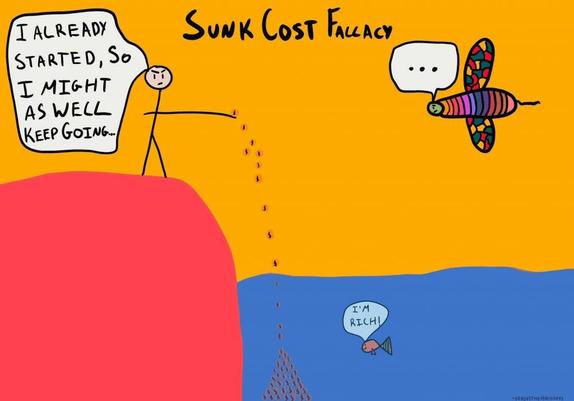
The sunk cost of unused office space has been a major factor in companies’ decisions to change their RTO approach, says Kacher.
So what we’re seeing here is a situation where 80% of bosses fucked their businesses up by falling victim to an economic reasoning fallacy they teach you about in Econ 101?
Do you have any proof you’re not a chatbot?