 Nonya Bidniss
Survivors of U.S. President Donald Trump's longtime best friend's huge sex trafficking and pedophilia ring have launched a website https://survivorsisters.org/

Fire Horse 2026
@blakefox
- 94 Followers
- 511 Following
- 109 Posts

 Flipboard Culture Desk
On the last day of Pride, TODAY tells the story of 101-year-old Robert Clement, a theologian whose photo at West Hollywood Pride Parade in California went viral earlier this month, and who has been fighting for gay rights since the 1970s.

 Greg Knauss
The number of Republican Party officials who will immediately volunteer to enforce the ban on trans athletes by doing genital inspections just shows how dedicated they are to their agenda.
Which is raping children, by the way.
 McSpocky™
Breaking: SCOTUS boosted GOP midterm chances by gutting restrictions on political party spending. Expect even more dark money flooding races from tRump-aligned billionaires. The Court isn’t neutral —it’s actively rigging the game for Republicans. Voters, take note.
https://www.sfexaminer.com/the-supreme-court-just-gave-the-gop-a-new-midterm-edge/article_86a8b5a7-bbfb-5028-a49c-4603a04a60bc.html
https://www.sfexaminer.com/the-supreme-court-just-gave-the-gop-a-new-midterm-edge/article_86a8b5a7-bbfb-5028-a49c-4603a04a60bc.html

The Supreme Court just gave the GOP a new midterm edge
The Supreme Court's recent ruling in National Republican Senatorial Committee v. Federal Election Commission is expected to significantly alter the landscape of political campaign funding, allowing greater coordination between parties and candidates and potentially increasing the influence of big money in American politics.
 David Ho
A University of Hawaiʻi report says that building more solar farms with battery storage is the most cost-effective way to power Oʻahu, rather than building new power plants. The electricity company doesn’t agree. Lol.
UH Report: Oʻahu Needs More So...
UH Report: Oʻahu Needs More So...

 Unnamed TNG skant beefcake
Adding completely gratuitous dicks and gay shit to my art to make it indigestible to AI's and also to demarcate it from the products of AI and then remembering that the Romans also added gratuitous dicks as a magic anti-trespassing ward and taking a moment to process it
 Taylor Lorenz
If you’re wondering what the hell the KIDS Act is and why it’s so awful I made a video on it last week. Call your senators and kill this bill! We are running out of time https://youtu.be/TIqzmatFMUQ?is=Iq-ohNjvQLJvmXC4

Congress Just Voted to Track Your Web History
 Cat 🐈🥗 (D.Burch)
I'm making a note here: HUGE SUCCESS
 Frankie ✅
Lord of the Roths: How Tech Mogul Peter Thiel Turned a Retirement Account for the Middle Class Into a $5 Billion Tax-Free Piggy Bank
#news #business #economy #finance #finance #peterthiel #fraud #scam
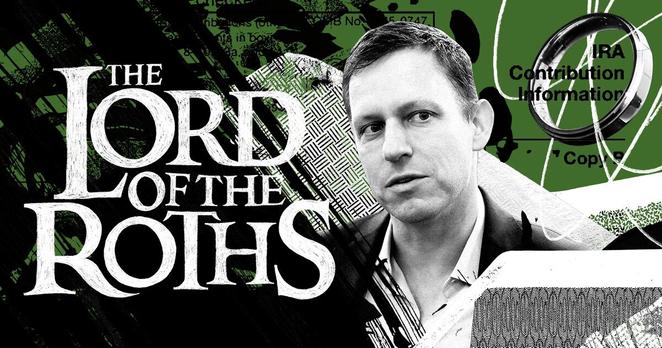
Lord of the Roths: How Tech Mogul Peter Thiel Turned a Retirement Account for the Middle Class Into a $5 Billion Tax-Free Piggy Bank
Roth IRAs were intended to help average working Americans save, but IRS records show Thiel and other ultrawealthy investors have used them to amass vast untaxed fortunes.