Leeeeerooooooy! #fifa #worldcup2026
Freut mich besonders, nachdem ich am Wochenende im tiefsten AfD-Land hören durfte, wie dort über ihn gesprochen wurde.

Leeeeerooooooy! #fifa #worldcup2026
Freut mich besonders, nachdem ich am Wochenende im tiefsten AfD-Land hören durfte, wie dort über ihn gesprochen wurde.

Dass Jens Spahn zurücktritt, ist aufgrund all seiner offengelegten Korruptionsskandale lägst überfällig.
Seine Nähe zu Grenell war schon immer höchst problematisch. Die hier offengelegte Nähe zu Thiel (#Palantir) und seinen Konsorten schlägt dem Fass den Boden aus. Er ist in der Spitzenpolitik in Gänze untragbar.
Er konspiriert mit Techfaschisten und ist damit ein klares Risiko für unsere freiheitlich-demokratische Grundordnung...
https://www.t-online.de/nachrichten/deutschland/innenpolitik/id_101300782/jens-spahn-besucht-seit-jahren-diskrete-thiel-treffen.html
6. **USB-C als gemeinsamer Ladestandard**
Viele elektronische Geräte müssen denselben Ladeanschluss verwenden. Das reduziert Kabelchaos und Elektroschrott.
7. **Europäische Krankenversicherungskarte**
Gesetzlich Versicherte erhalten bei vorübergehenden Aufenthalten in anderen EU-Staaten medizinisch notwendige Behandlungen.
8. **Streaming-Abos im EU-Ausland**
Bezahlte Streamingdienste können bei vorübergehenden Reisen innerhalb der EU grundsätzlich weitergenutzt werden.
9. **Einlagensicherung**
Bankguthaben sind in der EU grundsätzlich bis zu 100.000 Euro pro Person und Bank geschützt.
10. **Stärkerer Datenschutz**
Die Datenschutz-Grundverordnung gibt Menschen europaweit Rechte auf Auskunft, Berichtigung, Löschung und Schutz ihrer persönlichen Daten. (2/2)
Im Moment muss ich mir mantrahaft Positives, das die EU geschaffen hat, vor mich hinmurmeln, um nicht doch irgendwann schreiend im Kreis herumzulaufen.
## 10 EU-Erfolge, die Menschen im Alltag direkt nutzen
1. **Keine Roaminggebühren**
Telefonieren, SMS und mobiles Internet kosten im EU-Ausland grundsätzlich nicht mehr als zu Hause.
2. **Fluggastrechte**
Bei langen Verspätungen, Flugausfällen oder Überbuchungen gibt es Betreuung, Ersatzbeförderung und teilweise bis zu 600 Euro Entschädigung.
3. **Fahrgastrechte im Bahnverkehr**
Bei Verspätungen können Reisende einen Teil des Fahrpreises zurückfordern und unter bestimmten Bedingungen andere Verbindungen nutzen.
4. **SEPA-Überweisungen**
Euro-Überweisungen und Lastschriften funktionieren innerhalb Europas weitgehend so einfach und günstig wie im Inland.
5. **14 Tage Widerrufsrecht beim Onlinekauf**
Online bestellte Waren können in der Regel innerhalb von 14 Tagen ohne Begründung zurückgegeben werden. (1/2)
Wer immer noch glaubt, die US Regierung wird schon nichts abschalten lassen und digitale Souveränität geht mit US TechKonzernen oder deren Töchtern... well, es gibt News für euch:
US-Regierung erzwingt Abschaltung von Anthropics KI Fable 5 und Mythos 5
Bonus... Antropic nutzt natürlich eine Vorratsdatenspeicherung, so wie alle KI Modellbetreiber, um alle Prompts und Geschäftsgeheimnisse zu analysieren und zu nutzen:
...
https://www.heise.de/news/US-Regierung-erzwingt-Abschaltung-von-Anthropics-KI-Fable-5-und-Mythos-5-11331129.html
 HasnainKazim
 Manuel 'HonkHase' Atug
 padeluun ⁂
 taz
taz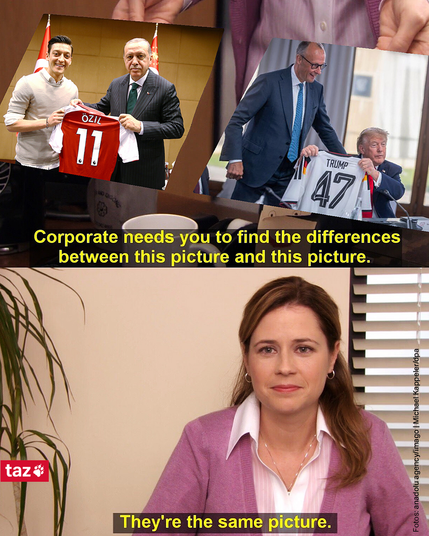
 Jake Williams
 Volksverpetzer