| website | https://arkirus.fun |

arki
@arkirus
- 4 Followers
- 17 Following
- 26 Posts
hi, i love crabs
 ruben
rubenhttps://books.worksinprogress.co/
* curiosa iniciativa para articular colaboraciones entres autores y lectores
Aggh los profesores que hacen sus exámenes y en general con chatgpt. Hermano te pagan para que no solo los hagas tu sino también para que nos enseñes.
Darme cuenta de que las notas dependen más del profesor que de ti mismo me tiene muy bajoneado.
 Miguel Afonso Caetano
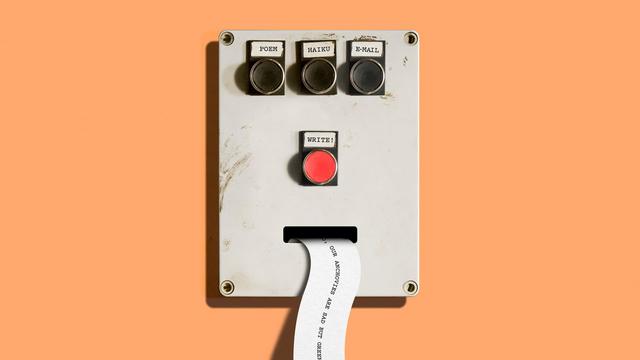
"Machine-generated writing, though it doesn’t smell as sweet, has something of molasses’s smothering stickiness. One way to think about the internet is that it’s an attempt to archive nearly everything ever written by anyone who ever lived. Recently, more and more new writing online is being produced by bots, during this, the Great A.I.-Slop Flood. Ante-ChatGPT, more than ninety-eight per cent of all English-language articles being published on the internet were written by humans. By the fall of 2024, machines were writing around half of such articles, according to the digital-marketing agency Graphite, which, far from taking umbrage at the usurpers, recommends using A.I. to help run your ad campaigns. And why not? In one blind test, people found A.I.-generated advertisements to be “of higher quality” than ads made by humans.
And that’s not counting social media or e-mail or all the robot-written rubbish that comes your way by text or voice mail or pop-up customer-service chats. YouTube is overrun with slop. Reddit is caked in it. Much of Facebook is nothing but slop. The literary critic Matthew Kirschenbaum warns of a coming “textpocalypse” that will render the words you’re reading right now—this word, and this one—relics your grandchildren will frame on a wall, a daguerreotype, a needlepoint sampler. “Like the prized pen strokes of a calligrapher, a human document online could become a rarity to be curated, protected, and preserved,” Kirschenbaum writes. Can the textpocalypse be stopped? “Rest assured 2026 will be the beginning of AI slop purge,” Forbes promised, sloppily, at the start of this year. This was hardly reassuring. My anchovies are still sad.
The idea of mechanically produced prose or poetry is not especially new. Eighteenth-century letter-writing manuals provided fill-in-the-blank templates, because many types of correspondence are set forms..."
https://www.newyorker.com/magazine/2026/05/25/the-prehistory-of-ai-slop
@naturaleza24 tu tomas las fotos? Son muy bonitas
 Elías Fraguas
Hace tiempo que tengo la idea de que la locura esta de la IA sólo es sostenible de una manera: si no lo pagamos voluntariamente, algo que es imposible hasta para las mayores empresas, son los estados los que deben costearlo, es decir: como impuestos. Literalmente las big tech llevan años ya anunciando que esto es como el agua o la luz, y si algo no están siendo estos genios es sutiles. Creo, sospecho, que siempre tuvieron los números y este siempre fue el plan.
Voy a dejar ideas de futuros posts que darán inicio al siguiente mes