TF binding bot

72 Followers
4 Following
108 Posts
Publications about transcription factor binding (#TFbinding) maintained by @teiflab
Role of the histone tails in histone octamer transfer

Abstract. The exceptionally high positive charge of the histones, concentrated in the N- and C-terminal tails, is believed to contribute to the stability of the

OUP Academic
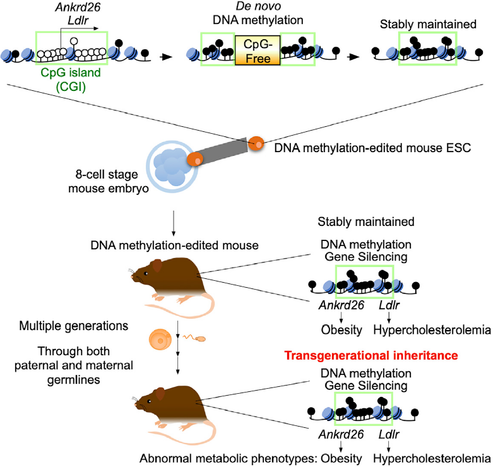
Transgenerational inheritance of acquired epigenetic signatures at CpG islands in mice https://sciencedirect.com/science/article/pii/S0092867422016300
▶️Targeted CGI methylation editing in ES cells
▶️Phenotypic alterations induced by gene silencing
▶️Acquired phenotypes are transmitted across multiple generations
GhMYB102 Promotes Drought Resistance by Regulating Drought-responsive Genes and ABA Biosynthesis in Cotton (Gossypium hirsutum L.) http://dlvr.it/ShjdBq
GhMYB102 Promotes Drought Resistance by Regulating Drought-responsive Genes and ABA Biosynthesis in Cotton (Gossypium hirsutum L.) - PubMed

The MYB transcription factor (TF) family is among the largest TF families and plays an important role in plant growth and stress response. However, few studies have investigated the role of the MYB gene in drought resistance in cotton. In this study, we analysed the drought transcriptomic data of co …

PubMed
LcERF134 increases the production of monoterpenes by activating the terpene biosynthesis pathway in Litsea cubeba http://dlvr.it/Shjd94
LcERF134 increases the production of monoterpenes by activating the terpene biosynthesis pathway in Litsea cubeba - PubMed

Litsea cubeba, an aromatic species of the Lauraceae family, produces a diverse array of monoterpenes. The biosynthesis of monoterpenes is regulated by transcriptional factors (TFs), such as APETALA2/ethylene response factor (AP2/ERF). However, the regulatory mechanisms that control the AP2/ERF gene …

PubMed
Apo- and holo- transferrin differentially interact with ferroportin and hephaestin to regulate iron release at the blood-brain barrier http://dlvr.it/ShgCVL
Apo- and holo- transferrin differentially interact with ferroportin and hephaestin to regulate iron release at the blood-brain barrier - PubMed

These novel findings provide a molecular mechanism for apo- and holo-Tf regulation of iron release from endothelial cells. They further demonstrate how hepcidin impacts these protein-protein interactions, and offer a model for how holo-Tf and hepcidin corporate to suppress iron release. We have esta …

PubMed
Mutual antagonism between glucocorticoid and canonical Wnt signaling pathways in B-cell acute lymphoblastic leukemia http://dlvr.it/ShgCTx
Mutual antagonism between glucocorticoid and canonical Wnt signaling pathways in B-cell acute lymphoblastic leukemia - PubMed

Glucocorticoids (GCs; i.e., steroids) are important chemotherapeutic agents in the treatment of B-cell precursor acute lymphoblastic leukemia (B-ALL) and <i>de novo</i> GC resistance predicts relapse and poor clinical outcome in patients. Glucocorticoids induce B-ALL cell apoptosis through activatio …

PubMed
Apo- and holo- transferrin differentially interact with ferroportin and hephaestin to regulate iron release at the blood-brain barrier http://dlvr.it/ShgCT3
Apo- and holo- transferrin differentially interact with ferroportin and hephaestin to regulate iron release at the blood-brain barrier - PubMed

<span><b>Background</b> : Apo- (iron free) and holo- (iron bound) transferrin (Tf) participate in precise regulation of brain iron uptake at endothelial cells of the blood-brain barrier. Apo-Tf indicates an iron deficient environment and stimulates iron release, while holo-Tf indicates an iron sufficient</span> …

PubMed
Modulation of protein-DNA binding reveals mechanisms of spatiotemporal gene control in early Drosophila embryos http://dlvr.it/ShgCPl
Modulation of protein-DNA binding reveals mechanisms of spatiotemporal gene control in early Drosophila embryos - PubMed

It is well known that enhancers regulate the spatiotemporal expression of their target genes by recruiting transcription factors (TFs) to the cognate binding sites in the region. However, the role of multiple binding sites for the same TFs and their specific spatial arrangement in determining the ov …

PubMed
Structural characterization of protein-DNA complexes using small angle X-ray scattering (SAXS) with contrast variation http://dlvr.it/ShfKC5
Structural characterization of protein-DNA complexes using small angle X-ray scattering (SAXS) with contrast variation - PubMed

Molecular and atomic level characterization of transcription factor (TF)-DNA complexes is critical for understanding DNA-binding specificity and potentially structural changes that may occur in protein and/or DNA upon complex formation. Often TFs are large, multidomain proteins or contain disordered …

PubMed
Using epigenomics to understand cellular responses to environmental influences in diseases

It is a generally accepted model that environmental influences can exert their effects, at least in part, by changing the molecular regulators of transcription that are described as epigenetic. As there is biochemical evidence that some epigenetic regulators of transcription can maintain their states long term and through cell division, an epigenetic model encompasses the idea of maintenance of the effect of an exposure long after it is no longer present. The evidence supporting this model is mostly from the observation of alterations of molecular regulators of transcription following exposures. With the understanding that the interpretation of these associations is more complex than originally recognised, this model may be oversimplistic; therefore, adopting novel perspectives and experimental approaches when examining how environmental exposures are linked to phenotypes may prove worthwhile. In this review, we have chosen to use the example of nonalcoholic fatty liver disease (NAFLD), a common, complex human disease with strong environmental and genetic influences. We describe how epigenomic approaches combined with emerging functional genetic and single-cell genomic techniques are poised to generate new insights into the pathogenesis of environmentally influenced human disease phenotypes exemplified by NAFLD.