305 Followers
177 Following
13 Posts
Archaeologist | Prehistory | Heritage

Off to the Isles of Scilly for today's #StandingStoneSunday offering. This double holed standing stone is in the Abbey Gardens on Tresco. (Portrait, needs a click)

Its folklore is that it was a prehistoric handfasting or marriage stone.

Visited June 2010.

#IslesOfScilly #Tresco #StandingStone #BronzeAge #Folklore #Lichen

[Edited for apostrophe crime]

@carto I'm not sure we can project our notion of 'trans' onto the past, but yes, perfectly possible that they were non-binary in some way.
@weborguk Ah, I had been told it was where you could easily collate feeds in one place. Perhaps a bit different.
This is really exciting; our gender assumptions are so often wrong. Long thought to be a male 'prince', the 'richest' Copper Age (c.2800 BC) burial in Europe, accompanied by an amazing crystal dagger with ivory handle, from Valencina, Spain, is female. https://www.nature.com/articles/s41598-023-36368-x
Amelogenin peptide analyses reveal female leadership in Copper Age Iberia (c. 2900–2650 BC) - Scientific Reports

Given the absence of written records, the main source of information available to analyze gender inequalities in early complex societies is the human body itself. And yet, for decades, archaeologists have struggled with the sex estimation of poorly preserved human remains. Here we present an exceptional case study that shows how ground-breaking new scientific methods may address this problem. Through the analysis of sexually dimorphic amelogenin peptides in tooth enamel, we establish that the most socially prominent person of the Iberian Copper Age (c. 3200–2200 BC) was not male, as previously thought, but female. The analysis of this woman, discovered in 2008 at Valencina, Spain, reveals that she was a leading social figure at a time where no male attained a remotely comparable social position. Only other women buried a short time after in the Montelirio tholos, part of the same burial area, appear to have enjoyed a similarly high social position. Our results invite to reconsider established interpretations about the political role of women at the onset of early social complexity, and question traditionally held views of the past. Furthermore, this study anticipates the changes that newly developed scientific methods may bring to prehistoric archaeology and the study of human social evolution.

Nature
@weborguk I think you dreamt of Buffer (it exists).
Looking at old data with new eyes upends the ”truth” of males = big game hunters and women = gatherers. (Neat cautionary tale of widespread but unrecognized bias affecting scientific interpretation fieldwide. And a reminder of the value of data archives.) https://www.npr.org/sections/goatsandsoda/2023/07/01/1184749528/men-are-hunters-women-are-gatherers-that-was-the-assumption-a-new-study-upends-i

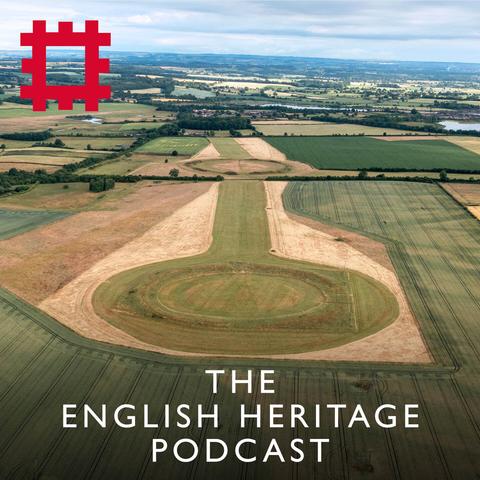
A fabulous new podcast from #EnglishHeritage about the Thornborough Henges with our very own PAST editor, Sue Greaney, and Joe Savage.

#Archaeology #Prehistory

https://soundcloud.com/englishheritage/episode-203-an-ancient-landscape-thornborough-henges

Episode 203 - An ancient landscape: Thornborough Henges

This week, we’re talking about one of the oldest and most important Neolithic sites in Britain, which has recently come into English Heritage’s care. Thornborough Henges comprises three circular earth

SoundCloud

Post from BAJR - UK Archaeology FB Group:

Mesolithic Deeside presents ….
A BASIC GUIDE TO IDENTIFYING AND RECORDING PREHISTORIC FLINT* TOOLS

http://www.bajr.org/BAJRGuides/Lithics_handbook_2022.pdf

Working with Lithic specialist Ann Clarke, Mesolithic Deeside produced this excellent guide dedicated to the memory of Caroline Wickham-Jones

The handbook begins with a brief introduction to why archaeologists classify things. It then takes you through the various stages of recording including how to identify a worked flint; how to divide a lithic assemblage into the basic units of flakes, blades, cores, chunks, and retouched tools; how to identify the material and condition; and how to measure the flints.

A timeline of the archaeological periods along with a simple description of their most characteristic flint working techniques helps you place your lithics in their prehistoric context. There is a section on how you might use the information you have gathered to interpret the landscape. Finally, there are links to online publications that will further your interest in lithic analysis and interpretation.
But for now, here are the basics. Like anything lithic identification takes practice and the more flints you look at, the more familiar you get, and the more confident you will be in identifying and recording your finds.

Mesolithic Deeside https://www.mesolithicdeeside.org/

*other types of stone are flaked for example quartz, quartzite, tuff, pitchstone, rhyolite etc and you can use this guide for these materials too !!

This and many other Guides are available on BAJR.

http://www.bajr.org/BAJRread/BAJRGuides.asp
Been in fab discussions with #NationalTrust #archaeology colleagues today to plan our student training excavations and fieldwork with them for next summer - excited about what we can achieve now!
@thesweetcheat Hello - followed back now! Am I there yet? :)