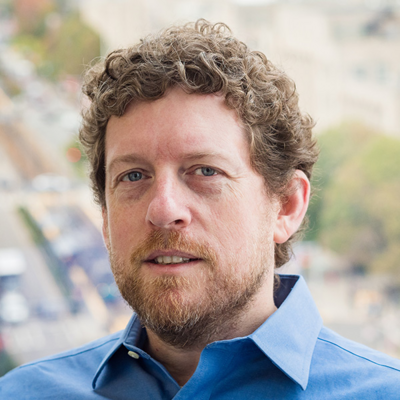
Dr. Dennis Eckmeier

@SciCommDennis
289 Followers
415 Following
43 Posts
Former neuroscience researcher, science journalist for Doktor Whatson on YouTube, SciComm podcaster. Toots in GER and ENG
Mein Kollege Jens Foell zu Gast beim Podcast Fakt ab mit Sina Kürtz. Ich musste ein paar Mal laut lachen
https://www.swr.de/swr2/wissen/podcast-fakt-ab-eine-woche-wissenschaft-100.html
Fakt ab! Eine Woche Wissenschaft

Kann es den Zombie-Pilz aus „The Last of Us“ wirklich geben? Wieso sieht man im Winter seinen Atem, einen Pups aber nicht? Könnten die Drachen aus „Game of Thrones“ in unserer Welt auch fliegen? Diese Fragen aus dem echten Leben stellen sich Julia Nestlen, Sina Kürtz und Aeneas Rooch. Sie sind Wissenschaftsfreaks, vergraben sich unter der Woche in den Tiefen aller möglichen Studien und besprechen freitags ihre Funde. Die sind bahnbrechend - oder einfach irgendwie schräg. Habt ihr auch heiße Forschung für uns? Schreibt uns auf [email protected], über WhatsApp auf 0174/4321508 – oder folgt den drei auf Insta!

swr.online

BOOM! :D Wir hatten schon länger ein Video zum Starship von Space X vorbereitet und es dann für diesen Anlass aufgehoben. Das Warten hat sich gelohnt, finde ich.

https://youtu.be/XFXhGQgM0p8

#spaceX #Starship

Starship: Warum die Explosion kein Misserfolg war

YouTube

Für dieses Video zu "Insterstellar" habe ich mir extra das Buch des Nobelpreisträgers Kip Thorne gekauft. Doktor-Whatson-Fans lieben den Film. Ich habe aber nicht erwartet, dass das Video den Rekord für die meisten Aufrufe in 24h absolut zerstören würde.

https://youtu.be/xs0cUMYo7IQ

#Relativität #Interstellar #wissenschaft #wisskomm #youtube #SciFi #science #sciencefiction

Kann es den Planeten aus Interstellar wirklich geben?

YouTube

@NicoleCRust Thanks for the question, Nicole. I got a little carried away...

A lack of self-awareness of the communication goal is sometimes an issue. One way I see "getting excited about science" go bad is when there is a clandestine switch of the topic of discussion, hiding a goal shift from increasing scientific understanding to increasing psychological reward.

Someone starts with a show on "The Science of Canine Cognition", which explains currently known "facts" about behavior, neuroscience, history, and so on, with equal emphasis on the process by how these facts were determined, including their uncertainty. Excitement, sure, and relating things to people's everyday experiences with their beloved pets, and keeping the scientific process in the forefront. Motivation and Method gets equal screen time with Result and Discussion. It is a show about a cool area of scientific study.

But people resonate with the doggy facts more than the explanations of experiments. So the show becomes "How Dogs Think", and the description of process gets reduced to "Scientists at Prestigious University have determined..." and everything is "explained" by videos of cute dogs doing things. The essential concepts of uncertainty and empiricism get thrown out, and the narration now contains fewer passages of questions ("How might one figure out if a dog understands English? What does it really mean to understand a language in the first place?"), and more blanket statements ("Dogs know so many words! Look at this adorable dog operate a pedal board that plays words."). It is a show of claims about dogs.

And we might keep going. The show is "Your Dog's Incredible Inner Mind". Claims are selected with a strong "excitement" bias, and explanations are stories that seem to make sense and aren't obviously wrong; maybe a scientist somewhere is willing to say on camera that it might be true. Watch this dog get over the loss of their favorite plushy by "singing" along to Taylor Swift lyrics, just like you might. This other dog writes poetry (remember that pedal board?) in an innovative Romantic-Absurdist style. No questions, no process, just examples with just-so narration. It is a show of our fascination with and emotions about dogs.

And if that last show spurs someone's curiosity and makes them want to learn more about science, great, except that the show didn't actually get them excited about science. It got them excited about dogs. The process by which we come to know things isn't part of that deal.

I'm reminded of a critique from the ancient Internet that the website "I F*cking Love Science" was better named "I F*cking Love Trippy Pictures of Multicolored Fluorescent Stuff".

To me "getting excited about science" means getting excited about the applied process, not the particular list of conclusions best supported by evidence we happen to have at the moment. I see the clandestine switch from Process to Fact behind a lot of the arguments people have over what is "good" general audience science explanation.

As scientists, we don't accept blanket statements of fact, unmotivated and unjustified by evidence, from our colleagues. We should not feel comfortable making those kinds of statements to the public. Popularizing carries the additional burden that you have to explain process at the same time as you explain the subject, because your audience in general has not been trained on the relevant conceptual toolkit. To me that is the core thing that makes it hard. To avoid the failure mode I tried to exemplify above, it's critical at the outset to be clear on what you are actually trying to communicate: Scientific Process, Subject Matter Fact, Emotional Connection, ...?
@PessoaBrain @hsalis @jason_ritt @neuralreckoning @WorldImagining @NicoleCRust @matthewcobb @WiringtheBrain

Classical cytoarchitectonic work of reptile cerebral cortex is wrong. Tosches and Laurent (2018) https://www.science.org/doi/full/10.1126/science.aar4237 demonstrated that not only all inhibitory neuron types are there except for Chandelier cells, but also the layering is far more elaborate and much closer to mammals than ever known before.

(Ich seh schon, YouTube-Embedden ist hier genauso zuverlässig wie auf Facebook.)

Ich fand es wirklich spannend, dieses Thema zu recherchieren und zusammenzuschreiben.

Leider: Macht man ein Video über eine armuts- und terrorgebeutelte Region in Afrika, sieht man, wie schnell in Kommentarspalten Eugenik, Re-Kolonialisierung und sogar Genozid als "Lösungen" vorgeschlagen werden. :(

Zum Glück ist das eine Minderheit!

https://www.youtube.com/watch?v=BnSPk-cFLEY

#wissenschaft #Afrika #Klimawandel #biodiversitat

Das größte Projekt, das (fast) keiner kennt

YouTube

I burnt out several times in my research career and I made traumatizing experiences, before I lost my love for research.

Not everybody is as affected as I. But there are issues with academia that put early career researchers under a lot of stress, resulting in bad quality research.

I based this episode on ECRs in Germany on official studies. Quite the wake-up-call for many university students.

[GER] https://youtu.be/EA3LiXvjdTE

#writer #research #science #university #career #video #ichbinhanna

Warum du nicht in die Forschung gehen solltest

YouTube
Community Manager (m/w/d)

Community Manager (m/w/d)

I was thrown into the deep end, when I began working for the film company. I only had a few days to deliver the first script!

I chose to cover a preprint I had seen a few days prior. Its methods touch on my former field of research. Thankfully, my employer agreed it would fit the audience.

I wrote about neurons grown on a multi-electrode array learning to play "Pong".

The video actually did pretty well!

[German] https://youtu.be/P9fF-1Y6K5A

#science #neurowissenschaft #wisskomm

Erster Computer aus Gehirnzellen schlägt schon jetzt klassische KI

YouTube