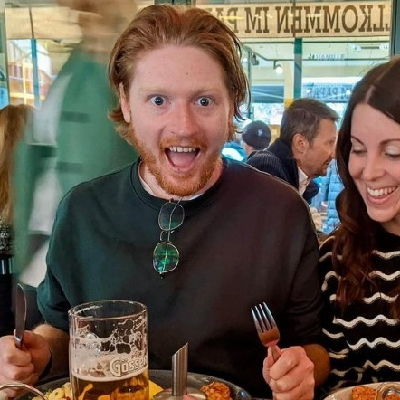

88 Followers
135 Following
59 Posts
Postdoc neuroscientist at Royal Holloway University of London and Cardiff University. I'm also a musician and am trying hard to learn Italian. Part of the Connected Memory Lab
Neurosciencememory, spatial navigation, stress, hippocampus
Red headGinger king
Websitehttps://www.connectedmemorylab.com/

RT @leafs_s
Nature Reviews Neuroscience

From cognitive maps to spatial schemas
https://www.nature.com/articles/s41583-022-00655-9

From cognitive maps to spatial schemas - Nature Reviews Neuroscience

Schemas are structured bodies of prior knowledge that reflect common patterns of information from related experiences. In this Review, Farzanfar et al. discuss evidence for spatial schemas, how they form and how they differ from cognitive maps.

Nature
Oh dear. I've just been informed that collecting the names of every person on the planet for my naughty and nice lists is, and I quote, “a significant and wholly irresponsible breach of #GDPR “.
I'm going to hand out about 8 billion consent forms soon. If you could all get them back to me ASAP that would be appreciated.
RT @manos_tsakiris
4 permanent Research & Teaching Lecturer positions ⁦@RHULPsychology⁩ ! We are nice people, good researchers & teachers and we care about all these ! 👇🏾 https://jobs.royalholloway.ac.uk/Vacancy.aspx?ref=1122-517
Job Opportunity at Royal Holloway University of London: Lecturer in Psychology x4

4x Lecturers in Psychology (Research & Teaching)Full-time, PermanentApplications are invited for four posts of Lecturer in the Department of Psychology, Royal Holloway, University of London, starting in September 2023. The posts are open to...

Jobs at Royal Holloway
Hello - excited to be on mastodon. I am a philosopher of cognitive science, working across philosophy of mind, cogsci, neuroscience and contemplative studies. You can see what we do here https://www.monash.edu/consciousness-contemplative-studies/home
Home

Monash Centre for Consciousness and Contemplative Studies (M3CS)
#Introduction. I'm a neurotechnologist and neuroscientist at Imperial College London (where I am Professor of Neurotechnology in the Dept of Bioengineering). My research focuses on understanding the neural coding of memory, and how it is impaired in memory disorders. Towards these goals I also develop new tools for neuroscience (multiphoton, data analysis, mouse behaviour etc). Outside science I'm into cycling (particularly gravel). #neuroscience #neurotechnology
Like a good GenXer, I held on as long as I could but made the hard break today. Send tips on how to best use this platform!
So, to try and rebuild my Twitter network on Mastodon I quite often look to see who someone I follow, follows. I’ve noticed a quite startling excess of males in most lists, especially men’s ones. Let’s try to build a better world here than the one we had there
RT @nschawor
IKEA shopping for neuroscientists – lamp ISKÄRNA
RT @prerana123
Thrilled to share our review on the modulation of emotional and social behaviors by oxytocin
signaling in limbic network!! It was great fun working on this together with @RodrigoTrianaD2, Sayali Ranade, Jahel Guardado, @LeDouxScience and @KlannLab. https://www.frontiersin.org/articles/10.3389/fnmol.2022.1002846/full
The modulation of emotional and social behaviors by oxytocin signaling in limbic network

Neuropeptides can exert volume modulation in neuronal networks, which account for a well-calibrated and fine-tuned regulation that depends on the sensory and behavioral contexts. For example, oxytocin (OT) and oxytocin receptor (OTR) trigger a signaling pattern encompassing intracellular cascades, synaptic plasticity, gene expression, and network regulation, that together function to increase the signal-to-noise ratio for sensory-dependent stress/threat and social responses. Activation of OTRs in emotional circuits within the limbic forebrain is necessary to acquire stress/threat responses. When emotional memories are retrieved, OTR-expressing cells act as gatekeepers of the threat response choice/discrimination. OT signaling has also been implicated in modulating social-exposure elicited responses in the neural circuits within the limbic forebrain. In this review, we describe the cellular and molecular mechanisms that underlie the neuromodulation by OT, and how OT signaling in specific neural circuits and cell populations mediate stress/threat and social behaviors. OT and downstream signaling cascades are heavily implicated in neuropsychiatric disorders characterized by emotional and social dysregulation. Thus, a mechanistic understanding of downstream cellular effects of OT in relevant cell types and neural circuits can help design effective intervention techniques for a variety of neuropsychiatric disorders.

Frontiers

RT @[email protected]

thanks neuro-twitter. I have enjoyed my 12+ years here. you gave me an endless amount of feedback and advice on my work and helped me grow as a scientist. not to mention all the views and citations.

🐦🔗: https://twitter.com/micahgallen/status/1593525741299585024

Micah Allen on Twitter

“thanks neuro-twitter. I have enjoyed my 12+ years here. you gave me an endless amount of feedback and advice on my work and helped me grow as a scientist. not to mention all the views and citations.”

Twitter