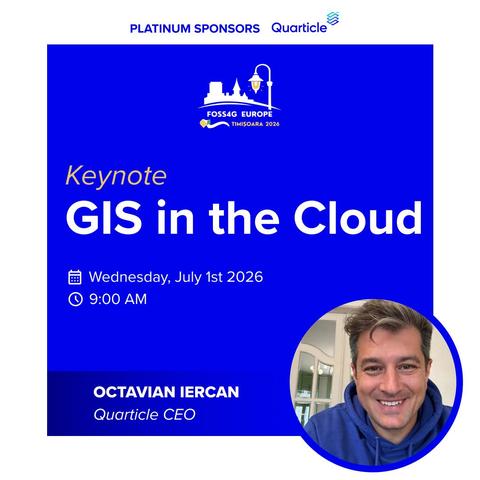
Moving GIS to the cloud is changing how geospatial platforms are built and run.
At FOSS4G Europe, Octavian Iercan (Quarticle CEO) shares a practical view on combining GIS, cloud, and AI, and what that looks like in real systems.
See you on July 1st.
Transforming and translating complex geo data into valuable business insights through user-friendly geospatial solutions.
Visit www.quarticle.ch or [email protected] for more information.
| Website | quarticle.ch |
| LinkedIn Page | https://www.linkedin.com/company/quarticle/ |
| Twitter Page | https://x.com/Quarticle_ |
| Bluesky Page | https://bsky.app/profile/quarticle.bsky.social |
Moving GIS to the cloud is changing how geospatial platforms are built and run.
At FOSS4G Europe, Octavian Iercan (Quarticle CEO) shares a practical view on combining GIS, cloud, and AI, and what that looks like in real systems.
See you on July 1st.
Quarticle has joined Netzwerk SDS 🇨🇭, a Swiss initiative focused on digital sovereignty, open standards, and reducing vendor lock-in across public and private sectors.
Looking forward to contributing to the conversation on open, cloud-native geospatial systems.
Model Context Protocol (MCP) defines a standard way for AI systems to access data and functions across platforms.
In Quarticle, it is used to connect AI models to geospatial, risk, and operational systems without custom integrations for each use case.
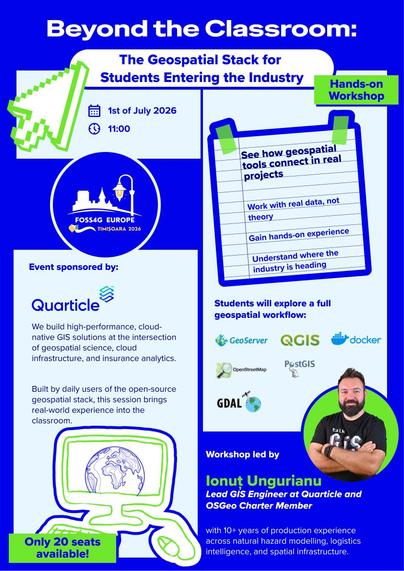
How do you go from learning GIS tools to actually using them in real projects?
That gap is real for many early-career professionals.
At @foss4geurope join a hands-on session with Quarticle’s Lead GIS Engineer to see how the full stack comes together with real data and workflows.
If you’re starting out, don’t miss it 👇
https://2026.europe.foss4g.org/schedule/sponsored-events/
(Student participation requires verification via student card submission)
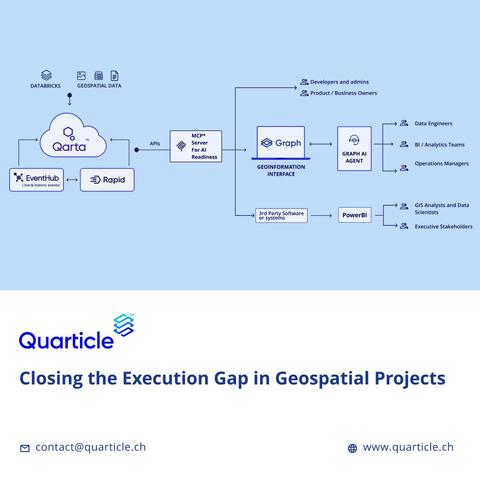
Many GIS initiatives do not fail at the analysis stage.
They fail because outputs are not integrated into operational workflows.
Strong pilot results are not enough.
Without scalable architecture and system integration, impact remains limited.
This is the execution gap.
We explore this in more detail here:
https://quarticle.ch/blog/closing-the-execution-gap-in-geospatial-projects
🚨 Quarticle has joined the Santiago Network.
The Santiago Network connects developing countries and communities with the timely, demand-driven, and tailored technical assistance, knowledge, and support they need to drive needs-based action on loss and damage.
We are proud to contribute our expertise and collaborate with partners across the network to provide support where it is most needed.
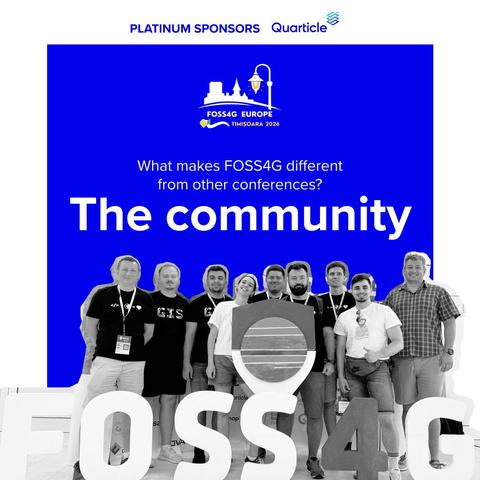
What makes FOSS4G different?
The community.
A place where developers, analysts, and teams come together around the same open geospatial ecosystem.
That’s why people keep coming back.
See you in Timișoara this June 👇
https://2026.europe.foss4g.org/
How efficient is your last-mile network?
With #Quarticle's Graph, you can visualize delivery points, evaluate hub coverage, & test the impact of adding micro-hubs to identify redundancies, gaps, and optimization opportunities.
Watch the full demo: https://www.youtube.com/watch?v=BaSOnVEOh_U

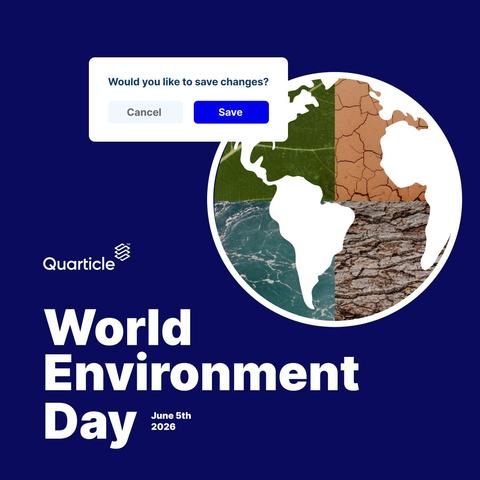
World Environment Day 🌍
A few practical things you can do today:
• Review how you use environmental data
• Cut unnecessary storage/processing
• Support open datasets
• Set one concrete improvement for the year ahead
Small steps, real impact.
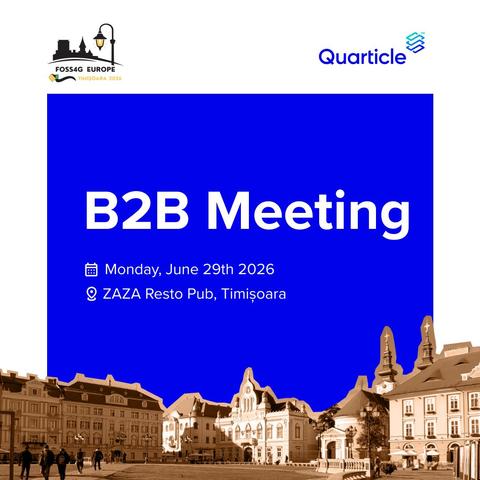
The best conference conversations don’t happen on stage.
The B2B sessions at FOSS4G Europe are where real discussions, ideas, and partnerships take shape.
We’re looking forward to it. Who else is joining? 👇