Nicolas Tromas

15 Followers
70 Following
5 Posts
Cyanobacteria-cyanophages dynamic, bloom toxicity prediction, cyano microbiome.
Evolutionary ecologist, fake-bioinformatician & author of children book.
We are also searching for fundings (to cover printing and shipping costs) :)
Hey! Pls help us to spread the word: if you know primary schools/teachers that can be interested in popular science and the microbial world (especially in area impacted by bloom). We send free copies and we do visioconf to answer to kids' questions!
Single-colony sequencing reveals microbe-by-microbiome phylosymbiosis between the cyanobacterium Microcystis and its associated bacteria - Microbiome

Background Cyanobacteria from the genus Microcystis can form large mucilaginous colonies with attached heterotrophic bacteria—their microbiome. However, the nature of the relationship between Microcystis and its microbiome remains unclear. Is it a long-term, evolutionarily stable association? Which partners benefit? Here we report the genomic diversity of 109 individual Microcystis colonies—including cyanobacteria and associated bacterial genomes—isolated in situ and without culture from Lake Champlain, Canada and Pampulha Reservoir, Brazil. Results We identified 14 distinct Microcystis genotypes from Canada, of which only two have been previously reported, and four genotypes specific to Brazil. Microcystis genetic diversity was much greater between than within colonies, consistent with colony growth by clonal expansion rather than aggregation of Microcystis cells. We also identified 72 bacterial species in the microbiome. Each Microcystis genotype had a distinct microbiome composition, and more closely related genotypes had more similar microbiomes. This pattern of phylosymbiosis could be explained by co-phylogeny in only two out of the nine most prevalent associated bacterial genera, Roseomonas and Rhodobacter. These phylogenetically associated genera could enrich the metabolic repertoire of Microcystis, for example by encoding the biosynthesis of complementary carotenoid molecules. In contrast, other colony-associated bacteria showed weaker signals of co-phylogeny, but stronger evidence of horizontal gene transfer with Microcystis. These observations suggest that acquired genes are more likely to be retained in both partners (Microcystis and members of its microbiome) when they are loosely associated, whereas one gene copy is sufficient when the association is physically tight and evolutionarily long-lasting. Conclusions We have introduced a method for culture-free isolation of single colonies from nature followed by metagenomic sequencing, which could be applied to other types of microbes. Together, our results expand the known genetic diversity of both Microcystis and its microbiome in natural settings, and support their long-term, specific, and potentially beneficial associations. Video Abstract

BioMed Central
@rspfau the microbial community attached to the cyano mucilage :)
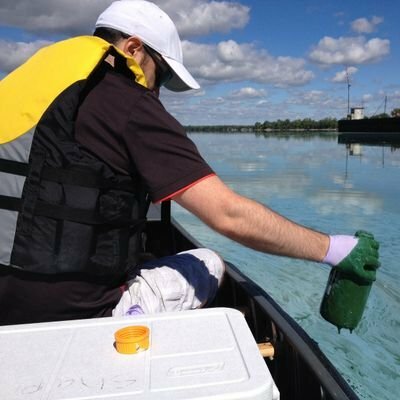
Hi everyone! I am a research associate (evolutionary ecologist) in love with Cyanobacteria working on 1-bloom&toxicity prediction, 2-Cyano microbiome, 3-Cyanophage/Cyano co-evolution and 4-Microbial interactions. Currently working on ATRAPP and Tara ocean dataset. I like fieldwork (canoe+lake = <3 ), wetlab (dvping new protocols) and love playing with big omics dataset. I am also an author of children book to improve bloom prevention (freely distributed to schools! ) #Cyanobacteria #Genomics