MPI for Biology of Ageing

246 Followers
47 Following
15 Posts
The Max Planck Institute for Biology of Ageing investigates basic causes and processes of ageing. Toots by press office | Imprint http://bit.ly/2x4vj5B

🔍 mTORC1 Research: New Findings Challenge Old Model 🧫🧪Congrats to the Demetriades Lab team! #mTORC1
#Research

https://www.age.mpg.de/415628/241122_mtor_on_the_move?c=2930

mTOR on the Move

Eating less, intermittent fasting, anti-ageing drugs such as rapamycin - there is a lot of public advice on preventing age-related diseases. A central regulator that appears to be linked to all these measures is a protein complex called mTORC1 that functions in our cells both as a sensor of nutrient availability and as a controller of most cellular functions. A research group at the Max Planck Institute for Biology of Ageing in Cologne has now shown for the first time that mTORC1 functions differently at different locations inside cells. These new findings broaden our understanding of how mTORC1 is activated by nutrients and may help to develop new, more-targeted therapies against ageing and age-associated diseases.
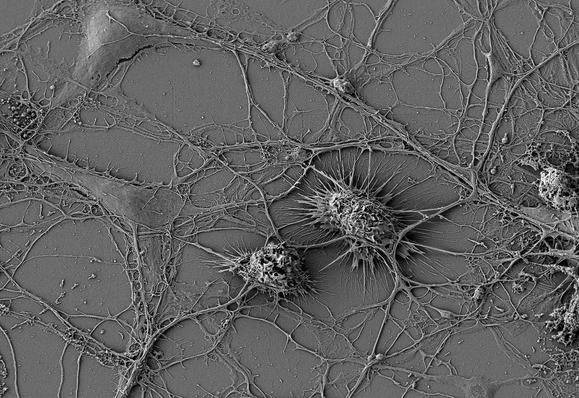
🧠 New study from Hannah Scheiblich and Michael Heneka in Neuron:

Microglia form "Tunneling Nanotubes" to remove harmful proteins from neurons and deliver healthy mitochondria. New approach for the treatment of neurodegenerative disease?

Congratulations to all authors!

https://www.age.mpg.de/407303/240731-pm-tiny-tubes?c=2930

Tiny tubes in the brain

When nerve cells in the brain die, diseases such as Alzheimer's and Parkinson's develop. To protect these cells, there are immune cells in the brain known as microglia. A study by researchers from the Max Planck Institute for Biology of Ageing, the University of Bonn and the Luxembourg Centre for Systems Biomedicine has now shown that microglia form tiny tubes, so-called ‘tunnelling nanotubes’, and thus connect directly to the nerve cells. The microglia can transport harmful proteins away as well as supply vital substances via the tubes. These findings are important for the treatment of neurodegenerative diseases.

Exciting news! 🎉 Maarouf Baghdadi has been honored with the prestigious Ben Barres Spotlight Award! 🏆 He plans to use the grant to develop an mRNA sequencing dataset for his upcoming career endeavors. Congratulations, Maarouf!
https://elifesciences.org/inside-elife/b5d03822/ben-barres-spotlight-awards-announcing-the-winners-for-2024
Ben Barres Spotlight Awards: Announcing the winners for 2024

Fourteen researchers, eight of them as authors of Reviewed Preprints, have been recognised in the awards’ most geographically diverse cohort to date.

eLife
🎉 We're thrilled to announce the launch of the new Collaborative Research Centre (SFB) 1678, titled "Systemic Consequences of Fidelity Changes in mRNA and Protein Biosynthesis". Congrats to Ina Huppertz, PhD, Stephanie Panier from and Andreas Beyer from CECAD Cologne.
https://ww.age.mpg.de/403407/new-collaborative-research-centre?c=2930grat
We are very proud of our PhD student Bruna Martins Garcia! She was awarded an EMBO fellowship! Congratulations, Bruna 🥳🥳
@CECAD @EMBOPress

Ron Jachimowicz receives funding from Behrens-Weise Foundation. The foundation supports research to improve #humanhealth and is part of the Max Planck Foundation @maxplanckpress

Congratulations, Ron! 🥳🥳
▶️ https://www.age.mpg.de/communications/news/detail/ron-jachimowicz-receives-funding-from-behrens-weise-foundation
#ageing #aging
@CECAD

Ron Jachimowicz receives funding from Behrens-Weise Foundation

Funding supports research to improve human health

Mitochondria are the metabolic hub in cells and are important for regulating cell death 🦸: Soni Deshwal from the Langer Lab now
found that #mitochondria regulate the transport of antioxidant Coenzyme Q to the cell surface to protect cells from #ferroptosis. https://www.nature.com/articles/s41556-022-01071-y
Mitochondria regulate intracellular coenzyme Q transport and ferroptotic resistance via STARD7 - Nature Cell Biology

Deshwal et al. show that the protease PARL regulates coenzyme Q (CoQ) via the lipid transfer protein STARD7. Mitochondrial STARD7 ensures CoQ synthesis; cytosolic STARD7 preserves CoQ transport to the membrane, protecting cells against ferroptosis.

Nature
🔥🔥🔥9 open PhD positions available in the newly established
@dfg_public
Research Unit on Physiological Causes and Consequences of Genome Instability 🧬. Join the thriving research environment in Cologne, Germany
@CECAD
@unicologne
@MPIAGE 🔥🔥🔥

In the aging research field, probably everyone knows this review: The Hallmarks of #Aging . Now there is a revised version with brand new hallmarks! 🌟👇

https://www.cell.com/cell/fulltext/S0092-8674(22)01377-0

Neue #DFG Forschungsgruppe untersucht Ursachen und Folgen von Genominstabilität🧬
Das interdisziplinäre Team von Wissenschaftler*innen aus #Köln und #Muenster erforscht komplexe Auswirkungen von DNA-Schäden auf alterungsbedingte Erkrankungen.
Die Ergebnisse könnten helfen, das Ausbrechen von altersbedingten Krankheiten zu verhindern.
▶️https://uni.koeln/7Y2W9
@CECAD @MPIAGE @schumacherbj