Updated Online Discussion:The Future of Consciousness Science
https://twitter.com/JohannesKleiner/status/1706411797916385382/photo/1
Tomorrow, Tues, Sept 26,
19:00Paris;1pmNY;2amTokyo,.
Join with zoom link: bit.ly/46thwCx
Updated Online Discussion:The Future of Consciousness Science
https://twitter.com/JohannesKleiner/status/1706411797916385382/photo/1
Tomorrow, Tues, Sept 26,
19:00Paris;1pmNY;2amTokyo,.
Join with zoom link: bit.ly/46thwCx
Tomorrow, Tues, Sept 26,
19:00Paris;1pmNY;2amTokyo,.
Online Discussion:The Future of Consciousness Science
The following will kick-start the discussion: Claire Sergent,Anil Seth,Lenore Blum,Thomas Andrillon,David Chalmers,Ryota Kanai,Erik Hoel,Jakob Jolij
Join with zoom link: bit.ly/46thwCx
The Association for #Mathematical #Consciousness Science (AMCS) and the Oxford Mathematics of Consciousness&Applications Network are pleased to jointly sponsor an Online talk by
Simon Kochen on The Free Will Theorem (https://omcan.web.ox.ac.uk/event/free-will-theorem),
Wednesday, June 14, 16:00, Berlin Time.
Link to join: https://bit.ly/42HZRoV
Password: ask3cb31o1
If joining for the 1st time, read https://bit.ly/3MdmKtF. If having problems when joining, refer to the trouble shooting information on the same page.
Dear Friends,
Today I removed the twitter app from my iphone.
Twitter was a life-saver for me during lockdown. I met so many new friends and research articles and thoughtful discussions.
But starting last fall, these posts became fewer and far between; now I have to wade through so much debris before I see a welcome gem.
Today, with elon musk using his twitter handle to promote classic antisemitic tropes, I’ve had it.
Now, I plan to mainly use my sigmoid.social account. Keep in touch!


We have defined the Conscious Turing Machine (CTM) for the purpose of investigating a Theoretical Computer Science (TCS) approach to consciousness. For this, we have hewn to the TCS demand for simplicity and understandability. The CTM is consequently and intentionally a simple machine. It is not a model of the brain, though its design has greatly benefited - and continues to benefit - from neuroscience and psychology. The CTM is a model of and for consciousness. Although it is developed to understand consciousness, the CTM offers a thoughtful and novel guide to the creation of an Artificial General Intelligence (AGI). For example, the CTM has an enormous number of powerful processors, some with specialized expertise, others unspecialized but poised to develop an expertise. For whatever problem must be dealt with, the CTM has an excellent way to utilize those processors that have the required knowledge, ability, and time to work on the problem, even if it is not aware of which ones these may be.
When you follow someone on Mastodon, you'll see their posts appear in your Home timeline.
Optionally, you can also receive a notification every time they post, in order to make sure you don't miss what they say.
To switch on notification, log in through your server's website, go to the person's profile page and click the 🔔 bell icon. (The official apps don't show this option yet, but some third party apps do.)
This only works for profiles you are following.
Hi Mastodon! #introduction 👋
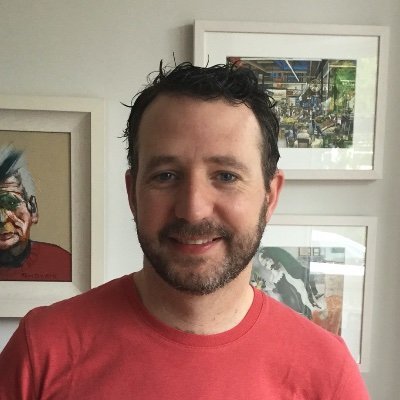
My name is John Butler.
I'm Maths/Stats Lecturer and Neuroscience researcher in the School of Mathematics and Statistics in TU Dublin since 2015.
My research uses computational neuroscience methods to investigate multisensory processing. My favourite sensory system is the vestibular system it is just great.
I am a member of @neuromatch I’ve contributed materials to the summer schools. I also help organise the Conference and I’m particularly proud of the introduction of Neuromatch for Kids which shows how maths and neuroscience work together.
I really enjoy teaching, I've taught mathematics, statistics and computational neuro to all levels from graduate, down to primary. Here are two modules:
• Numerical Analysis with Applications in Python (https://john-s-butler-dit.github.io/NumericalAnalysisBook/ )
• Short Introduction to Maths in Neuroscience with Python (https://github.com/john-s-butler-dit/Basic-Introduction-to-Python)
There are more on my my GitHub.
Lastly, I do a bit of#scicomm, so I give talks at events like; Maths week and Science Week, Pint of Science, Bright Club, I’m a Mathematician Get Me Out of Here, and I regularly give talks in primary and secondary schools about his work.


 FediTips has moved!
 David L Barack
 John Butler