 Luna
LunaCette illusion d'optique m'a retourné le cerveau 🤯
Professor in: Physics, Neurology, ECE at UCLA.
Research: Learning & memory, sleep, hippocampus, neural computation, quantum physics, AI. #Neuroscience
https://www.physics.ucla.edu/~mayank/
@matti We all suffer this way. There is a simple solution:
1 All papers are on biorxiv and all reviews are anonymous but pulbished, even if paper is not accepted.
2 People can vote if a review is bad (-5) or very good (+5).
3 Referees with very bad score are pruned by the editors (who know the referee ID).
Problem solved!
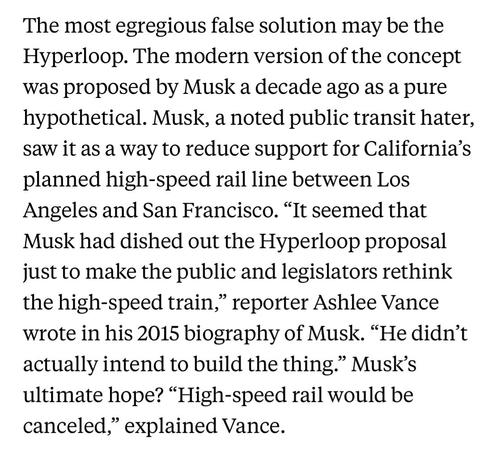
The Hyperloop was never meant to be built. Elon Musk admitted it was all about fueling opposition to California’s high-speed rail project so it would get canceled.
He never planned to improve transportation; he just wants to keep people trapped in cars.
https://newrepublic.com/article/174089/big-tech-watching-drive
#tech #transport #elonmusk #transportation #hyperloop #trains
Brenda Milner did a lot more pioneering work than you'd guess (see article). Remarkably, most of it is still useful after 60+ years! She will be 105 on July 15. Award committees, now is your chance to recognize her pioneering work and send her a great birthday gift.
https://www.frontiersin.org/articles/10.3389/fnhum.2021.786167/full

Although the behavioral effects of damage to the frontal lobes date back to at least the late 19th century even midway through the 20th century very little was known about human frontal lobe function and there was a general consensus that the frontal lobe did not play a key role in cognition. This all changed when Brenda Milner published a chapter in a 1964 volume entitled: The Frontal Granular Cortex and Behavior. Milner’s chapter, “Some effects of frontal lobectomy in man,” was the first systematic study of the effect of frontal lobe excisions on cognition in human patients. Milner had access to a unique population of frontal excision patients at the Montreal Neurological Institute that were being treated by Wilder Penfield and his associates for a wide range of neurological disorders, including intractable epilepsy. Milner and her colleagues engaged in a more than 50-year study that has had a formidable impact on our understanding of frontal lobe function. Paralleling studies of frontal lobe function in non-humans they influence on understanding the evolution and function of the prefrontal cortex of mammals. Thus, although Brenda Milner is best known for her studies of human memory, she has had an equally important contribution to our understanding of the frontal lobes.
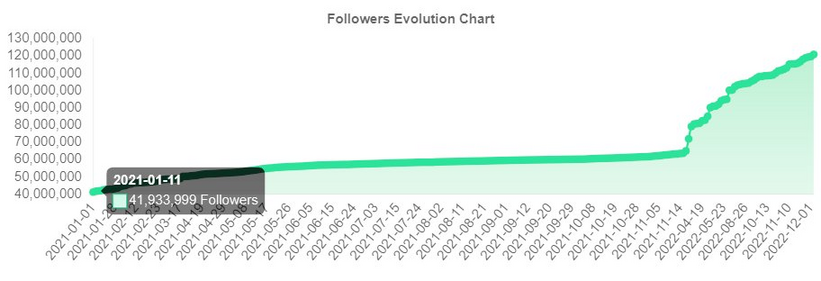
Imagine a free, informal block party. Then, a bully walks in, injects himself in all conversations, spreads misinformation, fires people and asks for a monthly $8 fee. That's what M#$k did and gained a whopping 100million+ followers within a year.
Do you support this?
Speaking at conferences increases citations by 52%!
https://www.nature.com/articles/d41586-023-01604-x
But
-In person meeting requires airline travel, fuels greenhouse gases.
-Less wealthy can't afford to travel or get visas. Referees prefer papers from known/famous authors. In person conferences create a vicious cycle.
-"I invite you, you invite me" enables nepotism.
-A handful of famous voices dominate the airwaves.
-This stifles the young investigators and disruptive innovation.
What's the solution?
Get your shingles vaccine, it can also reduce your risk of dementia.
 Steve Herman
 Paris Marx
